
Israel dispatched a version of the Iron Beam laser-based air defense system to the United Arab Emirates during the recent fighting with Iran to help protect the Gulf nation from missile and drone attacks, according to a report on Thursday, in a significant step for the defense ties between the two countries.
According to The Financial Times, Jerusalem also sent over an advanced surveillance system known as Spectro to help the UAE detect Iranian drones from up to 20 kilometers (12.4 miles) away.
The report comes on the heels of a piece by Axios earlier in the week, which asserted that Israel deployed an Iron Dome Battery to the Gulf nation and sent several dozen troops to operate it.
Citing a source familiar with the matter, The Financial Times reported that Israel also sent additional, unspecified weapons systems to the UAE.
“It’s not a small number of boots on the ground,” the source said.
Get The Times of Israel’s Daily Edition
by email and never miss our top stories
By signing up, you agree to the terms
The newspaper reported that in addition to the equipment, Jerusalem also provided the UAE with real-time intelligence on missile launches from Iran heading toward the Gulf state.
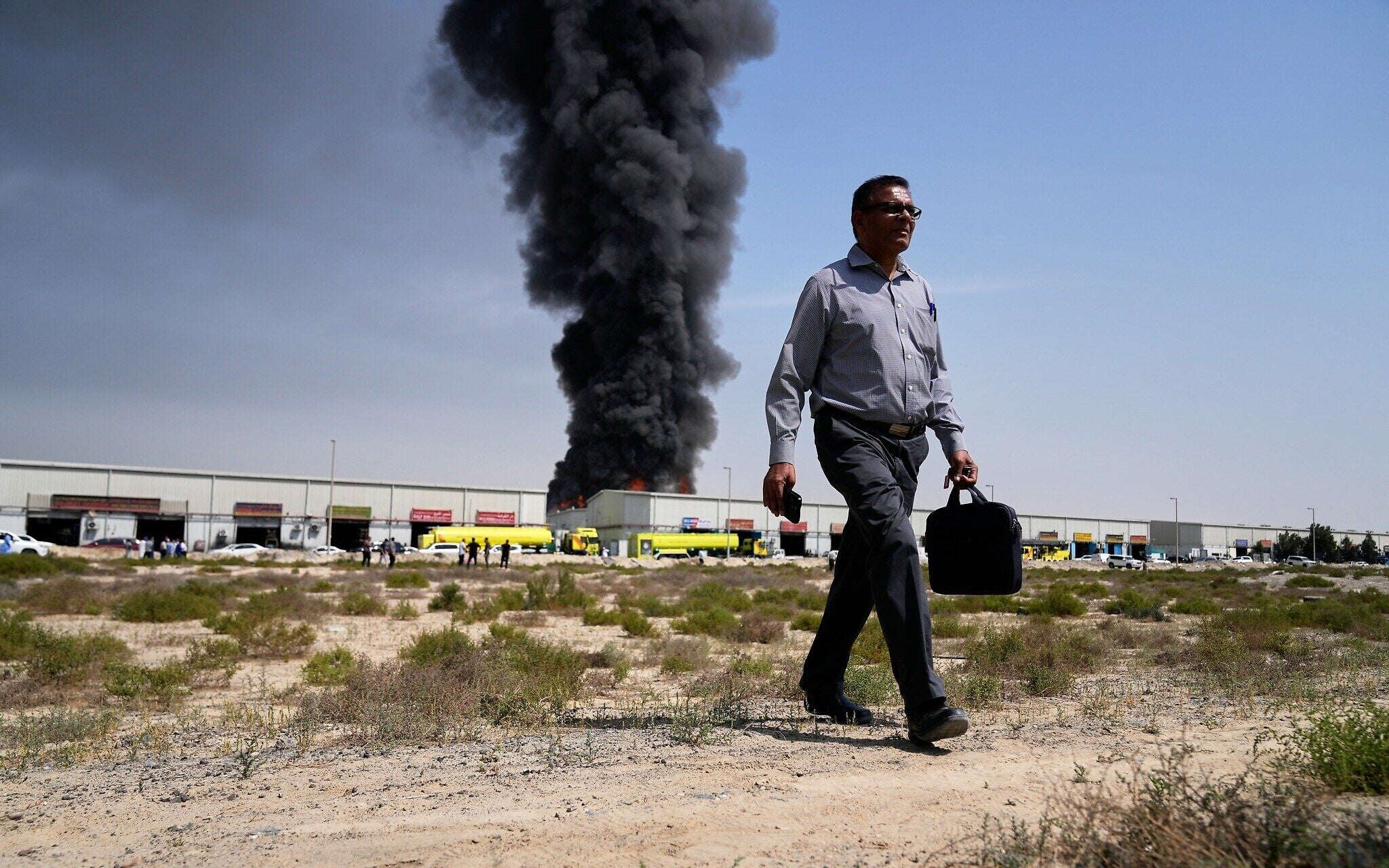
A man walks away after watching as a black plume of smoke rises from a warehouse in the industrial area of Sharjah City, United Arab Emirates, after an Iranian strike, March 1, 2026. (AP Photo/Altaf Qadri)
Reports that Israel has provided significant military assistance to the UAE appear to be among the first publicly disclosed cases of cooperation beyond joint training exercises.
Jerusalem and Abu Dhabi established diplomatic, economic and security ties in 2020 under the Abraham Accords, a deal motivated in part by the shared threat of Iran.
Although Bahrain also signed the accords at the same time, and, like the UAE, came under attack from Iran during recent fighting, there is no indication as to whether it received similar support from Israel.
Sources familiar with the matter told the Financial Times that the various defensive and offensive systems to the UAE were mostly prototypes, or otherwise not fully integrated into Israel’s own systems.
This was done, it said, to keep up with the fast pace of the war.
The Iron Beam — a high-power laser interception system — was only recently integrated into the Israel Defense Forces’ defense array, with the first operational system delivered to the military in December 2025.
The system was in development for more than a decade after it was first unveiled in 2014. It was declared operational in September after completing development and final tests.
Within Israel, it is intended to supplement and complement the Iron Dome and other air defense systems, shooting down smaller projectiles and leaving larger ones for the more robust missile-based batteries such as the David’s Sling and Arrow systems.
As long as there is a constant source of energy for the laser, there is no risk of it ever running out of ammunition. Officials have hailed the system as a potential “game-changer” in the battle against projectile attacks.
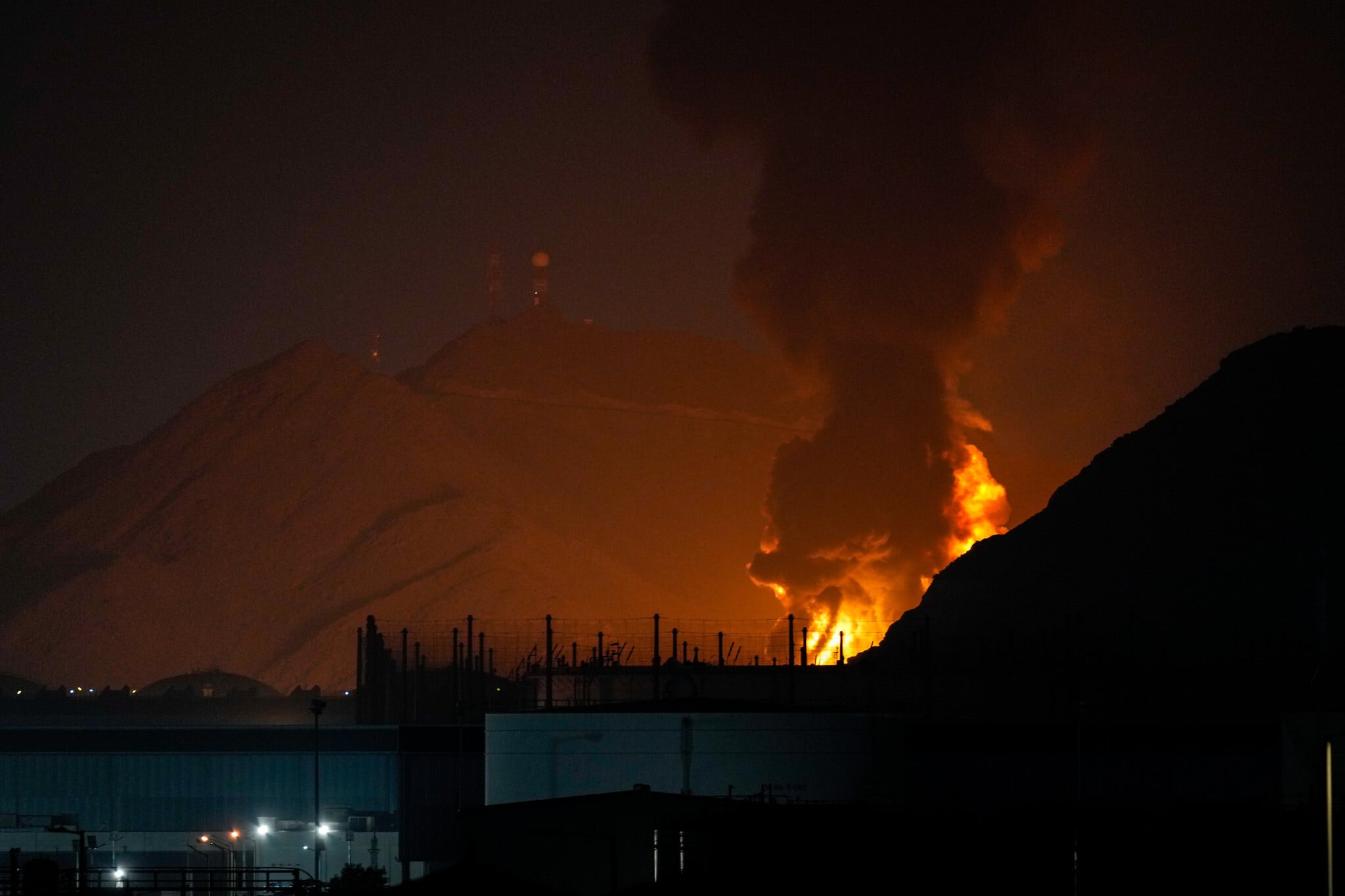
A large fire and plume of smoke are visible after, according to the authorities, debris from an Iranian intercepted drone hit the Fujairah oil facility, in Fujairah, United Arab Emirates, Tuesday, March 3, 2026. (AP Photo/Altaf Qadri)
According to the Axios report earlier in the week, Prime Minister Benjamin Netanyahu ordered the deployment of the Iron Dome — and presumably the other systems — following a call with UAE President Mohamed bin Zayed Al Nahyan.
Since the war began on February 28, Israeli and Emirati officials have said the two countries have been in close military and political coordination, with the Israeli Air Force also carrying out strikes in southern Iran during the war to neutralize short-range missiles threatening Gulf states.
Between February 28 and April 8, when a tenuous ceasefire took effect, Tehran fired some 550 ballistic and cruise missiles and more than 2,200 drones, according to the Emirati defense ministry, making it the most targeted country in the region, including Israel.
While most projectiles fired at the UAE were intercepted, some struck military and civilian targets, reportedly prompting Abu Dhabi to seek assistance from allies.
Stav Levaton and Emanuel Fabian contributed to this report.
Which gorgeous bird do you prefer?

THIS MONTH ONLY: Join our reader support group for as little as $6/month and receive an exclusive tote bag featuring one of Israel’s native birds.
Choose between the Duchifat (yellow), Israel’s national bird, or the Shaldag (blue), a beloved symbol of the Israeli landscape.
As a member of the Times of Israel Community, you’ll also enjoy:
An ad-free experience of our site and podcasts.
Exclusive access to award-winning films via DocuNation.
Weekly letters from founding editor David Horovitz.
Join ToI Community & claim my bag
Already a member? Sign in to stop seeing this
You appreciate our wartime journalism

You clearly find our careful reporting of the Iran war valuable, at a time when facts are often distorted and news coverage often lacks context.
Your support is essential to continue our work. We want to continue delivering the professional journalism you value, even as the demands on our newsroom have grown dramatically during this ongoing conflict.
So today, please consider joining our reader support group, The Times of Israel Community. For as little as $6 a month you’ll become our partners while enjoying The Times of Israel AD-FREE, as well as accessing exclusive content available only to Times of Israel Community members.
Thank you,
David Horovitz, Founding Editor of The Times of Israel