
IDF Central Command chief Maj. Gen. Avi Bluth reportedly acknowledged in a recent closed forum that the IDF applies different enforcement policies against Israeli and Palestinian stone-throwers in the West Bank.
Bluth justified the decision to only use live fire against Palestinian stone-throwers, arguing that IDF troops employing the same measures against fellow Jews would have “sociological consequences,” according to Haaretz, which apparently obtained a recording of the senior IDF officer’s remarks. Bluth did not deny the quotes attributed to him in the Sunday report.
Bluth took pride in having loosened the IDF’s rules of engagement against Palestinians, particularly those trying to illegally cross the West Bank security barrier, Haaretz reported.
Soldiers are now permitted to carry out a suspect arrest procedure that includes shooting up to a Palestinian’s knees for the purpose of deterrence in the so-called “seam zone,” Bluth reportedly said.
He quipped that many Palestinians are now seen limping as a result of his policy, adding that another 42 Palestinians who were allegedly trying to hurl stones at cars in the West Bank were shot dead by Israeli troops in 2025 alone.
Get The Times of Israel’s Daily Edition
by email and never miss our top stories
By signing up, you agree to the terms
While he characterized stone throwing by Palestinians as terror, he didn’t go as far as to make that characterization when referring to Jewish stone-throwers and argued that he did not support soldiers opening fire at them.
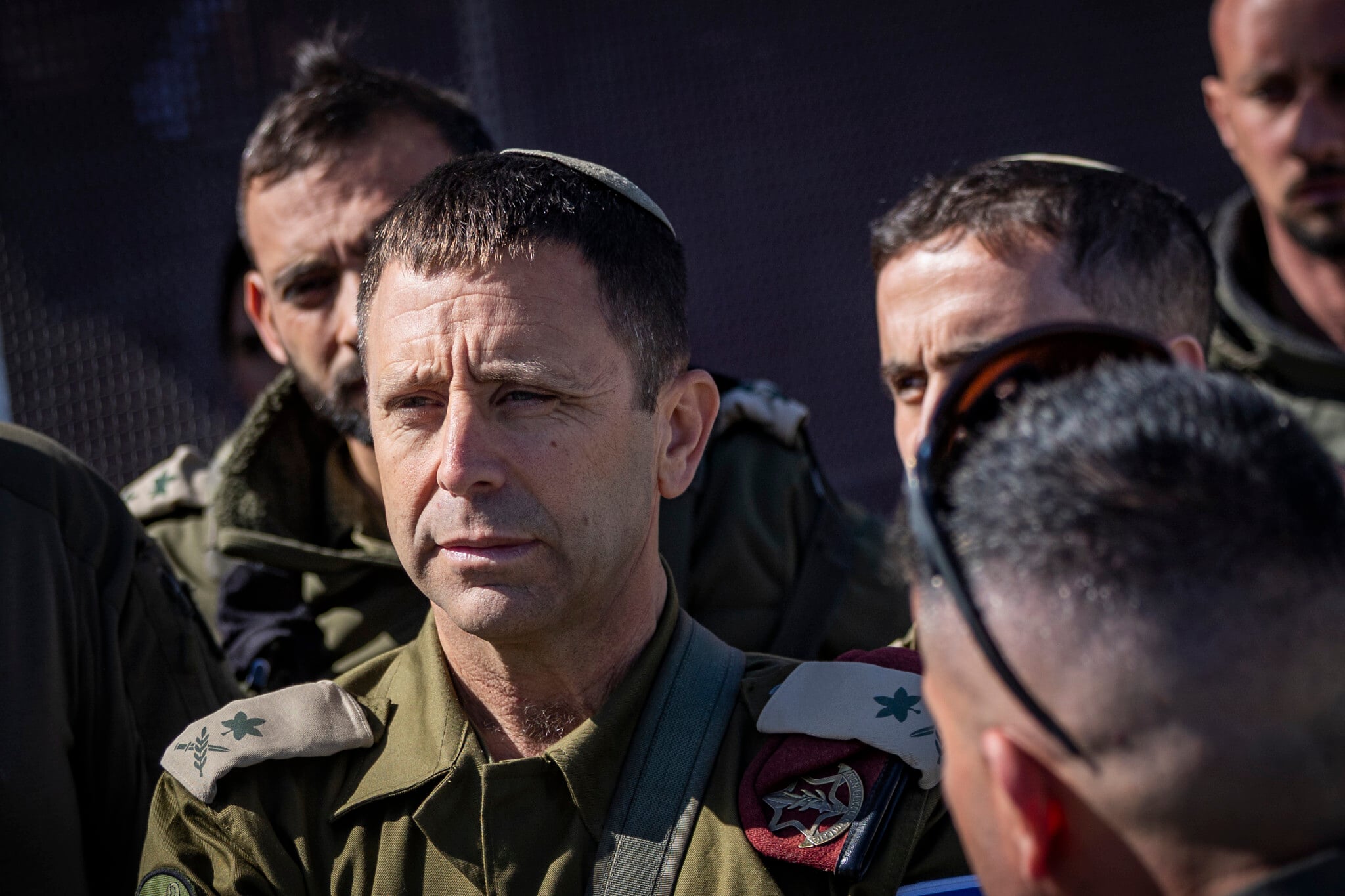
IDF Central Command chief Maj. Gen. Avi Bluth watches as Palestinians pass through the Qalandia checkpoint on their way to attend Ramadan prayers at Jerusalem’s Al-Aqsa Mosque, February 20, 2026. (Chaim Goldberg/Flash90)
Bluth — who has faced criticism for allowing settler violence to fester unchecked for months before only recently speaking out against it — recalled how Border Police last year shot at stone throwers because their faces were covered and the cops didn’t realize they were settlers.
Even though they had been targeted by settlers, the Israeli forces faced criticism from certain ultranationalist circles for having used live fire. It was one of two such incidents over the past year. “Luckily, the Jews were not killed,” Haaretz quoted Bluth as having said.
“Any such incident [in which soldiers shoot at Israeli stone-throwers] has very severe consequences from a sociological perspective,” Bluth said. “Yes, there is discrimination to some extent.”
“I’m not sure that opening fire on every Israeli stone-thrower… would help. I think it would do the exact opposite,” he added.
Bluth also pointed to disparities in Israel’s employment of administrative detention, but in this case appeared to take issue with the discrepancy between its use against Jews and Palestinians.
The legal mechanism allows Israeli authorities to indefinitely keep a suspect in custody without charge, based on covert intelligence information.
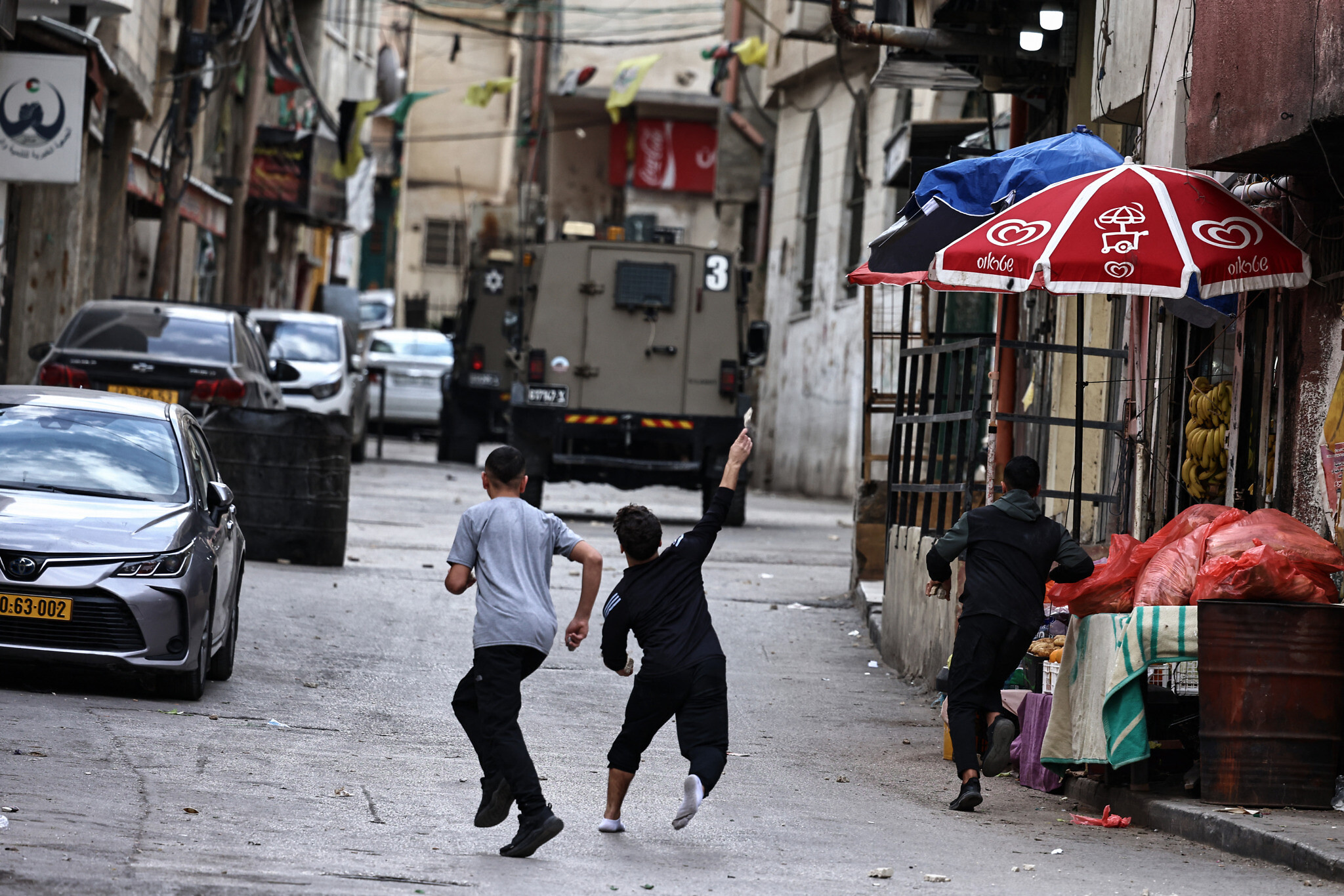
Young Palestinians throw stones at an Israel Defense Forces vehicle during a military raid in the Al-Amari refugee camp near the city of Ramallah in the West Bank on December 9, 2025. (Zain JAAFAR / AFP)
The practice has been deemed so controversial over due process concerns that Defense Minister Israel Katz barred its use against Jewish suspects. Meanwhile, it is still used against over 4,000 Palestinians as well as a small number of Arab Israelis.
Taking issue with Katz’s decision —as settler attacks have only intensified since — Bluth said curbing the phenomenon should start with re-employing administrative detentions against Jewish extremists before there is any talk of changing the IDF’s rules of engagement. ” I am winning with what I have,” he claimed.
Bluth credited his hardline policies for curbing Palestinian terror in the West Bank. “I’m constantly turning [Palestinian] villages into conflict zones.”
The IDF has been conducting lengthy counter-terror operations in West Bank refugee camps, flattening hundreds of buildings deemed as terror infrastructure, while displacing tens of thousands in the process.
“We’ve killed 1,500 terrorists in three years. So how come there is no intifada?… Because 96 percent of the 1,500 killed were involved in terrorism, only 4 percent were not,” he claimed. Bluth’s breakdown of civilians to combatants could not be immediately independently verified.
Last week, though, Bluth was quoted as having expressed bewilderment over the fact that Palestinians have not launched an uprising amid ongoing “Jewish terrorism.”
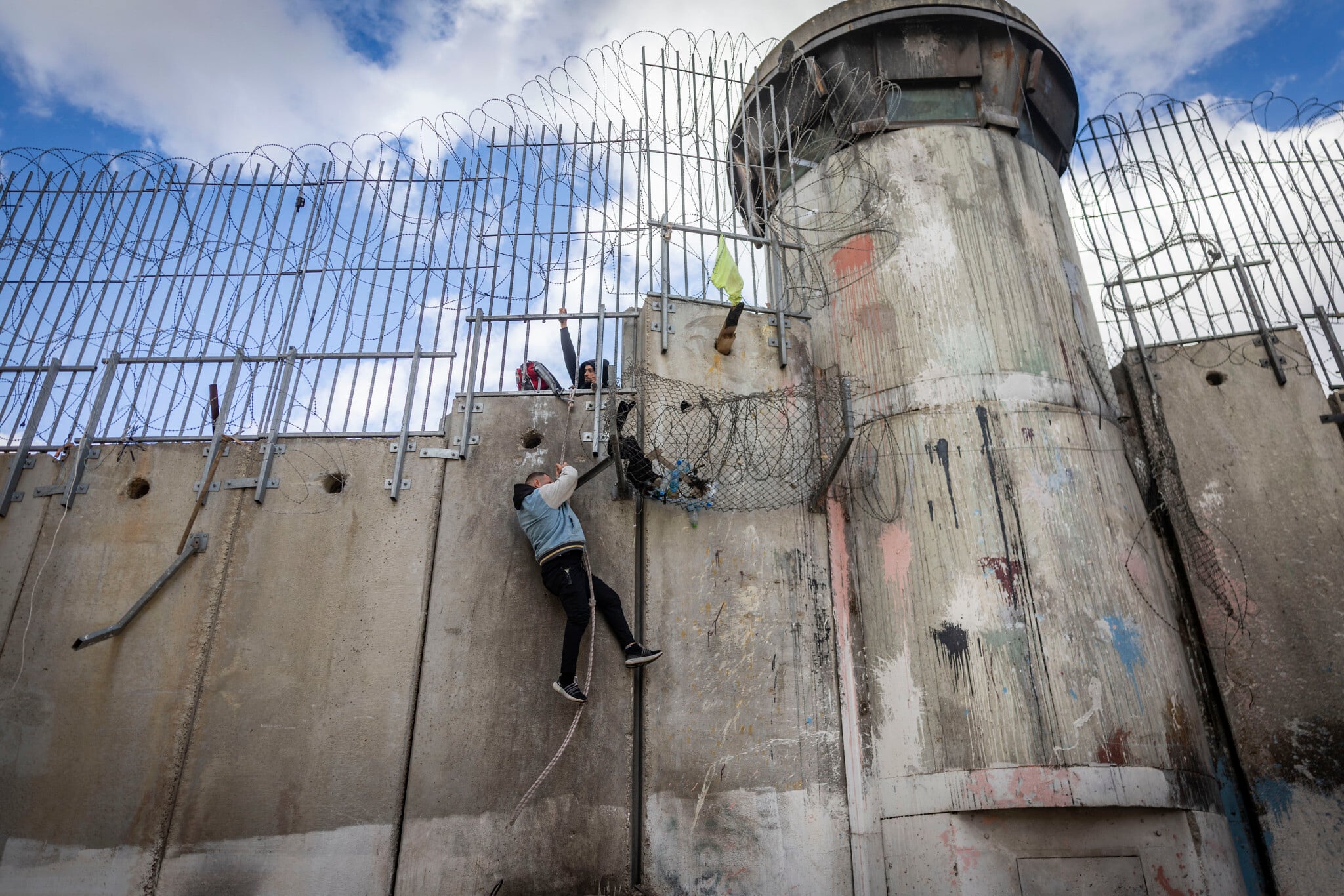
Palestinians use a rope to climb over the separation barrier from the al-Ram village into East Jerusalem, January 12, 2026. (Chaim Goldberg/Flash90)
Haaretz quoted Bluth as having recently said that “it’s quite a miracle the Palestinian public is still indifferent… but it won’t remain indifferent forever.”
Returning to the issue of Palestinians trying to illegally cross through the West Bank security barrier, Bluth in the Sunday report said 50,000 to 70,000 of them have managed to continue working inside Israel since Hamas’s October 7, 2023, terror onslaught.
In response to the attack, Jerusalem decided to revoke all entry permits for the over 100,000 Palestinians who had been working legally inside Israel. Illegal infiltrations by Palestinian day laborers before October 7 were at roughly 40,000.
The revoked entry permits, along with Israeli measures against the Palestinian banking sector and the withholding of several billion dollars in Palestinian tax revenues, have plummeted the West Bank economy to unprecedentedly low levels.
IDF revokes permission for Palestinian farmers to plow their fields after settler disruption
Another sector of the Palestinian economy under significant duress is the agricultural industry.
Violent settlers are reported to harass Palestinian farmers on a near-daily basis, preventing them from reaching their lands.
On Monday, a group of about 20 Palestinians from the village of Turmus Ayya, near Ramallah, were prevented from plowing land by the IDF after their activities were disrupted by settlers, even though they had coordinated the work with Israeli authorities.
The group arrived in the morning to plow land adjacent to the village, but extremist settlers arrived at the scene and were documented attempting to chase the Palestinians’ tractors. Calls had circulated online on Sunday urging settlers to come to the site and disrupt the plowing.
The land is privately owned by village residents, but because it is in Area C and located near the settlements of Shvut Rachel and Shilo, the work had been coordinated in advance with Israel’s Civil Administration. In Area C of the West Bank, both security and civilian authority lie with Israel.

Palestinians harvest olives in the West Bank village of Turmus Ayya, on the outskirts of Ramallah, October 20, 2025. (Hazem BADER / AFP)
But following the settler disruptions, the IDF decided to revoke the authorization it had granted to the Palestinian farmers and instead declared the area a closed military zone. The IDF did not respond to a request for comment.
Monday also saw the government announce NIS 1.075 billion ($365 million) in funding for the years 2026-2028 to pave roads for recently approved settlements in the West Bank.
An analysis by the Peace Now settlement watchdog noted that the current government is already investing NIS 7 billion in settlement road construction, representing about 30% of Israel’s intercity road budget, despite serving only about 3% of Israel’s population.
Finance Minister Bezalel Smotrich, who is also a minister in the department of defense, called this part of a “revolution” the government is leading in the West Bank by approving and supporting dozens of new settlements.
You appreciate our wartime journalism

You clearly find our careful reporting of the Iran war valuable, at a time when facts are often distorted and news coverage often lacks context.
Your support is essential to continue our work. We want to continue delivering the professional journalism you value, even as the demands on our newsroom have grown dramatically during this ongoing conflict.
So today, please consider joining our reader support group, The Times of Israel Community. For as little as $6 a month you’ll become our partners while enjoying The Times of Israel AD-FREE, as well as accessing exclusive content available only to Times of Israel Community members.
Thank you,
David Horovitz, Founding Editor of The Times of Israel
Already a member? Sign in to stop seeing this