
The historic Rossoneri and Azzurri defender has passed away: Baresi underwent surgery for a lung nodule last year. He is remembered as one of the greatest defenders of all time, an example recognised by everyone, including his fiercest rivals.
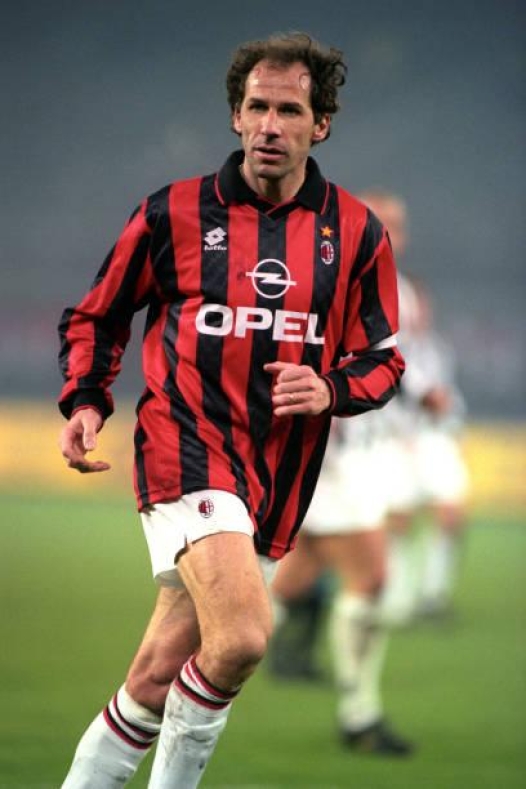
Mourning at Milan and across the football world. Franco Baresi passed away aged 66, having celebrated his birthday on 8th May. The Rossoneri club announced: “The history of Milan is in tears at the passing of Franco Baresi. His example and profound impact will forever, like his number 6 shirt, remain an integral and fundamental part of the Club’s DNA and journey.” Having undergone surgery for a lung nodule in 2025, the historic captain had made several returns to San Siro, including when he carried the Olympic flame at the opening ceremony for Milano-Cortina 2026. He played 719 matches for Milan, winning six league titles and three European Cups/Champions Leagues, while for the national team he made 81 appearances, winning the 1982 World Cup.
captain—
You are forever, even if you are no longer here: Franco Baresi has succumbed in his final, fatal match. Italian and world football mourn him, and Milan bids farewell to its great icon. A life of unwavering loyalty, cut short by an illness that forced Franco into a continuous, high-spirited fight in recent years. Thus, one of the greatest defenders of all time, an example recognised by everyone, including his fiercest rivals, departs.
franco baresi—
Accustomed to overcoming obstacle after obstacle, Baresi displayed exceptional resilience from a young age. He first made his mark at Unione Sportiva Oratorio di Travagliato, a village club in the province of Brescia. Orphaned at just 14, in 1974 he joined a family he would never leave: Milan, following a recommendation from USO director Guido Settembrino. Fate has a strange way of working: Beppe, his older brother by two years and a Milan fan, joined Inter’s youth academy. Franchino, born an Inter supporter, was signed by the Rossoneri after being rejected by his boyhood club for being deemed too frail. In this instance, it was the keen eye and shrewdness of Italo Galbiati, impressed by Franchino’s technique, that changed the course of events. With his blond hair and excellent ball control, his almost boyish appearance and elegant touch often deceived opponents, only for them to be disabused at the first tackle. The masseur Mariconti gave him the nickname, “Piscinin”, meaning ‘little one’ in Milanese dialect, which would become his unmistakable trademark.
promoted—
Baresi’s breakthrough came under Nils Liedholm, who handed Franco his Serie A debut on 23rd April 1978. Milan won 2-1, an auspicious result that was significant for a superstitious man like ‘the Baron’. But the Swedish coach didn’t just throw Baresi into the first team as a good luck charm; he genuinely believed in him, making him one of the key figures in the following season, which culminated in the long-awaited and almost fabled league title. It was immediately clear that Baresi hadn’t become an Italian champion by chance. Indeed, one of his staunchest supporters was none other than Gianni Rivera, the leader who recognised the young defender’s superstar qualities. It wasn’t just a matter of technique, but of character and innate talent. So much so that the ‘Golden Boy’ himself, during a ‘Città di Milano’ tournament match at San Siro against Flamengo, heard Baresi call out: “Are you going to pass it to me, then?” Rivera wasn’t offended; in fact, he wholeheartedly approved of Franchino’s courage, sensing that the quiet sweeper not only knew how to handle the ball and marshal the defence but also how to make his presence felt. So much so that at just 22 years old, Baresi was promoted to Rossoneri captain.
setbacks—
These immense satisfactions were, however, followed by bitter disappointments. The first relegation after the Totonero scandal was a severe blow. His immediate return to Serie A allowed him to catch the eye of Enzo Bearzot for the national team. Franco continued his upward trajectory but then faced another setback. He contracted a virus that forced him to stop playing for three and a half months: many questioned his future, which hung in the balance at just 21, but he reacted and fought his way back, more determined than ever. However, he couldn’t avoid another stain on his record, another relegation, in 1982. Yet, he was still called up for the Azzurri’s Spanish World Cup campaign. Baresi was the understudy to another legend, Gaetano Scirea; he never played, but still ended on a high note, lifting the trophy in the Madrid final.
successes—
Riding the wave of World Cup euphoria, Baresi was courted and sought after by major clubs, having achieved the status of an emerging top player. Yet, despite being able to succumb to excellent offers from rivals, he remained at Milan. His unwavering loyalty was repaid with interest in subsequent seasons. Franco remained the cornerstone of a team that, unfortunately, suffered from frequent corporate turmoil. Until Silvio Berlusconi arrived on the scene in 1986: he saved the club from bankruptcy and launched an ambitious revival programme, which initially raised more than a few eyebrows among the players themselves. The next turning point came in 1987 with the arrival of Arrigo Sacchi. The beginnings with the coach from Fusignano were far from easy; however, Baresi then proved to be one of the finest interpreters of Sacchi’s football philosophy and beliefs. With the additions of Gullit and Van Basten, Milan returned to win the league title in 1988, and in 1989, with Rijkaard joining, there was even triumph in the European Cup. These historic victories propelled the Rossoneri juggernaut, marking years of undisputed dominance, especially in Europe, with a second consecutive win in 1990. Baresi lifted trophy after trophy, yet he never abandoned his composure: he didn’t shout; a glance from him was enough for you to know what to do, without the need for any grand displays. Such was his dedication to the cause and his passion that he even faced embarrassing circumstances, such as the infamous ‘night of darkness’ in Marseille, when he complied with the management’s dictate and abandoned the Velodrome with his teammates.
never give up—
After Sacchi was replaced by Fabio Capello, another significant challenge emerged for Baresi. Many believed that he and his teammates were nearing the end of their careers. Capello, who as a player hadn’t had a particularly strong rapport with Baresi, appealed to the pride of both the leader and the survivors of the Sacchi era. The move worked wonders; the ‘Diavolo’ (Devil) brought home another four league titles and the European Cup in 1994. Meanwhile, Baresi continued to rack up caps for the national team; for coach Sacchi, he was untouchable. However, Franco decided to retire from international duty in 1992. Arrigo asked him to reconsider, and he succeeded, proving his point: Franco captained the national team that would lose on penalties in the 1994 World Cup final against Brazil. Baresi was the first to miss from the spot and was inconsolable, his live tears moving all Italians. A reserved man, but one of deep emotions. With his wife Maura, whom he met in Tuscany in the early 80s, he had two children: Edoardo and Gianandrea. Franco left the national team and had more time to dedicate to his family. He enjoyed a final parade with the 1996 league title, but age was catching up. The 1996-97 season started poorly under Tabarez and ended badly with Sacchi’s second spell. Baresi decided in June 1997 to retire from playing. His unmistakable number 6 shirt was retired. Franco was appointed vice-president of the club, overseeing the Primavera (youth team). In 2002, he took his only break from Milan: he was hired as technical director by Fulham, who had just been promoted to the Premier League. The Premier League adventure lasted just under three months due to disagreements with coach Jean Tigana. Since then, his bond with Milan has been indissoluble. And it always will be. All stand for ‘Piscinin’.
This article was originally written in Italian by La Gazzetta dello Sport editor. The English version has been generated using AI translation tools. If you notice any translation errors or have suggestions, please contact us at iniziativegazzetta@rcs.it
© RIPRODUZIONE RISERVATA