
This spring, an elementary school in Osaki, Miyagi Prefecture, folded away its flag for the last time, marking the latest school closure in a city facing an acute shortage of children.
On Feb. 14, Shimoibano Elementary School held a closing ceremony ahead of its official closure at the end of March. The school flag displayed on stage was handed from the principal to the head of the city’s education board, and then to the mayor.
All eight students at the school, along with their parents and local community members, attended the ceremony. Over its 35-year history, the school has had 257 graduates.
“Even if Shimoibano Elementary School closes, what we learned here, the bonds we formed, and the memories we built together will never disappear,” Yuma Sato, a 12-year-old student representative, said as her voice resounded clearly through the modest school gym. Watched over by parents and community members, the children stood tall and sang their school anthem in full.
The city of Osaki marked the 20th anniversary of its founding on March 31, having been created through a merger of seven municipalities. Over the years, 20 elementary schools and two junior high schools in the city have closed, while two new elementary schools and two integrated compulsory education schools have opened.
Shrinking population
The number of children in the city age 15 or younger has decreased by 6,760 — roughly 30% — from the time of the merger.
Births are on a downward trend, dropping from 1,212 in 2006 to just 524 in 2025 — fewer than half.
Reflecting on the flag handover during the ceremony, Mitsutoshi Kumano, the head of the education board, said both the flag and the gazes directed at the stage felt heavy. But, the 72-year-old added, “A certain school size is necessary for the healthy development of children.”
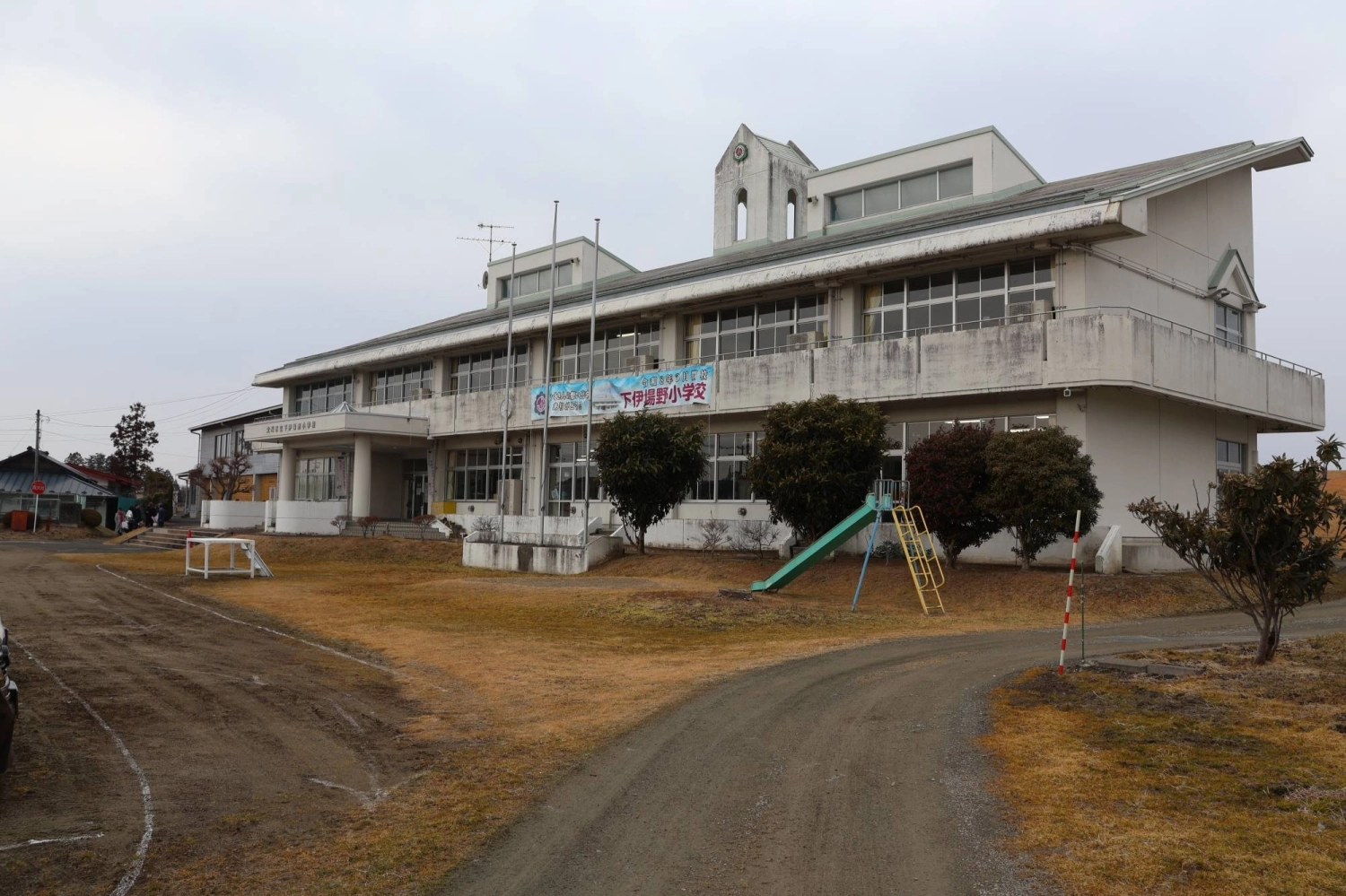
Shimoibano Elementary School ended its 35-year history at the end of March.
| Kahoku Shimpo
Schools serve as community hubs that connect generations through events such as sports days and gatherings attended by grandparents. When school gates close, part of the region’s history closes with them.
Japan’s declining birthrate issue is not something that a single region can overcome on its own. Still, the city has explored ways to reuse closed school buildings, such as by converting them into facilities for processing game meat, relocating agricultural cooperative headquarters there, or leasing them to private companies.
One noteworthy example of this is a city-run Japanese language school that opened in April last year and sent off its first graduating class in March this year. It is only the second publicly operated Japanese language school in the country.
Of the 16 graduates, seven found jobs, three went on to higher education, and six returned to their home countries. Of the seven who found jobs, five remained in Miyagi Prefecture, with four of them securing employment in Osaki thanks to support from the city and the school.
Huang Manling, 34, from Taiwan, has been hired by Hotel Onikoube in the Naruko Onsen hot spring resort area in Osaki.
“I was touched by the kindness of the people in Osaki and decided to work here,” she said. “I think I’ll make many mistakes in this new environment, but I want to take on challenges.”
As the city sought ways to keep the community alive, it arrived at one potential solution — working toward becoming a multicultural society.
Inbound demand
In the Naruko Onsen area, Hotel Onikoube is bustling thanks to a throng of visitors from Taiwan.
In mid-March, when snow still remained on ski slopes near its premises, the hotel lobby was packed with Taiwanese guests waiting to check in.
“When Taiwanese see snow, their excitement skyrockets,” tour guide Wang Ya-hui, 54, said with a smile as voices of Taiwanese guests echoed across the illumnated slopes.
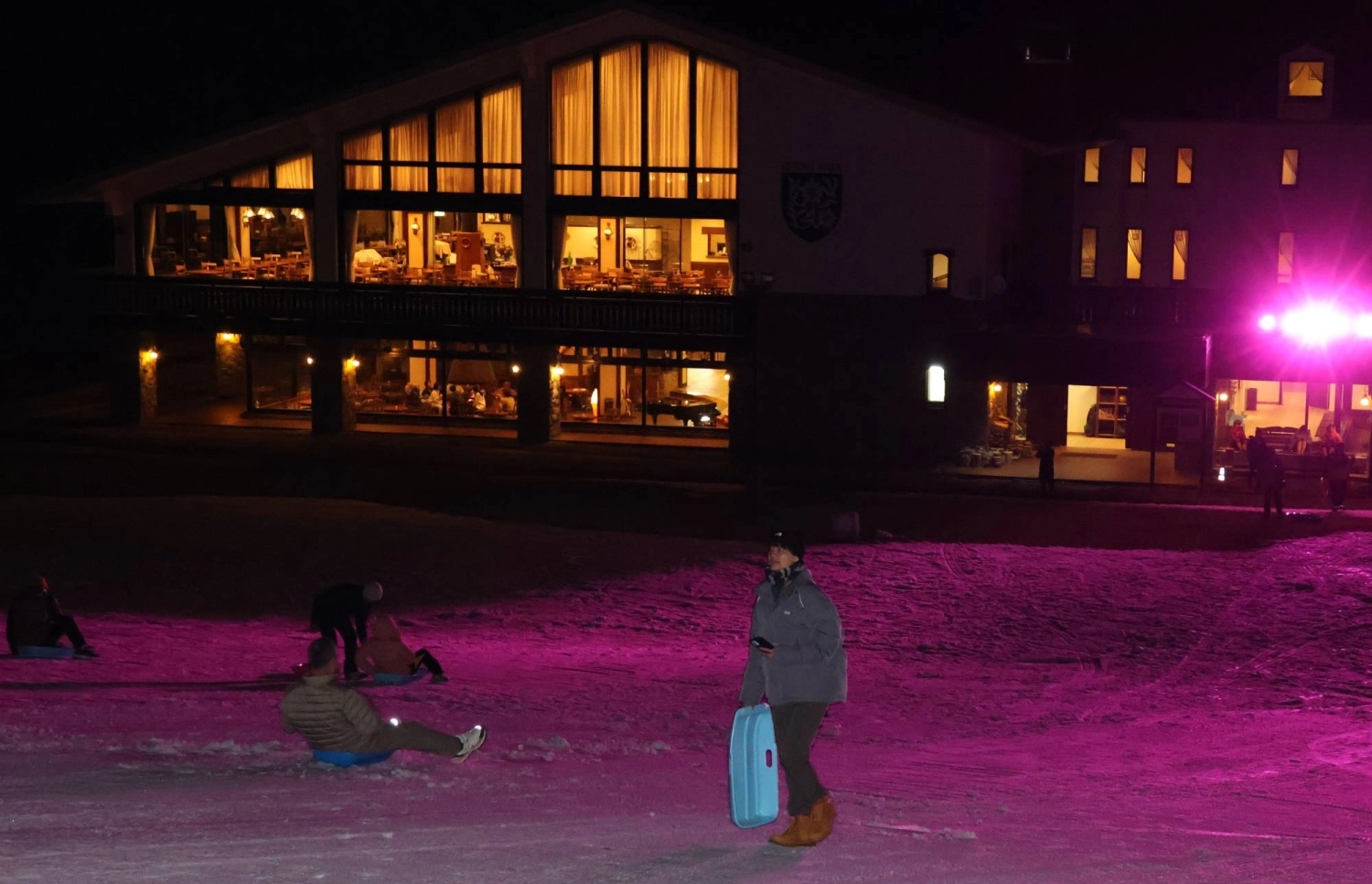
Taiwanese tourists enjoy sledding in the snow at night at Hotel Onikoube in the Naruko Onsen hot spring resort in Osaki in March.
| Kahoku Shimpo
Last year, the number of visitors from Taiwan totaled 14,500 at the hotel, or about half of its overall guests. The hotel, which had been running deficits, has made a V-shaped recovery since President Hirotaka Enokiya joined from a foreign-affiliated hotel in October 2022.
Enokiya, 67, set his sights on the influx of Taiwanese tourists to the Ginzan Onsen hot spring resort in Obanazawa, Yamagata Prefecture. Promoting the idea that “tourists can enjoy playing in the snow just 90 minutes by bus from Ginzan Onsen,” he worked with Taiwanese travel agencies to attract visitors to his hotel.
In the three years since taking the helm, Enokiya has turned the hotel around to profitability, allowing for renewed investment in facilities.
In January this year, the hotel opened an office in Taiwan. While fully committed to the Taiwan market, Enokiya notes that “this peak will likely last about five years.” He is already turning his eyes to Europe and North America as his next targets.
Gloomy mood
Despite the bustle at Hotel Onikoube, the mood in the wider Naruko Onsen resort is gloomy.
Last autumn, the region experienced an unusually quiet fall foliage season due to a surge in bear sightings.
“I came here as a bride 40 years ago. This was the quietest autumn I’ve ever seen,” said Hiromi Takahashi, 67, proprietress of the time-honored Naruko Hotel, which has been in business for 153 years.
In late October, the city of Osaki issued a state of emergency due to fears of increasing bear attacks, with the number of bear captures exceeding seven times the usual level. The alert was not lifted until late December, dealing a direct blow to the fall foliage tourism season.
Visitor numbers to the Naruko Onsen area, which had not recovered to pre-COVID levels, declined even further due to the bear worries.
Since the municipal merger 20 years ago, the population decline in what was then the town of Naruko is especially severe, nearly halving from 8,645 to 4,634 today.
As the population decreases, land prices fall. The rate of land-price decline in the area ranks among the worst 10 spots nationwide for both commercial and residential areas.
Takahashi of Naruko Hotel wonders if the municipal merger benefitted the former town of Naruko. She acknowledges the reality that without the merger, the town’s finances might have collapsed, leading to even greater hardships.
Yet she speaks for the mixed feelings of the community. “What if we carefully preserve and refine the nostalgic Showa Era townscape in Naruko,” Takahashi said, hinting at ways to revitalize the resort area blessed with its high-quality hot-spring waters.
This section features topics and issues from the Tohoku region covered by the Kahoku Shimpo, the largest newspaper in Tohoku. The original articles were published April 1 and April 2.