
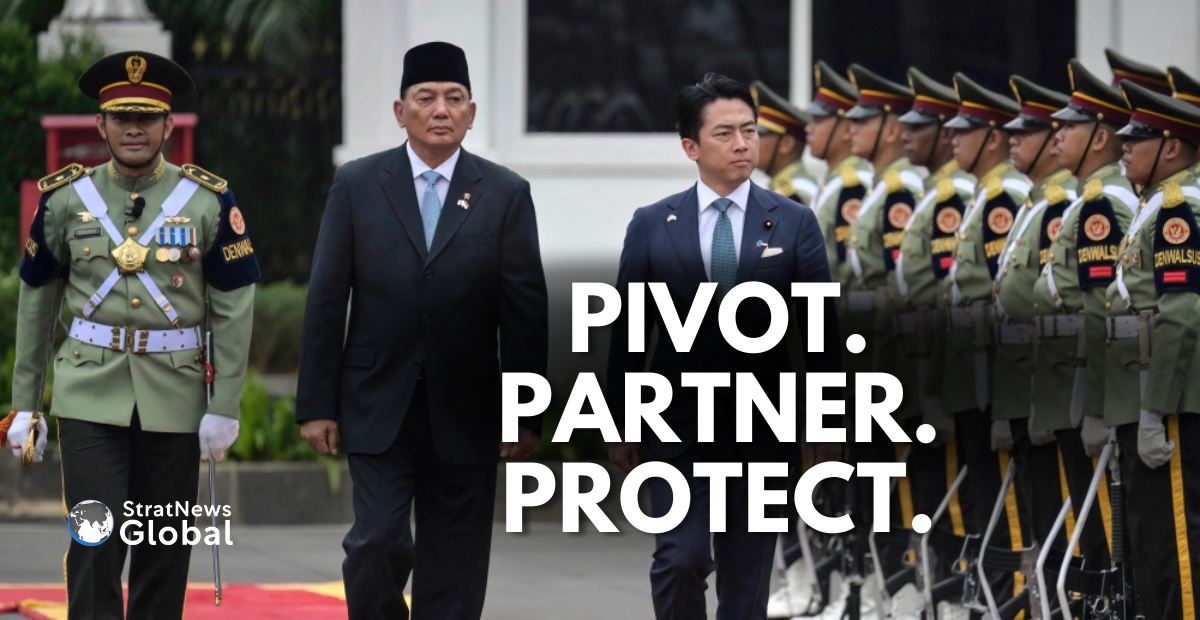
Indonesia and Japan signed a landmark defence cooperation agreement in Jakarta on Monday, marking a significant step in bilateral security ties between two of Asia’s major powers.
Indonesian Defence Minister Sjafrie Sjamsoeddin and his Japanese counterpart Shinjiro Koizumi signed the agreement, which covers cooperation across the defence industry, human resource development, and disaster mitigation.
“We have both agreed to promote substantive cooperation in the defence industry and development of our personnel, whilst taking into account our respective national interests,” Sjafrie said ahead of the signing ceremony.
Koizumi described the agreement as a “compass” and a “crucial milestone” that would guide defence cooperation between the two nations.
Speaking through a translator, he framed the deal in the context of a rapidly shifting global security landscape. “Amid an increasingly complex and tense international situation, such as in Iran, deepening defence cooperation between Japan and Indonesia will make a significant contribution to peace and stability, not only for both countries but also for the region.”
The two ministers also held a bilateral meeting where they discussed collaboration on maritime security, joint military exercises, and defence technology and hardware. Neither side elaborated on the specific areas of cooperation under the agreement.
The signing comes at a pivotal moment for Japan’s defence posture. The Quad has grown conspicuously quieter under the Trump establishment, whose transactional approach to alliances has left partners uncertain about Washington’s long-term commitments in the Indo-Pacific.
For Japan, this silence appears to have been a catalyst rather than a comfort. Tokyo’s decision last month to scrap its long-standing ban on overseas arms sales, and now this bilateral defence compact with Indonesia, suggest a country hedging its security bets and building its own regional scaffolding, one partnership at a time.
For Indonesia, long guided by its non-aligned principle of “bebas aktif”, free and active, the agreement represents a careful but deliberate tilt toward partners who share its interest in a stable, rules-based regional order, without the baggage of formal alliance commitments.
As American reliability comes into question and the Quad’s momentum stalls, bilateral defence agreements like this one may well become the primary currency of Indo-Pacific security, quietly reshaping the region’s strategic landscape without fanfare or formal doctrine.
(with inputs from Reuters)