
From the summit of Mount Fuji to the most remote corners of the countryside, vending machines are just about everywhere in Japan, as much a convenience as a symbol of efficiency, near-flawless execution and, at one time, general economic optimism.
The machines, often a marvel of engineering and old-school tech, are also falling victim to mundane economic pressures. Their omnipresence could someday be a thing of the past.
Beverage companies have been forced to rethink the vending machine business. It’s under-performing as consumers are spoiled for options to purchase sodas, juices and green teas at more competitive prices through other sales channels, and as costs increase.
Pokka Sapporo Food & Beverage said last week that it would sell its vending machine business to Lifedrink on Oct. 1 due to the “challenging business environment.”
“Demand has struggled to grow amid price increases driven by rising raw material costs and consumers’ growing preference for saving money, while the industry is also confronting challenges such as higher equipment maintenance costs and labor shortages,” the company said in a statement.
DyDo Group Holdings will reduce its 270,000 vending machine fleet by 20,000 units in fiscal 2026, which starts in April.
Coca-Cola Bottlers Japan Holdings, which has about 640,000 vending machines, took a non-cash impairment loss of ¥88.1 billion ($557 million) in the first half of last year in part due to efforts to streamline its vending machine business.
According to the Japan Vending System Manufacturers Association, the number of vending machines for beverages in the country was 1.98 million as of December 2024, down from 2.2 million in December 2014.
In short, businesses are responding to a change in consumer behavior — turning away from vending machines to buy their favorite thirst quencher.
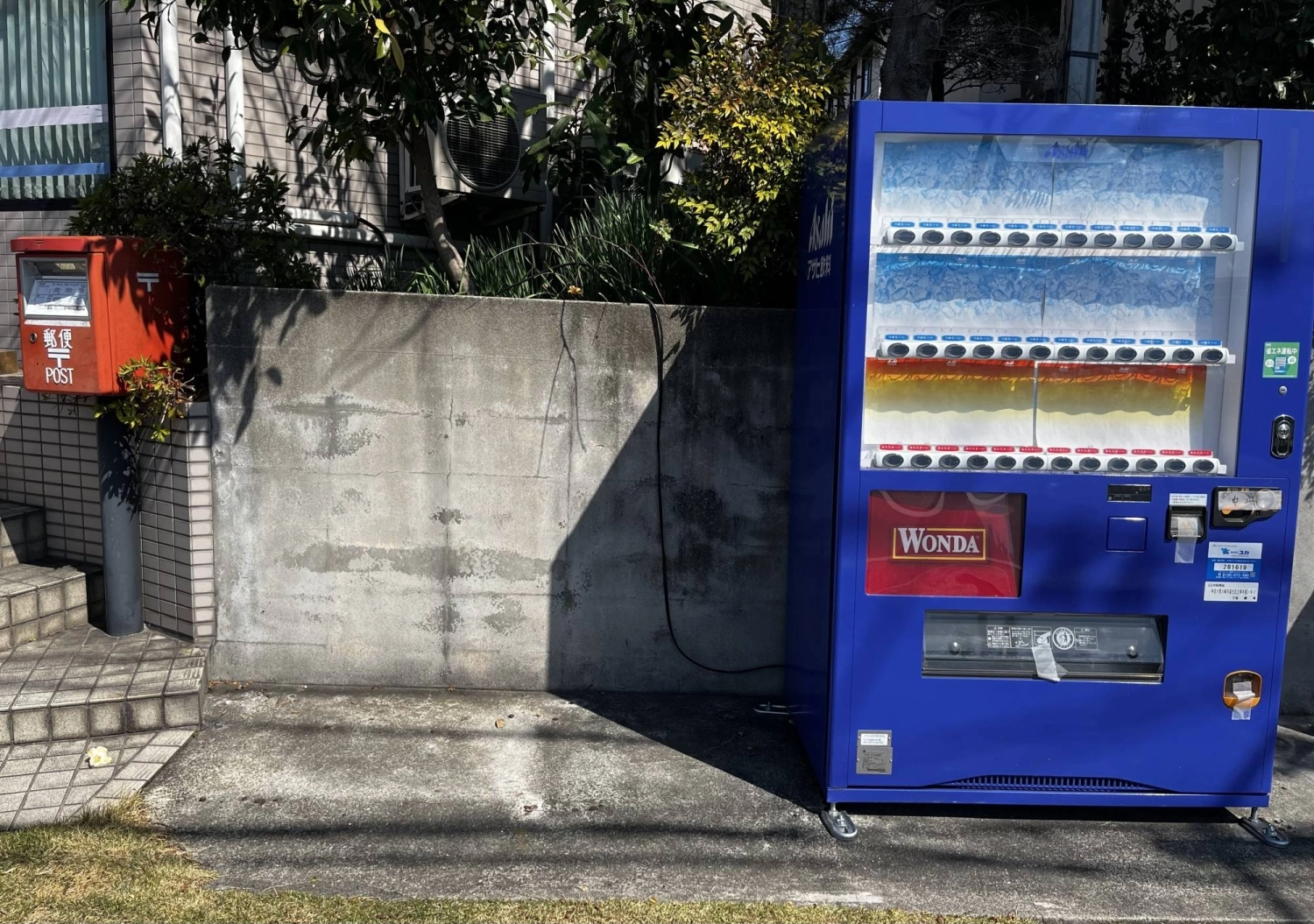
A vending machine that has been taken out of service in the city of Kawasaki. According to the Japan Vending System Manufacturers Association, the number of vending machines for beverages in the country was 1.98 million as of December 2024, down from 2.2 million in December 2014.
| Daniel Traylor