
In the residential neighborhood of Seijo, Setagaya Ward, a small team of 25 people at Toho Archive is working to preserve a physical record of Japanese film history.
Toho Archive’s catalog reads like a syllabus of Japanese film history: Akira Kurosawa’s “Seven Samurai,” the original “Godzilla” series, Kenji Mizoguchi’s “The Life of Oharu” and Mikio Naruse’s “Floating Clouds” as well as beloved animated franchises such as “Doraemon” and “Detective Conan.”
Although the organization was officially established in December 2023, it has a much longer lineage as the direct successor to Tokyo Laboratory, a film-processing house that was founded in 1955 and pioneered the world’s first “gin-nokoshi” (literally, “silver retention”; also known as bleach bypass) coloring technique.
“The processing lab’s historical role came to an end,” says Ryosuke Miki, manager of Toho Archive’s imaging division and a longtime former employee of Tokyo Laboratory before the transition.
As celluloid film gave way to digital production around the turn of the century, the lab’s work shifted away from developing new prints and toward restoring old ones.
“We wanted to keep the postproduction and archive divisions alive,” Miki says. When the lab closed, its institutional knowledge and many of its expert technicians migrated to the newly formed Toho Archive, based inside Toho’s own studio lot.
Turning back time
Toho Archives’ mandate is broad: film maintenance, cleaning and repair; digitization of picture and sound; digital restoration and remastering; and long-term preservation planning, including for paper materials.
Restoration begins with a smell test. Safety film made from old triacetate, Miki explains, degrades by releasing acid into the air over time, a phenomenon known as “vinegar syndrome.”
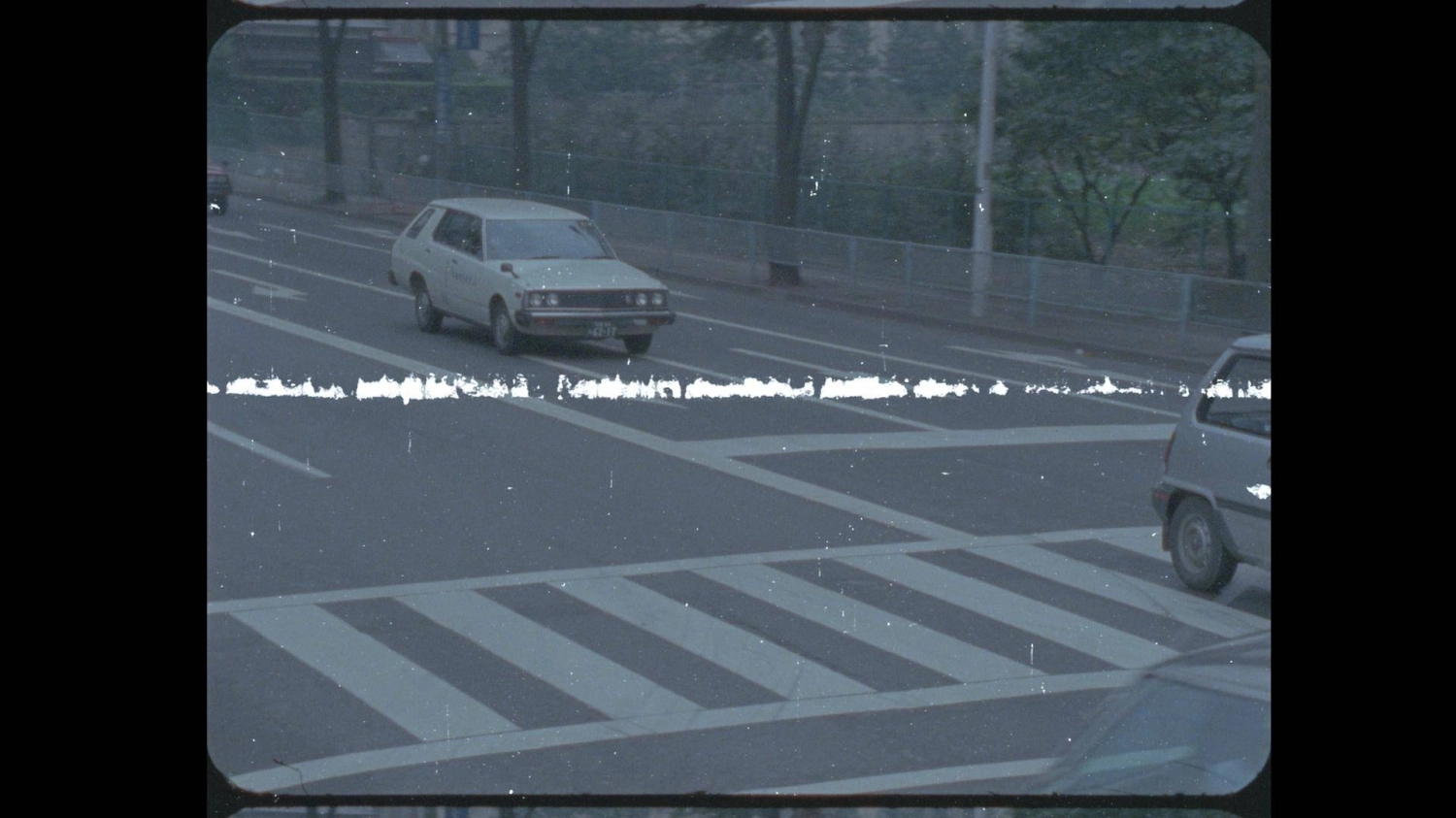
Technicians insert acid-sensitive strips into film canisters and look for a change from the strips’ natural blue to green or yellow-green, then file a report on their condition before any physical work begins. Reels are hand-checked for shrinkage, tears and damage to the perforations, cleaned using either wet organic solvents or dry particle transfer rollers and, finally, scanned.
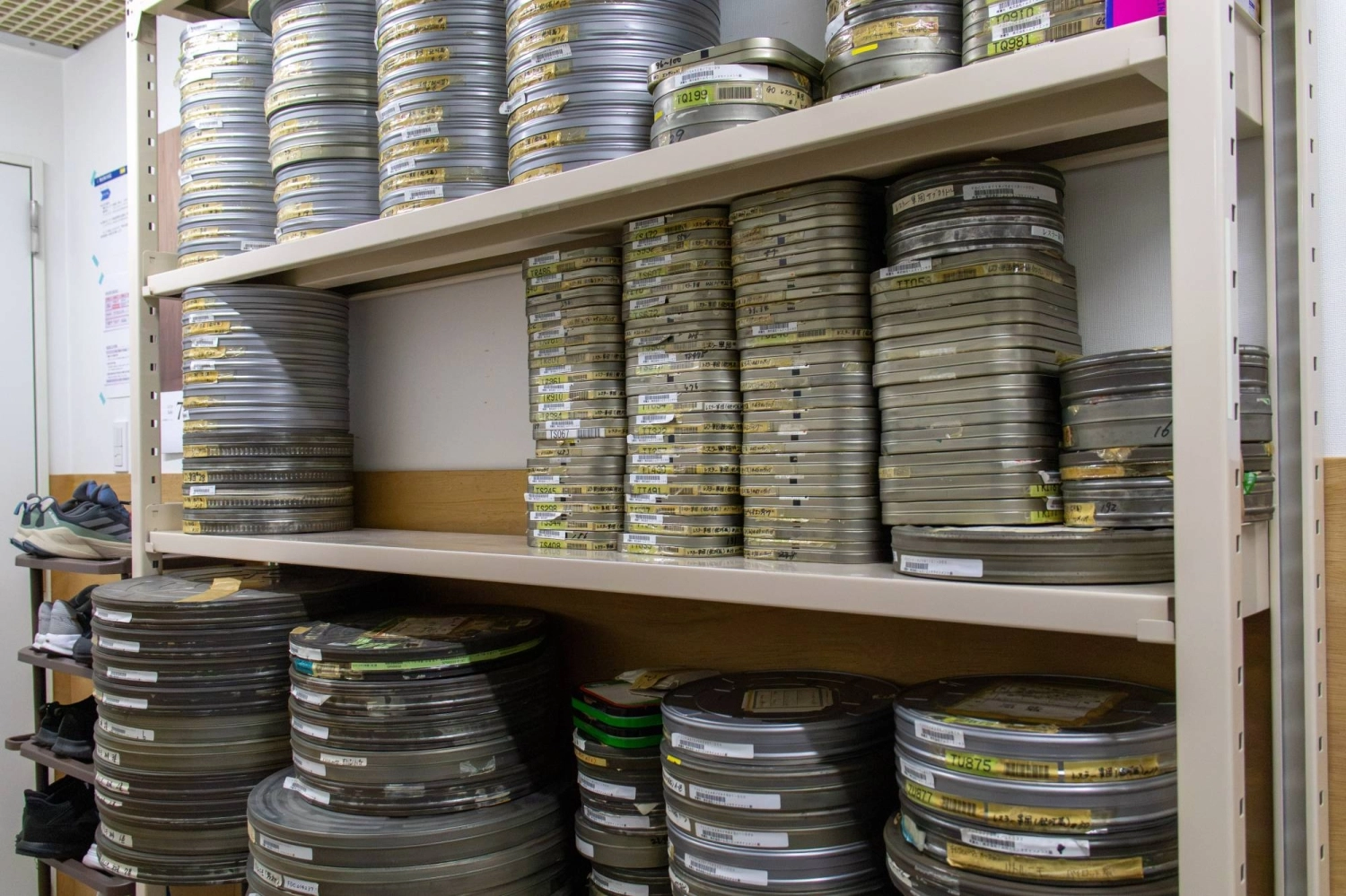
Toho Archive was established in 2023 as the direct successor to a film processing lab with a decades-long history.
| SEBASTIEN RAINERI
Damage is rarely confined to a single reel out of the six to 10 that typically make up a feature film. Rather than deploying artificial intelligence-assisted upscaling, Toho Archive’s guiding principle is fidelity to the original theatrical release.
Nobushige Toshima, president and sales division manager, says that the goal is never simply to make an image look impressively “clean” but to recover the print as it looked “the very first day it appeared in the world.”
In other words, the restoration of the physical medium allows contemporary viewers to have the same experience of the film as its first audiences.
This guiding principle led the team to a technical breakthrough: making the notoriously mumbled dialogue of “Seven Samurai” intelligible again.
Using a proprietary sound scanner capable of extracting audio at unusually high resolution, engineers discovered clear, audible dialogue on the original recording. The limitation had been the playback and print technology of the past, not the source material.
“The film already contained that information,” explains Miki. “Once the technology finally caught up, we could deliver the best-quality sound of that recording for the first time.”
At the intersection of art and technology
Miki and Toshima bring different backgrounds, expertise and personal interests to their work at Toho Archive.
Toshima, a passionate cinephile who estimates he watches around 500 films a year, joined Toho’s parent company in 1989 and later served as secretary general of the film -promotion body Unijapan before taking the archive’s helm in December 2023.
He spent years working front-of-house in Toho’s own theaters, including, by his account, one legendarily chaotic opening night when roughly 2,000 fans queued overnight for a stage-greeting event with Yuji Oda (the star of the film “Bayside Shakedown”), forcing staff to shut off elevators and ration bottled water until dawn.
COURTESY OF TOHO ARCHIVE
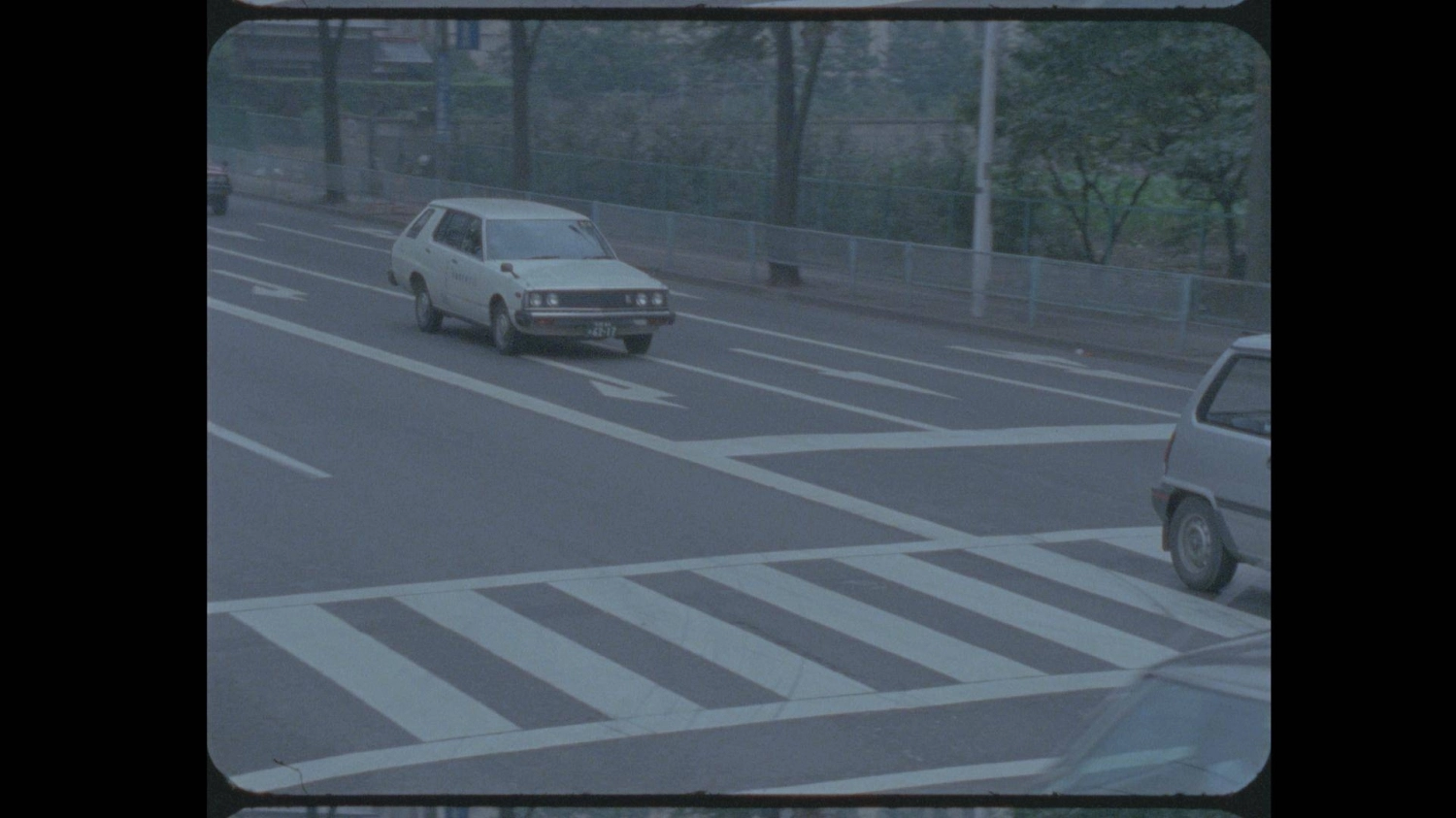
As celluloid film gave way to digital production around the turn of the century, Tokyo Laboratory’s work shifted away from developing new prints and toward restoring old ones, eventually leading to its rebirth as Toho Archive.
| COURTESY OF TOHO ARCHIVE
Miki, by contrast, says that he doesn’t watch many films at all. With his professional training in still photography and film-lab quality control, he is most interested in the apparatus itself: the spinning reel, the sound synchronized to the image, the mechanical choreography of a 35mm projection.
“Whatever the story inside is,” he says, “I want to make it better.” He offers a technician’s love of craft in service of someone else’s art.
Toho Archive doesn’t control distribution of Toho’s back catalog directly — that authority lies with the parent company — but its restorations are increasingly reaching audiences abroad.
“Sanshiro Sugata” (1943), Kurosawa’s first feature film, was screened this year at the Cannes Film Festival as part of the Cannes Classics program, thanks to a print restored by Toho Archive.
A newly remastered “Seven Samurai” had screened at Cannes in 2024 and later at Bologna’s Il Cinema Ritrovato festival, where it played to an open-air crowd of roughly 2,000 in the Piazza Maggiore past 1 a.m.
Toshima describes actively pitching Toho’s head office project by project, arguing that decisions about which films to restore shouldn’t be judged purely on whether a single title can recoup its costs, but treated as a cultural obligation.
That argument extends to national policy where Japan is lacking. Both executives pointed to France’s CNC (Centre National du Cinema et de l’Image Animee, an agency of the French Ministry of Culture), which channels a share of every movie ticket into film preservation and promotion.
They noted that the National Film Archive of Japan recently had to launch a crowdfunding campaign after its government subsidy was cut, even as Toshima’s own long-term ambition, stated plainly in Toho Archive’s mission materials, is to help push Japan toward becoming an “archive-advanced nation.”
Ironically, streaming platforms have become an ally in this fight. Whereas theatrical release windows once meant a film’s commercial life was brief, on-demand platforms now give restored classics a durable “second life,” in Toshima’s words, by enriching the content available to the public long after the works’ initial release.
Nonetheless, against a background of shifting consumer tastes and rapidly developing technologies, Japan’s cinematic heritage is in need of its champions. The staff at Toho Archive are among them, but whether their efforts will lead to more institutionalized support remains to be seen.
For more information, visit toho-arc.com. Maki Raineri assisted with this interview.