
I found myself in a situation last week where I was able to say, accurately, that we needed to “overnight parts from Japan.” You’ll see the fruit of that request in about two weeks, but the immediate payoff was that everyone involved got to give a knowing chuckle at my very obvious and not-that-clever reference to the original Fast and the Furious film, which debuted 25 years ago.
Maybe it was more of a groan than a chuckle. Either way, I was momentarily pleased with myself and didn’t think about it much more until I saw a report in the Japanese business publication Nikkei Asia this morning with the headline “Japan carries out yen-buying intervention as US executes rate check.” This was done to support the Japanese yen, which was falling relative to the US dollar.


If you read the article, it probably made you think about the larger Japanese macroeconomic picture, Prime Minister Takaichi’s economic plans, or maybe just the currency markets in general. It made me immediately ponder importing Japanese cars cheaply if the yen drops, which connected the dots in my head to a long-simmering thought I’ve had that The Fast and the Furious can only exist because of a massive swap in value between Japanese and American currencies in the 1990s and early 2000s.
What I’m saying is: If Die Hard is a Christmas movie, and The Wizard of Oz is an allegory for the 1896 Presidential Election, then The Fast and The Furious is a movie about currency and arbitrage.
The Film Was Originally Inspired By An Article Almost Everyone Forgot About
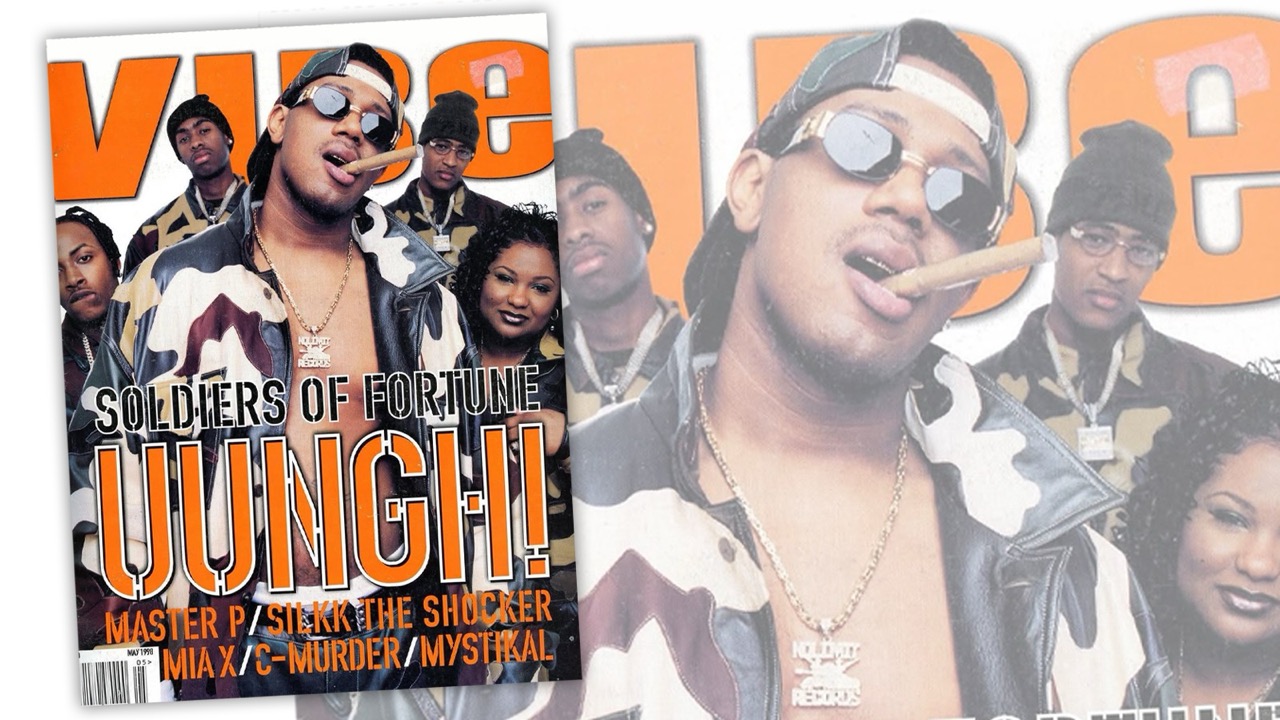 Image: Vibe
The idea for the 2001 film came about because of the article “Racer X,” which appeared in the May 1998 issue of Vibe magazine written by Kenneth Li. This was the issue with Master P and his No Limit soldiers on the cover (yes, I know I talk about Master P too much).
In the article, Li follows various racers in the burgeoning import racing scene, which was then transitioning from entirely underground to slightly more legitimate. At the center is Rafael Estevez, a 30-year-old from Washington Heights driving a heavily modified 300ZX.
Young men have been fascinated with tweaking and tuning big block Chevys and Mustangs since the days of Rebel Without a Cause. But the new guys wouldn’t be caught dead driving the gaudy muscular beasts of yesteryear. Instead, they’re tricking out low-buck Japanese imports like Honda Civics and Acura Integras and tattooing them like skateboards with Neuspeed and Greddy car parts stickers. By stroking the engine, adding a supercharger, and hitting the “juice” (nitrous oxide: a gaseous liquid once used to boost bomber planes in WWII), they can smoke the herb in the Iroc at the stoplight. And to do it with a puny four-cylinder rice burner that your moms would drive is downright arrogant.
While Vibe was not the first to report on this trend–the premiere issue of Sport Compact Car was published in 1989–you can see the proto-characters that would birth many of the film’s cast and ideas:
“The excitement of going fast is like nothing else,” says Javier Ortega, a Columbian-American who screeches his blue Honda Civic to a halt in front of the store. “Another group gets excitement from doing drugs or whatever. Speed excites us.”
Few know that excitement like Estevez. Six feet tall with stooped shoulders and a healthy gut, he writes his own rules. Forget about valor, compassion, honor; in his book, that’s all synonymous with second place.
“People say I cheat all the time,” explains Estevez, a Huck Finn grin spreading across his face. “They say I jump the line, I do this, I do that. Drag racing is war. If you bring a knife, and I bring a machine gun, you’re dead. That’s it.”
You can almost hear Vin Diesel saying that, right? At the time, most of the cars being driven were not imported Japanese cars, but American cars (Honda Civics, Acura Integras, Toyota Supras) heavily modified with Japanese-sourced parts.
In his history of the film franchise, Welcome to the Family: The Explosive Story Behind Fast & Furious, the Blockbusters that Supercharged the World, author Barry Hertz brings up an event early in the research for the first movie that has informed the whole series:
[D]irector Rob Cohen and screenwriter David Ayer began poking around LA’s street-racing underground. Together with automotive consultants R. J. de Vera and Craig Lieberman, the filmmakers discovered NOS, which would soon become their movie’s version of a warp-speed button. “It was small scale—I heard about it when I was hanging around tuners who were on the phone with Japanese brokers trying to get engines smuggled out of Tokyo,” says Ayer. “Very under the radar.”
That little bit about “engines smuggled out of Tokyo” is key. Both the fictionalized world of The Fast and the Furious and the real one the film’s creators were recreating relied on a huge flow of cars and parts–often illegally–from East to West.
How did this flow begin? A lot of it has to do with an appreciation of the superiority of design and engineering that coincided with a booming economy… just maybe not the way you’re imagining. Specifically, it began with a red hot economy in Japan and a small group of enthusiasts who badly wanted fulls-size American vans.
It Didn’t Start With Americans Wanted Japanese Cars, It Started With Japanese Enthusiasts Buying Our Old Vans
 Photo: Sam Smith
It’s difficult to express how enormous the Japanese economy became in the late ’80s and mid ’90s due to climbing valuations (and, in retrospect, overvaluations) of that country’s assets. The easiest way to understand this is to explain that, in 1998, the value of all the land in Japan was 400% higher than the value of all the land in the United States, even though the United States is a much larger country with more natural resources.
From a currency perspective, Japanese consumers saw their buying power increase dramatically in just 15 years. According to the Federal Reserve, a dollar in April of 1971 would get you 357 yen. This was great for Japanese exporters, who built cars cheaply in yen and brought back American dollars (eventually leading to protectionist measures like the Chicken Tax). As the Japanese economy grew, the yen started to improve relative to the dollar, and by April of 1995 a dollar only got you about 84 yen.
Flush with cash, Japanese car enthusiasts did what every car enthusiast with a jingle in their pocket does: they buy something they’re not supposed to have. For Japan, which had rebuilt its car industry after the war by becoming a producer of small and efficient cars, this meant buying the opposite of that. It turns out the opposite of that is a full-sized American van.
I am not well-equipped to explain exactly why vans, and not tri-five Chevys or ’64 Impalas (though some of those were also exported to Japan). When it comes to cross-cultural appreciation, it’s best to ask the appreciator and not the appreciated, because I’d be loath to find out from a Japanese person why they think I and my friends are obsessed with the eschatological anime series Neon Genesis Evangelion.
Initially, a lot of these vans were conversion jobs like the Econoline and especially the GMC Vandura/Savannah. In fact, there are currently more than 60 GMCs for sale on Japanese website Goo-Net, including this sweet high roof 1994 GMC Vandura. Leftovers from a different age.
 Photo: Goo-Net
Eventually, this resulted in an entire culture, called Dajiban, around the Dodge that was probably the least popular of the van offerings in America. The great Sam Smith went to Japan to find out why those vans for this seminal article for Road & Track about the trend and about its early adopter Abe Takuro who, not coincidentally, worked as an importer in the 1990s.
“Chevy Astro vans,” Takahiro said, “are really popular here. But it’s a V-6. Ford Econolines and some other U.S. vans have a V-8, but the body and wheelbase are too big for Japan—the short Dodge is just small enough.”
In America, I offered, these things are known for being terrible to drive. Like, terrible.
Abe rattled off a few sentences, deadpan. Takahiro wrinkled his brow before translating.
“If he gets it where he wants it… more than 300hp, weight about a ton and a half . . . the performance will be almost the same as . . .” —he paused, glancing at Abe to confirm—“a cheap rental car.”
The two men collapsed into laughter, arms crossed, shaking their heads at the joke.
Car nerds are car nerds everywhere. The language may be different, but the idea of pouring your life and money into a vehicle that’ll still be slow as hell because it amuses you is universal.
In the 1990s, containers full of vans get shipped to Japan and, generally, the higher relative cost of Japanese goods (because of the appreciating yen) now makes importing anything to the United States a little less appealing. Then the bubble bursts. Japan’s economy goes into a prolonged period of decline exactly as the American economy improves, and with it American buying power and the dollar surge.
While there was some shakiness beginning in the mid 1990s, the bubble didn’t fully burst until 1998, and by that summer a dollar suddenly got you 130-140 yen. This gave importers an idea. Thanks to a Christmas release of Gran Turismo in 1997, the awareness of Japanese performance suddenly expanded from a small group of early adopters to anyone with a PlayStation.
What if instead of importing vans, these companies focused on exporting sports cars developed by Japanese automakers competing with one another to build the fastest, most advanced cars they could?
The Legend Of Motorex
 Photo: Cars & Bids
No car was more legendary than the R34 Nissan GT-R in the tuning scene, and no company was more infamous for importing them to the United States than Motorex.
Writing for 0-60 Magazine, Richard Cheng explains how the reversal of currency values led almost immediately to a reversal of flow in goods:
Hiro Nanahoshi’s Diversity Services was one of several businesses in Southern California that exported these specialty cars to Japan. “We’d always bump into each other at auctions and things like that,” said Ken Takahashi, who, at the time, owned an export company called Ground Zero. The biggest exporter was A.I. Craft, operated by Wataru Noto, a Japanese man working for a large dealership in Japan. “Noto brought in this one big customer, Mr. Sawami, who was the owner of Advance Auto Group,” Takahashi said. “Noto was Mr. Sawami’s man in the U.S.”
Hiro was young, personable and ambitious. He had harbored plans of importing Nissan Skylines to America for years. Recognizing the potential in working for Noto and having access to A.I. Craft’s capital, Hiro joined A.I. Craft in 1996. “Hiro saw Noto as a cash cow,” Takahashi said. “Advance is a big client. Advance alone could easily buy 30 cars a month.”
The move paid off when stock markets across Asia crashed in 1998. The Nikkei index hit record lows. The Yen plummeted. Exporting from America suddenly became bad business. “Mr. Sawami wanted to hide some money in an overseas account,” Takahashi said. “That’s when Hiro proposed to Mr. Sawami the idea of importing Skylines.”
It did not end well for Motorex, and the echoes of that company’s downfall still reverberate in the car community today.
While importing cars was often a sketchy prospect until most of the desirable cars became 25 years old, enthusiasts got away with importing literally every part that made a car for a long period (at least until DMVs began to catch on to these Q-Ships of Theseus).
The Fast And The Furious Is A Film About Young People Involved In Arbitrage
 Photo: Universal Studios
Arbitrage is buying something at one price, moving it somewhere else, and selling it for a higher price. The value you create is not in making something or even marketing a product, it’s primarily from just moving it efficiently from a lower cost zone to a higher cost one, even though the good doesn’t change materially.
The first The Fast and the Furious film is a film about arbitrage, with most of the characters either acting as consumers using their valuable dollars to purchase cars and equipment (Toretto and his crew, Johnny Tran, Hector) or as importers/retailers (Harry of Harry’s Garage).
This is most notable later in the film when the character Hector–who is trying to go legit–asks Brian to help him and asks him to “hook me up, three of everything, I made a list.” He then does what every character in the film seemingly has to do at least once: Flash some cash.
At another point, one of the characters, Jesse, tells Toretto that he’s going to need to “overnight parts from Japan” to get Brian’s Supra in fighting shape. The fact that the extreme expense of overnighting parts doesn’t phase anyone goes to show just how strong the dollar was relative to the yen.
Spoiler alert: Veilside GT-Wing. Also spoiler alert: almost nothing ends up going well for the characters in the film. Dom goes on the run, Jesse gets murdered, Jonny Tran gets killed by Brian. There aren’t many happy endings, with one obvious exception.
You know who probably does the best in all of this? The eponymous Harry of Harry’s Garage/The Racer’s Edge. Not only does he avoid prison, he also rakes in incredible amounts of cash from all of these horny, angry, NOS-obsessed kids.
So, yeah, without the rapid change in fates of two currencies, the world of The Fast and the Furious looks a lot different and probably never happens.
Top photo: Universal Studios