
The Albanese government has met with Japan’s Defence Minister in the highest-level engagement between Canberra and Tokyo since the “melongate” scandal erupted.
It comes after Prime Minister Anthony Albanese appeared to make sexual innuendo using Crown Melons given to him by Japan’s Prime Minister Sanae Takaichi.
The Japanese Defence Minister Shinjiro Koizumi sat down with Australia’s Defence Minister Richard Marles on Tuesday in a closed-door meeting.
Mr Koizumi was asked at a press conference following the meeting if the issue of Mr Albanese’s melons scandal was raised.
“No. There was not such a discussion today,” Mr Koizumi told reporters in Canberra, translated into English by an interpreter.
“Before I visited Australia, the Australian side had already told the Japanese side that Mr Albanese… he did not mean it that way.”
Mr Marles added that the Japan-Australia relationship had never been so strong, across defence and diplomacy.
“The relationship between Australia and Japan is at a high water mark. It has never had the level of depth and engagement that it has right now,” Mr Marles said.
The talks come as the Albanese government continues to face questions over whether the Prime Minister should personally apologise to Ms Takaichi for his “melons” remark.
Mr Albanese has repeatedly denied making a sexual reference to the Japanese Prime Minister when he discussed the melons she had given him.
During a recent podcast, Mr Albanese recalled the gift and referred to Ms Takaichi bringing him “a couple of melons”, while gesturing around his chest.
He has since rejected calls for an apology, arguing his comments had been misrepresented and that he had already apologised for other elements of the podcast.
“I do respect the Japanese Prime Minister,” Mr Albanese told News24 when asked about the controversy last week.
“There’ve been a lot of words written about this. There hasn’t been one word attributed to me that people have pointed towards as being inappropriate.”
Asked whether he should apologise if people had found the remarks offensive, Mr Albanese said he had already apologised for other parts of the podcast.
“I apologised for elements of the podcast… I did that very clearly, but there is nothing I have done with the Japanese Prime Minister,” he said.
“Importantly, her visit was a really warm one, we had a very friendly and warm dinner, it was very informal. We got to know each other.”
Mr Albanese also claimed he had received assurances from Tokyo that it had not taken offence from the incident.
However, the Japanese Embassy in Australia told News24.com.au only that the Albanese government had attempted to assure Japan the comments were not offensive.
“We have been informed by the Australian side that Prime Minister Albanese did not make the comments in the way that has been reported,” the embassy said.
The controversy has also drawn criticism for a diplomatic cable sent from Tokyo which was leaked to the media.

Shadow defence minister James Paterson said last week that the leaked letter was an apparent “unlawful disclosure of confidential correspondence”.
“The government appears to be leaking confidential correspondence from the government of Japan to the media,” he said at a press conference.
“It is important that our closest allies have confidence that when they share confidential correspondence with us that it will not find its way in the media.
“In a dangerous strategic environment that trust with our closest partners is critically important. It is important that the AFP get to the bottom of this matter.”
Mr Paterson confirmed the police had received the referral, which he said included calls to investigate the Office of the Prime Minister.
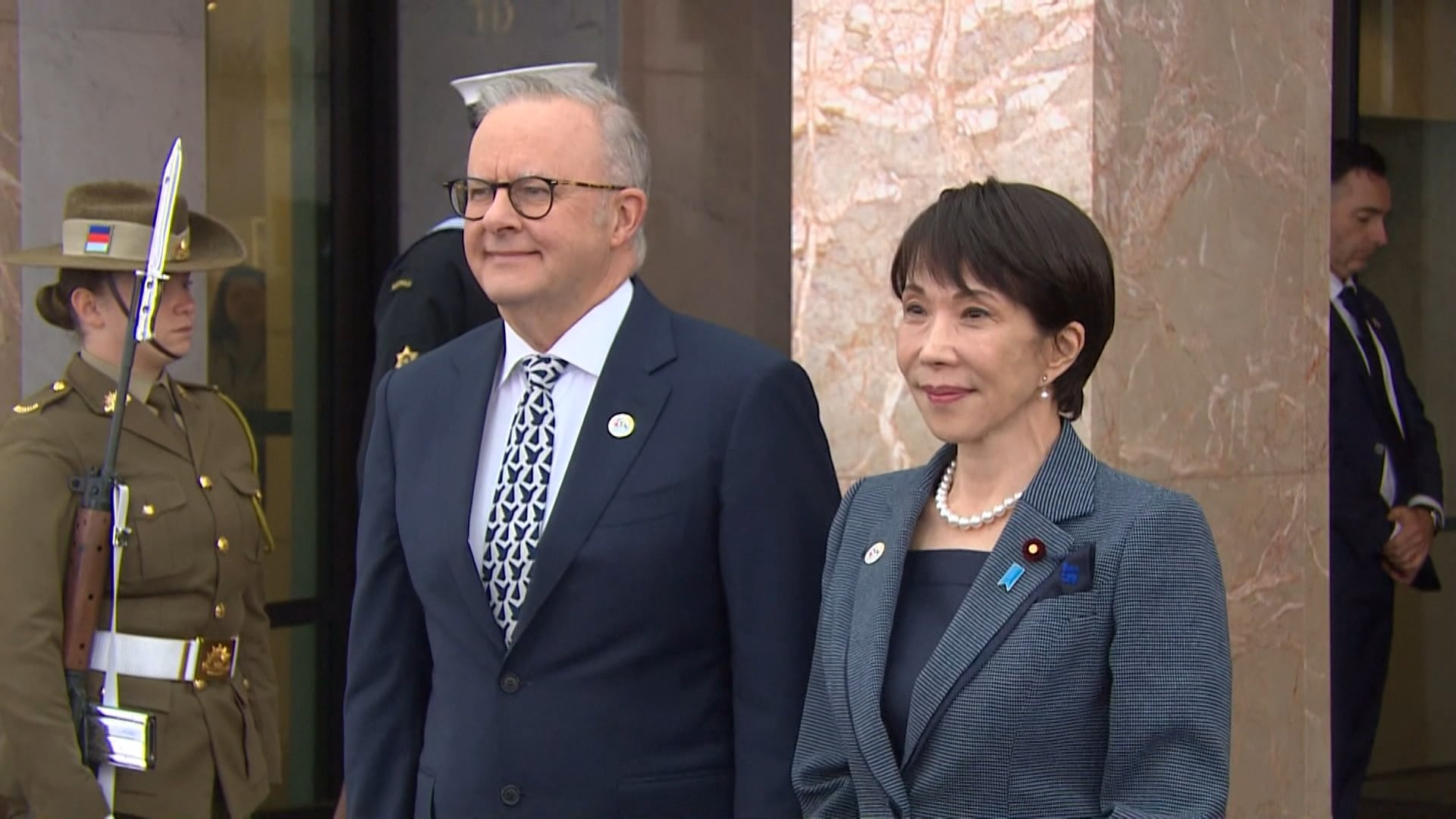
Meanwhile, former Australian ambassador to Japan Shingo Yamagami has warned the incident had affected the relationship.
“I think the Japanese government is sticking to this facade to maintain a cordial relationship,” Mr Yamagami said.
“If you take a close look at what’s being said on Japanese SNS (social media), certainly, this has made an impact on our special strategic partnership.
“So what is important? Yes, we need to move on, but I think we need to show mutual respect to each other.”