
Hitachi.com
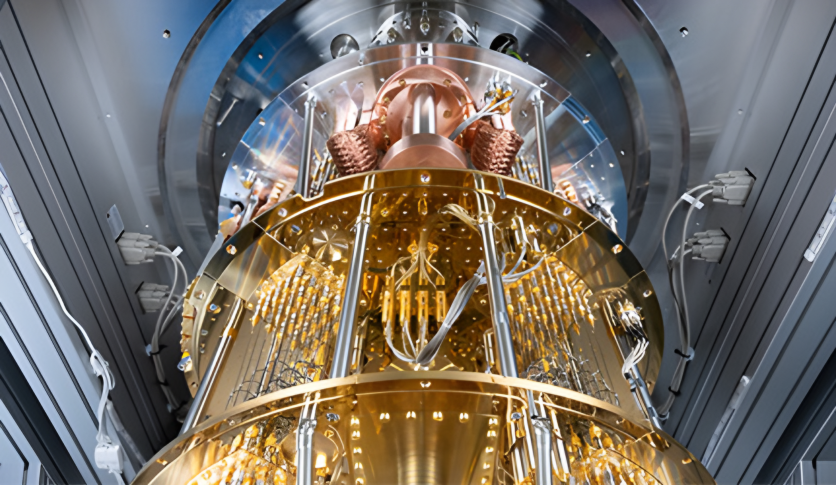
Japan’s Institute for Molecular Science announced on August 24 that Shunkai — the country’s first full-stack neutral-atom quantum computer — has come online, placing Japan inside the leading edge of a global technology race at the exact moment that race has a clear front-runner. Neutral-atom quantum computing, once a research curiosity, has emerged as the modality the rest of the field is converging on, and Japan, which already operates superconducting quantum machines and a separate silicon spin qubit program, has now committed sovereign research infrastructure to it.
The system is the product of a three-way collaboration between IMS, Japan’s Hitachi Ltd., and the Colorado-based quantum company Infleqtion, Inc. (NYSE: INFQ). Hitachi built the software stack; Infleqtion contributed the quantum processing unit (QPU); IMS led system integration. That architecture — an American QPU inside a Japanese national research machine, with Japanese industrial software controlling it — is itself notable: Infleqtion was the only foreign quantum company selected by Japan’s Science and Technology Agency (JST) for its Moonshot quantum program.
What Shunkai Is, and What Full-Stack Means
Shunkai is named after Harumi Shibukawa, the Edo-period astronomer (1639–1715) who built Japan’s first indigenous calendar system. The name honors his tradition of precision calculation: as IMS Assistant Professor Takafumi Tomita explained in the official announcement, the calculations of celestial motion on the celestial sphere evoke precise control of quantum states on the “Bloch sphere,” the physicist’s geometric representation of a single qubit’s state.
The word “full-stack” carries specific technical weight. A full-stack quantum computer integrates every layer between user input and physical quantum operation — from high-level software, through compilation and control electronics, through laser drive systems, to the hardware that manipulates individual atoms, and back through readout to a usable result. Personal computers and supercomputers are classical analogies. Many quantum systems operate at the hardware level only; a full-stack system makes the hardware accessible as a programmable instrument. Until Shunkai, Japan had no neutral-atom full-stack system — only research hardware and component programs.
Inside Shunkai, atomic qubits are captured in an array using optical tweezers — tightly focused laser beams that trap individual atoms at their focal points using gradient optical force. Quantum calculations are performed by irradiating the atoms with microwaves or laser light that drives transitions between the atoms’ hyperfine energy levels. The computational results are read out by illuminating the array with resonant light and photographing the fluorescence that each atom emits: an atom emitting light is in one state; one that does not emit is in the other.
Why Neutral Atoms Are Winning the Modality Race
The choice of neutral-atom architecture over superconducting qubits — the dominant platform used by IBM and Google — is both a technical and strategic judgment call, and it reflects where the global quantum research community is placing its bets in 2026.
Superconducting qubits require dilution refrigerators to cool metal circuits to roughly 15 millikelvin — colder than interstellar space — and the cryogenic support equipment is bulky, expensive, vibration-sensitive, and energy-intensive. Neutral-atom systems operate at room temperature in an ultra-high vacuum chamber, which eliminates that entire infrastructure cost and makes physical integration with classical computing systems — GPUs, HPC nodes — considerably more straightforward.
The architectural advantage that matters more, however, is qubit mobility. Superconducting qubits are fixed positions on a chip: they can interact only with immediate physical neighbors, and connecting distant qubits requires chains of SWAP gate operations that consume computation budget. In neutral-atom computers, the optical tweezers can physically move atoms to new positions between gate operations, bringing any two qubits in the array into proximity for interaction. This “any-to-any” connectivity is a direct match for the most efficient quantum error-correcting codes — the quantum low-density parity-check codes that the field has identified as the resource-efficient path to fault tolerance.
Because atoms of the same element are physically identical — not manufactured with dimensional tolerances — there is no fabrication variability to engineer around, unlike superconducting circuits where no two qubits behave exactly the same.
The field’s current logical qubit leaderboard illustrates where neutral atoms stand. In January 2026, QuEra Computing — in collaboration with Harvard and MIT — published a Nature paper demonstrating 96 error-corrected logical qubits using 448 physical atoms, using a high-rate error-correcting code that exploits neutral atoms’ mobility for long-range qubit interactions. That result remains the highest verified logical qubit count on any quantum hardware platform.
Google’s response to that track record was telling. In March 2026, Google Quantum AI — already the company with arguably the world’s most capable superconducting quantum program — announced it is launching a parallel neutral-atom quantum computing program in Boulder, Colorado, led by physicist Adam Kaufman. The company described the decision as complementary: superconducting qubits are faster and better for deep circuits, while neutral atoms scale to more qubits and are better matched to the error-correcting codes the field increasingly favors. This was first covered in the TechTimes article on Google’s neutral-atom announcement at the UCLA Quantum Device Design Workshop.
What the Collaboration Structure Reveals
The institutional architecture behind Shunkai is as significant as the machine itself. Infleqtion becoming the sole foreign partner in Japan’s Moonshot quantum program marks a specific US-Japan technology alignment in a strategically sensitive domain. Japan has spent more than ¥150 billion across its national quantum strategy, and the decision to embed an American QPU maker as the only non-Japanese partner in the program’s neutral-atom track reflects a trust level in quantum hardware supply chain that does not exist with all nations.
Hitachi’s position in the collaboration is worth noting separately. On March 3, 2026, Hitachi announced its Phase 2 Moonshot participation in two parallel projects: the silicon spin qubit program (with RIKEN, under the Tarucha project) and the neutral-atom Ohmori project. Hitachi is therefore simultaneously advancing Japan’s Intel 18A silicon spin program — which aims for CMOS-fab-compatible quantum hardware on Intel’s 18A process — and providing the software stack for the country’s operational neutral-atom system. That dual presence makes Hitachi the single company most embedded across Japan’s quantum modality bet.
Pranav Gokhale, Chief Technology Officer at Infleqtion, described the milestone in terms that point toward the larger roadmap rather than the current qubit count: bringing a full-stack system into production operation, he said, is a meaningful step toward fault-tolerant quantum computing that also serves as strong validation of neutral-atom architecture. The company’s quantum processing unit, he continued, delivers the programmability, scalability and fidelity control that next-generation systems demand.
Infleqtion went public on NYSE as INFQ in February 2026, becoming first publicly traded neutral-atom quantum company. Its shares fell 7.12% to $13.11 on August 24 — the announcement day — a reaction that analysts covering the stock attributed to “sell the news” dynamics rather than any negative fundamental signal.
How Shunkai Works: Rydberg Blockade and the Gate That Makes It Go
The two-qubit gates that give neutral-atom computers their computational power rely on a quantum mechanical phenomenon called the Rydberg blockade. When an atom is excited to a Rydberg state — a highly excited electronic state with a very large principal quantum number — it expands dramatically and interacts strongly with neighboring atoms. When one atom in a pair is in the Rydberg state, the strong dipole-dipole interaction it creates shifts the energy of the doubly-excited state far off-resonance, preventing the second atom from being excited simultaneously. That blockade — one atom’s Rydberg excitation preventing the other’s — is the conditional dynamics that implements a controlled-phase gate.
The two-qubit gate proceeds in three pulses: excite the control atom to its Rydberg state, apply a full Rabi rotation to the target atom (which completes only if the control is in one qubit state, because the blockade prevents the double-excitation), then de-excite the control atom. The entire sequence completes in hundreds of nanoseconds to a few microseconds — faster than trapped-ion gates (which run in tens of microseconds) but slower than the 20-to-100 nanosecond superconducting CZ gates from IBM and Google.
The best demonstrated two-qubit gate fidelity on neutral-atom platforms, as of mid-2026, is approximately 99.5% — achieved by QuEra’s Gemini system. Fault-tolerant quantum computing typically requires gate fidelity above 99%, and ideally above 99.9%, for quantum error correction to suppress errors rather than amplify them. The 99.5% figure is above the minimum threshold, though still below the levels that would make the most demanding error-correcting codes practical at scale.
Shunkai’s Honest Limitations at Launch
At 50 qubits, Shunkai is firmly a research instrument — a powerful one with a clear roadmap, but not a production machine. Fifty physical qubits is not enough to implement quantum error correction in any meaningful form. Surface codes, the most widely studied error-correcting approach, require hundreds of physical qubits per single logical qubit; qLDPC codes are more efficient but still require significant overhead. At 50 physical qubits, a neutral-atom system might run small research circuits and explore error-correction code properties, but cannot protect logical information reliably against noise.
The path from 50 qubits to the Moonshot target of 10,000 physical qubits by March 2031 involves several engineering challenges that Shunkai’s Phase 2 development is specifically designed to address: improving gate fidelity under sustained operation, developing atom-reloading protocols to replace qubits lost during computation, improving qubit control stability for extended runtimes, and ultimately developing the integrated photonic control systems — replacing the bulk free-space optics currently required — that will be necessary to address 10,000 atoms simultaneously. The neutral-atom quantum computing coalition roadmap from July 2026 addresses these same engineering milestones at the field-wide level.
Even 10,000 physical qubits does not guarantee fault-tolerant computation. The number of physical qubits required per logical qubit under a given error-correcting code, and the gate fidelity required to make that encoding work, are the remaining engineering targets. The Moonshot project’s 2031 goal specifies “quantum error detection and correction capabilities” alongside the 10,000-qubit count — the combination, not either alone, is what matters.
Shunkai’s Vision: A Quantum-GPU Hybrid Center
Professor Ohmori’s stated ambition for Shunkai reaches beyond a standalone quantum machine. His expectation, stated in the IMS launch announcement, is that Shunkai will be integrated with IMS’s existing shared supercomputer facility to develop into a quantum-GPU hybrid computing center — a configuration that would allow researchers to dispatch quantum workloads to Shunkai while running classical workloads on GPU nodes, with the two systems sharing the same network fabric.
This vision is more immediately achievable with neutral-atom hardware than with superconducting systems, which require dedicated cryogenic infrastructure that must be isolated from surrounding electronics and cannot share a standard data-center environment. A neutral-atom QPU operating at room temperature can, in principle, live inside or alongside an HPC cluster without requiring a dedicated facility.
The project also plans collaboration with Yaqumo Inc. — a quantum startup where Professor Ohmori serves as founder and executive advisor — for the social implementation and commercial upgrade path of the system. Yaqumo, which signed a supply-chain development agreement with NKT Photonics and Hamamatsu Photonics in June 2026 to industrialize neutral-atom optical components, represents the commercialization arm of the same research program that produced Shunkai.
Japan’s Modality Bet in Global Context
The emergence of Shunkai as an operational platform brings Japan’s total quantum computing footprint across three distinct physical approaches: superconducting (Fujitsu and RIKEN, which deployed a 256-qubit system in 2025 and opened it to Australian researchers through a Quad-level government agreement in August 2026); silicon spin qubits (Hitachi, Intel K.K., and AIST, backed by NEDO funding, targeting a 100-qubit prototype by fiscal 2028 on Intel’s 18A chip process); and now neutral atoms (IMS and the Ohmori Moonshot program, with Shunkai as the first operational system). The Japan-Australia quantum computing partnership and the NEDO-backed silicon spin qubit program are the other two legs of Japan’s three-modality quantum strategy.
That multi-modality investment reflects a national policy judgment that the winning approach to fault-tolerant quantum computing is not yet determined, and that Japan’s position in the eventual technology landscape will be stronger if its research base has built operational hardware across all serious contenders. Among the three, neutral atoms have the most momentum in the global race as of mid-2026: the leading logical qubit results belong to neutral-atom platforms (QuEra’s 96 logical qubits), and the most credible external validator of modality confidence — Google’s March 2026 decision to add neutral atoms alongside its superconducting program — has already arrived.
Shunkai is not Japan’s answer to Google Willow or IBM Heron. At 50 qubits, it does not compete on raw scale with the leading commercial systems. What it does is give Japan’s research community — and, through the planned external user access program, the international community — a working full-stack neutral-atom instrument at a national research institution, open to the algorithm and error-correction research that will determine whether any neutral-atom platform can clear the fault-tolerance threshold the field is working toward.
Currency conversions in this article are approximate, based on exchange rates as of August 25, 2026.
Frequently Asked QuestionsWhat is the difference between Shunkai and other quantum computers Japan already has?
Japan’s prior operational quantum computers use the superconducting modality (Fujitsu and RIKEN’s 256-qubit system) and are developing silicon spin qubits (Hitachi, Intel, and AIST). Shunkai is Japan’s first full-stack system using the neutral-atom modality — a different physical approach in which individual atoms, trapped by laser tweezers and entangled via Rydberg blockade interactions, serve as qubits. Neutral atoms operate at room temperature without cryogenic cooling, and the atoms can be physically rearranged during computation to enable flexible qubit connectivity. This architectural distinction, rather than qubit count alone, is why neutral atoms are currently leading the global race toward quantum error correction and fault tolerance.
Why does Infleqtion being the sole foreign partner matter?
The Japan Science and Technology Agency selected Infleqtion as the only non-Japanese quantum partner in the Moonshot program. Quantum computing hardware — particularly QPUs and their control systems — is increasingly treated as strategic technology. Infleqtion’s selection to supply Shunkai’s QPU stack, rather than a domestic Japanese or alternative foreign provider, represents a specific technology-sharing arrangement inside Japan’s sovereign quantum program. It also validates Infleqtion’s neutral-atom QPU as production-ready at the national research infrastructure level. Infleqtion (NYSE: INFQ), which listed on the New York Stock Exchange in February 2026 as the first public neutral-atom company, disclosed this relationship in its August 24, 2026 press release.
At 50 qubits, what can Shunkai actually compute?
At its current scale, Shunkai is a research instrument rather than a production computing resource. Fifty physical qubits allows researchers to run small quantum circuits, test error-correction protocols on a real hardware platform, and explore the behavior of neutral-atom systems under sustained operation. It is not large enough to implement quantum error correction that reliably protects logical information. The planned expansion to approximately 500 qubits will begin to allow more meaningful error-correction experiments. The Moonshot target of 10,000 physical qubits — aimed for March 2031 — would, if accompanied by sufficient gate fidelity, potentially support a system capable of demonstrating fault-tolerant logical computation. Until that threshold is reached, Shunkai is primarily valuable as an instrument for the research that makes a future fault-tolerant machine possible.
What is a Rydberg blockade, and why does it matter for quantum computing?
A Rydberg atom is an atom excited to a state with a very large principal quantum number — its outermost electron orbits so far from the nucleus that the atom expands dramatically. In that state, it interacts strongly with neighboring atoms through dipole-dipole forces. The Rydberg blockade is a consequence of that interaction: when one atom in a pair is excited to a Rydberg state, the strong interaction shifts the doubly-excited state out of resonance, preventing the second atom from being excited simultaneously. This conditional dynamics — one atom’s state controlling whether the other can change state — is the mechanism that implements two-qubit controlled-phase gates in neutral-atom computers. It is the quantum equivalent of a transistor, and it is what makes neutral atoms computationally universal.