このページを
日本語
で読む
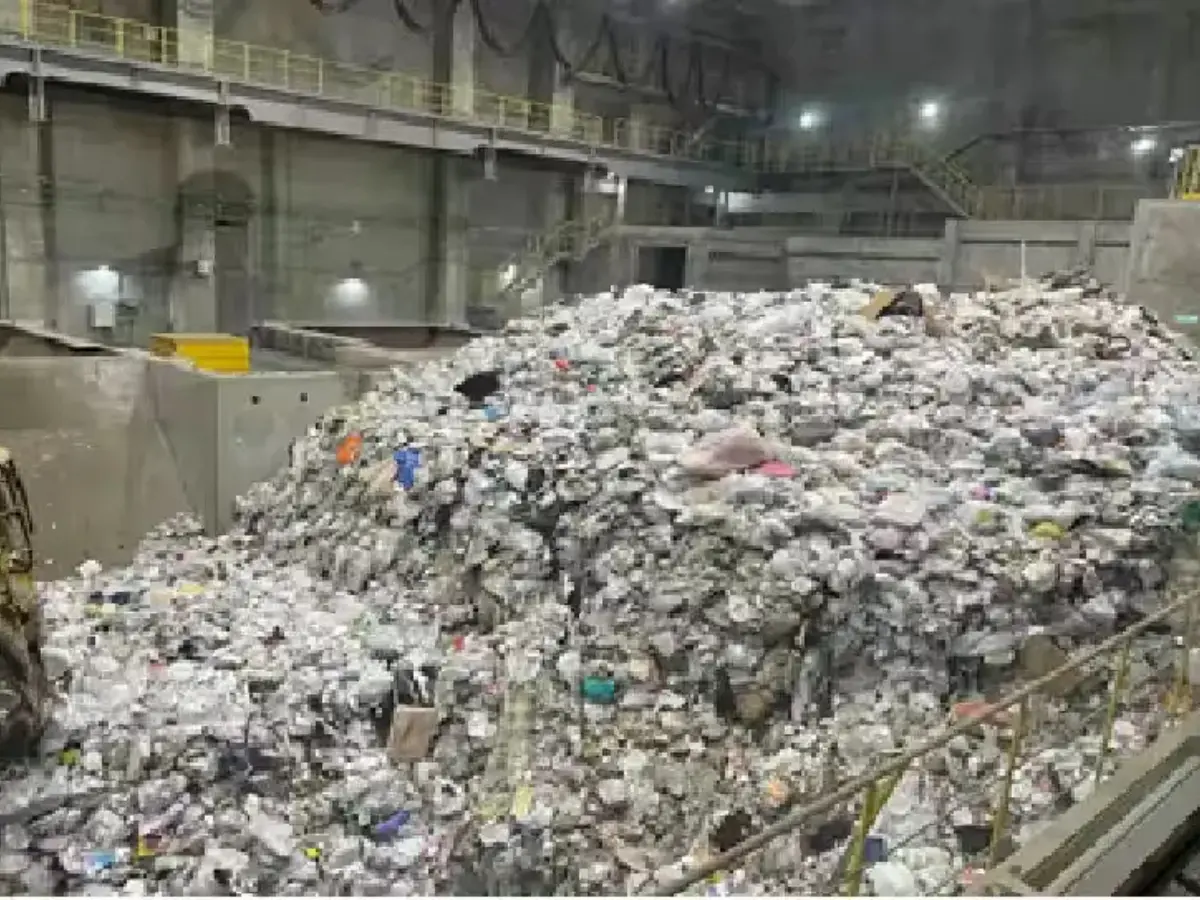
Waste treatment facilities serving Osaka and three neighboring cities are struggling to keep pace with incoming garbage, with storage areas at several plants nearing or exceeding full capacity in an unusual and prolonged squeeze.
A string of equipment failures and overlapping maintenance work have cut processing capacity even as the volume of waste continues to climb, driven in part by a surge in inbound tourism.
With the risk that a major disaster could send waste volumes spiking further, officials say closer cooperation among neighboring municipalities is becoming an urgent priority.
Storage Rate Tops 100%
“The storage areas at each of our plants are nearly full, and we are approaching a point where we cannot keep up with processing,” a notice on the website of the Osaka Wide Area Environmental Facility Association read this summer.
The association, based in Abeno Ward, Osaka, and administered by Osaka Mayor Hideyuki Yokoyama, oversees waste processing for four cities: Osaka, Yao, Matsubara, and Moriguchi. It operates seven incineration plants, including the Tsurumi plant, which is currently being rebuilt.
This fiscal year, the group’s combined maximum processing capacity is 3,800 tons per day, and it plans for a roughly 10% buffer above expected waste volumes to absorb seasonal swings and unexpected breakdowns.
That buffer evaporated after failures struck the Maishima and Nishiyodo plants beginning in May, compounding delays from routine maintenance already underway at other facilities.
By July, the rate at which the pits used to temporarily store incoming waste were filled hit as high as 105%. Because more scheduled maintenance is planned across the plants in the months ahead, officials expect the strain to persist through December.
An Unexpected Waste Increase
Behind the crunch lies more than reduced processing capacity—waste volumes themselves have been rising.
Following the mass production and consumption of the bubble economy era, the 2000 law promoting a recycling-oriented society helped establish recycling habits among the public.
Osaka’s waste volume subsequently fell sharply, from a peak of 2.17 million tons in fiscal 1991 to 880,000 tons in fiscal 2025.
Since the COVID-19 pandemic, however, the volume has crept back up as economic activity rebounded and inbound tourism surged.
The association processed 1.002 million tons of waste in fiscal 2025, exceeding its planned 949,000 tons by 53,000 tons—the fourth consecutive year in which actual waste volumes have outpaced projections.

Sakai City Steps In
To ease the pressure, the association asked the city of Sakai to take on roughly 100 tons of household waste per day through the end of August, leaning on another municipality’s facilities to lighten the load on its own plants.
Going forward, the association plans to draft guidelines on how it requests assistance from other cities and how it shares information with its member municipalities. “We want to build a stable waste processing system,” an association official said.
The strain is not confined to ordinary operations. A major earthquake or flood could cause waste volumes to spike suddenly, and if the processing facilities themselves were damaged, finding somewhere to send the waste would become even harder.
Satoshi Mizutani, a professor at the Osaka Metropolitan University Graduate School of Engineering who serves on waste facility development committees for other regions, pointed to the need for advance planning. “We need to build systems together with the neighboring municipalities that manage waste processing plants,” he said, noting that large volumes of disaster waste are a real possibility.
Waste processing plants are part of the social infrastructure that residents’ daily lives depend on, but improperly sorted waste has also caused equipment failures at some plants.
“I think this has shown that daily life can be threatened by a relatively minor problem,” Mizutani said, adding that reducing waste and pushing forward with recycling remain essential.
RELATED:
Anti-Trash Society? What Our Garbage Says About Us
(Read the article in Japanese.)
Author: Ryosuke Irizawa, The Sankei Shimbun
このページを
日本語
で読む
Continue Reading