At the Sodium-Cooled Fast Reactor (SFR) prototype integrated effect test building at the Korea Atomic Energy Research Institute (KAERI) in Daejeon on the 24th of this month, researchers moved busily around a massive green steel structure standing 30 meters tall, preparing for tests. Inside the multi-layered structure, liquid sodium flows instead of water. Connecting piping, pumps, heat exchangers, and a reactor mockup vessel, this facility is the integrated effect test facility ‘STELLA-2,’ which replicates accident conditions in an SFR. Although it does not use nuclear fuel or radioactive materials, it recreates temperatures and coolant flows similar to those of an actual reactor. It can also repeatedly conduct accident tests that are difficult to attempt in a real reactor, such as stopping pumps or inducing failures in equipment that releases heat to the outside.
Lee Je-hwan, head of KAERI’s Generation IV Reactor Technology Development Division, explained, “You cannot prove a reactor’s safety with design drawings and computational analysis results alone.” He added, “You can secure the trust needed for licensing only by recreating accident phenomena in an actual device and verifying whether the calculation results are correct.”
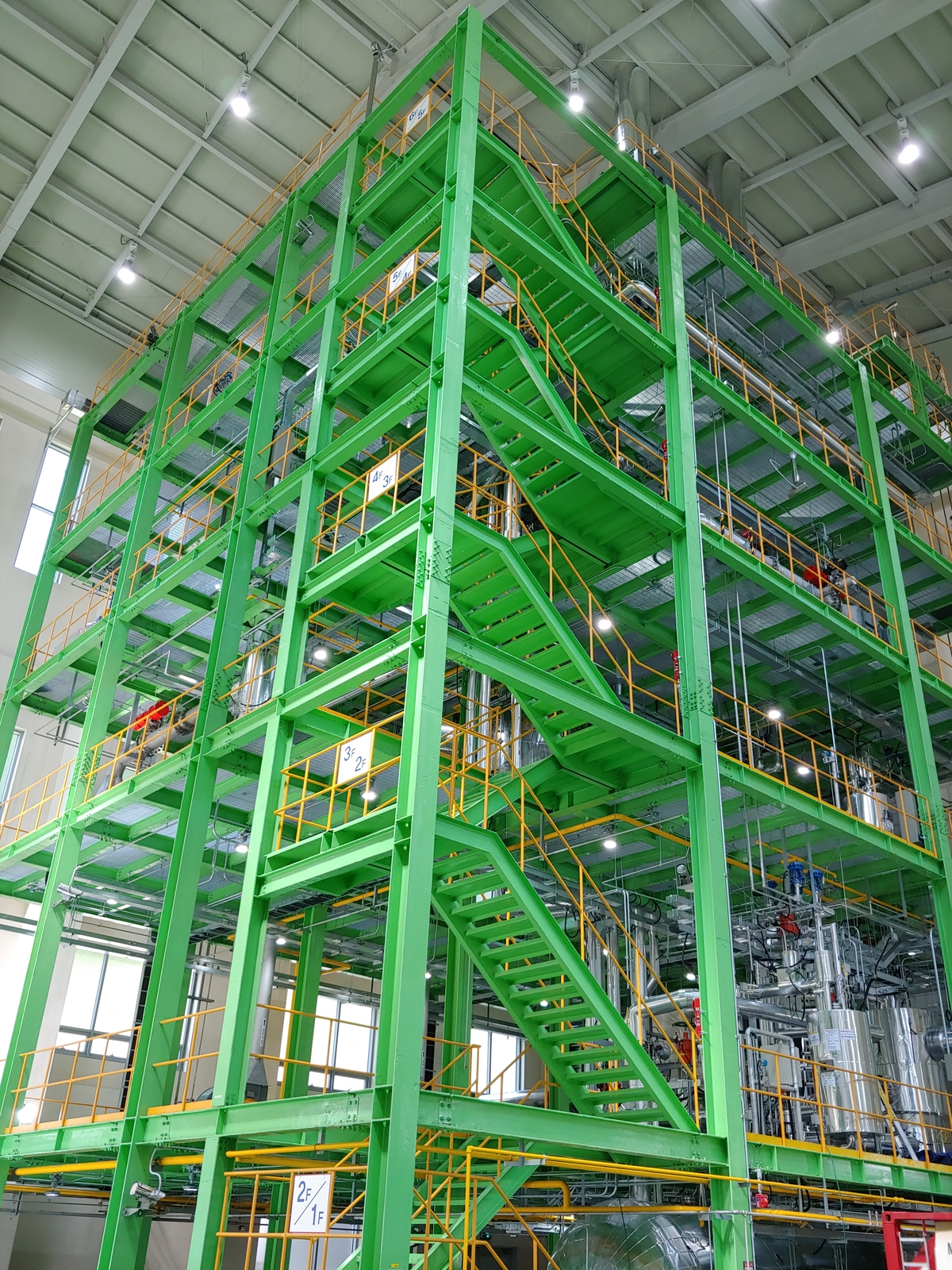 A full view of STELLA-2
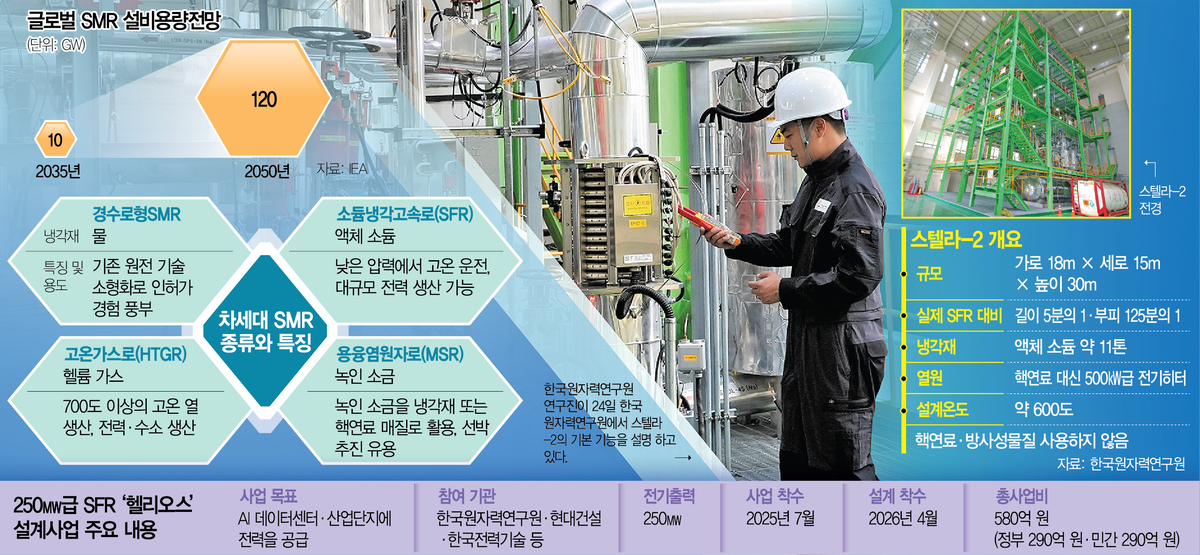
As countries around the world join the race to develop next-generation reactors, including small modular reactors (SMRs), the government also plans to accelerate the acquisition of core technologies and the establishment of a demonstration base. SMR is a general term for reactors that have lower output than conventional large nuclear plants and whose major equipment is manufactured in modular form. Their principles and structures vary widely, ranging from light-water types that use water as coolant like existing nuclear plants, to SFRs that use liquid sodium, molten salt reactors (MSRs) that use melted salt, and high-temperature gas-cooled reactors that use helium to cool heat.
Currently, KAERI is developing several non-light-water next-generation reactors, including high-temperature gas-cooled reactors and molten salt reactors. Among them, it has accumulated SFR technology for about 30 years since 1997, technology that can enhance the resource utilization of spent nuclear fuel and reduce the management burden of high-level radioactive waste. In 2009, it began designing STELLA-1, which verifies the performance of individual devices, and later expanded the scope of testing to STELLA-2, which verifies the safety of the entire reactor system.
Sodium has a high boiling point of about 883 degrees, enabling high-temperature operation even at low pressures close to atmospheric pressure, and it offers excellent heat transfer performance. It is also advantageous for reusing materials remaining in spent nuclear fuel as fuel by using fast neutrons, or for reducing materials that emit radiation over long periods. On the other hand, it is difficult to observe the interior with the naked eye, and it reacts violently when it contacts air or water. This is why separate technologies are needed, as with STELLA, to prevent leaks, manage purity, and measure the temperature, water level, and flow rate of high-temperature sodium.
STELLA-2 measures 18 meters wide, 15 meters long, and 30 meters high. Although it is reduced to one-fifth the length and one-125th the volume of an actual SFR, the height and arrangement ratio of the internal devices and the operating temperature of the sodium were recreated as similarly as possible. About 11 tons of sodium is put in, and instead of nuclear fuel, a 500-kW electric heater is used to heat it to a maximum of around 600 degrees. The core of the test is to confirm whether the reactor cools safely when an accident occurs. It recreates situations such as a coolant pump suddenly stopping, a failure in equipment that discharges heat to the outside, and damaged piping. This is because residual heat continues to be generated by the decay of radioactive materials even after nuclear fission has stopped. STELLA-2 examines whether residual heat is removed through “natural circulation,” in which hot sodium rises and cooled sodium descends, even when power and pumps are cut off.
The researchers measure changes in sodium immediately after an accident in seconds using thermometers, flowmeters, and pressure gauges installed throughout. This data is used to verify the accuracy of safety analysis codes that predict reactor accidents. This is because a computational code must properly predict phenomena observed in actual tests in order to reliably analyze accident conditions in reactors that have not yet been built. Korea’s capability to carry out the entire process, from the design and construction of large sodium test facilities to their operation and the production of experimental data, is rare even worldwide.
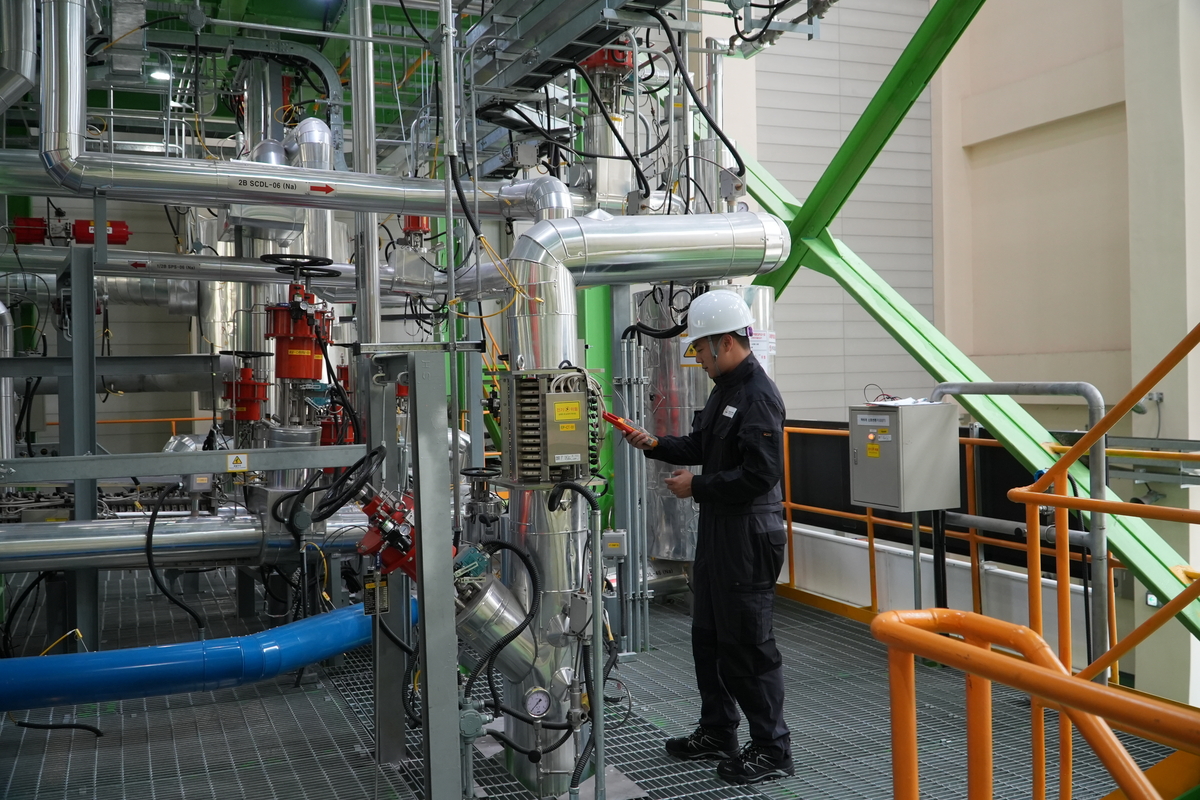 Researchers at the Korea Atomic Energy Research Institute explain the basic functions of STELLA-2 at the institute on the 24th. Photo courtesy of the Korea Atomic Energy Research Institute
This capability has led to overseas technology transfers. In 2025, KAERI transferred the design and manufacturing know-how of STELLA equipment and related intellectual property rights to U.S.-based TerraPower, founded by Bill Gates, for 5 million dollars (around 7 billion won). In May this year, about a dozen TerraPower employees visited KAERI for practical training on the design, operation, and handling of sodium facilities.
KAERI and the U.S. Argonne National Laboratory have also been conducting joint research since 2025 to verify the SFR safety analysis code ‘SAS4A/SASSYS-1’ developed by Argonne, using STELLA-2’s test data. Korea, which advanced its SFR design and analysis technology through past cooperation with the United States, has now reached the stage of transferring test-facility construction technology to a U.S. company and jointly conducting safety analysis code verification with a U.S. national laboratory.
However, even if safety is verified through STELLA-2, it is expected to take considerable time before this can be connected to actual SFR construction and commercialization. This is because it is necessary to secure not only the research and development personnel to design and demonstrate the reactor, but also the regulatory specialists to review its safety and a long-term budget.
Lee said, “Korea is not ahead in all areas of SFR, but it has the capability to lead the world in building sodium systems, manufacturing nuclear plant equipment, operating large test facilities, and verifying safety.” He emphasized, “For the test capability we have accumulated to lead to actual reactor construction and exports, long-term support that connects research, demonstration, and licensing is needed.”