
Traditional painting has long been central to Korean art history, but it is rarely presented in dialogue with contemporary practice outside Korea. The Korean Cultural Centre UK is seeking to change that with Korean Traditional Painting in Alter-age: Pure and Hybrid, an exhibition that places masterpieces of Korean painting alongside the work of four contemporary artists to explore how centuries-old techniques continue to shape artistic practice today.
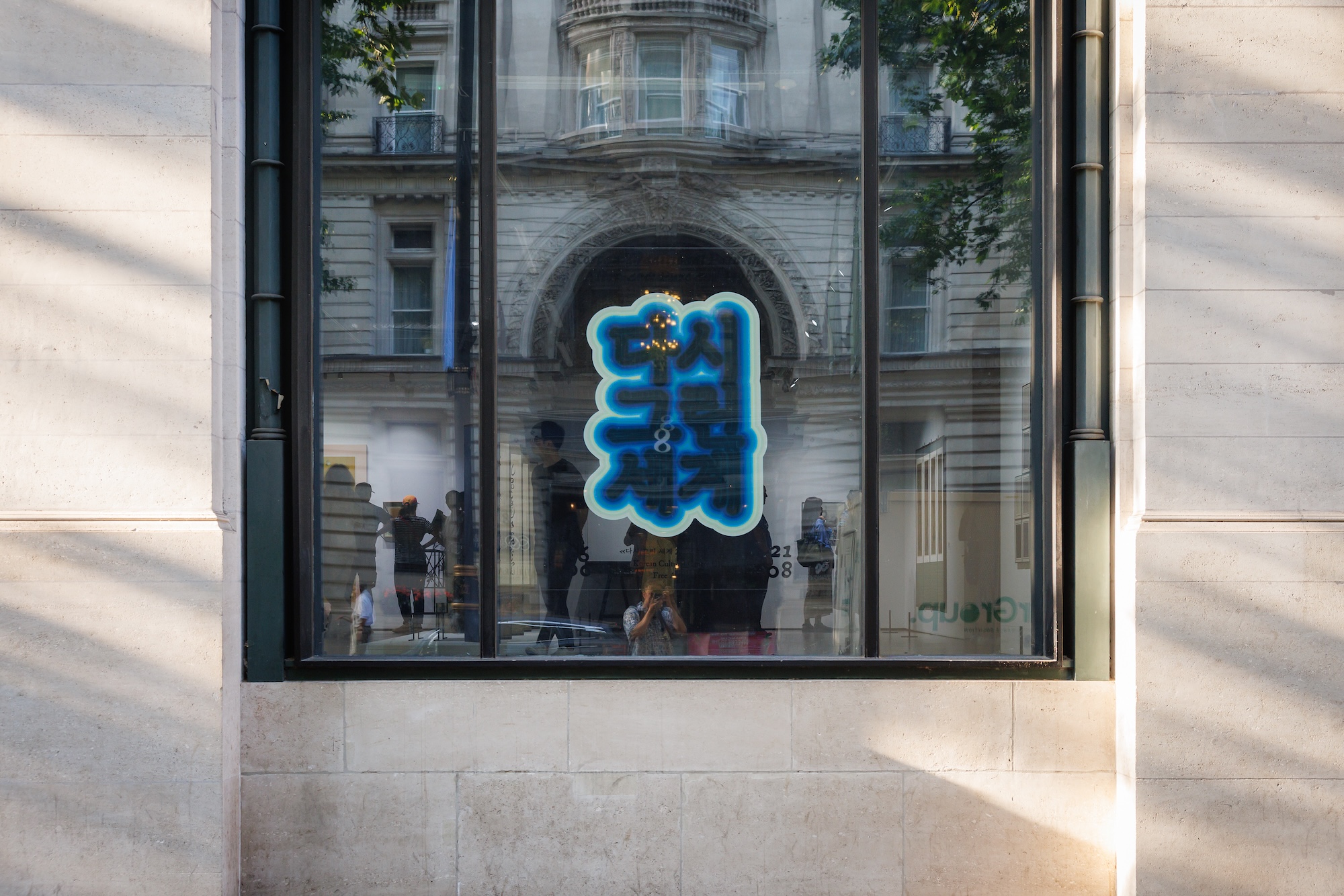 KCC-Traditional Painting in Alter-age- Pure and Hybrid-June 2026 Dan Weill Photography
Developed in collaboration with Seoul’s Ilmin Museum of Art, the exhibition pairs works by historical masters including Kang Sehwang, An Jungsik, Jeong Seon, Kim Jeonghui, Lee Sangbeom, Pak Nosoo and Yi Gwangsa with contemporary artists Jean Song, Choe Sooryeon, Choi Haeri and Hwang Kyumin. Rather than presenting tradition as something fixed in the past, the exhibition reveals an ongoing conversation between generations, where inherited techniques, materials and philosophies are continually reinterpreted through contemporary experience.
At the heart of the exhibition is an idea unfamiliar to many Western audiences: Mo–Im–Bang, a centuries-old methodology that encourages artists first to copy great works, then study them before adapting their ideas into something new. Rather than celebrating originality above all else, this approach understands creativity as an evolving dialogue between past and present.
The exhibition also arrives at a moment when many artists are returning to slower, material-based practices after decades dominated by digital technologies and conceptual approaches. While this renewed interest in traditional techniques has become increasingly visible within Korea, Korean Traditional Painting in Alter-age offers UK audiences one of the first opportunities to see how contemporary Korean artists are engaging with this history without simply reproducing it.
Rather than simply reviewing Korean Traditional Painting in Alter-age, we wanted to understand how the exhibition works from the inside out. We first sat down with curator Jaemin Cha to discuss the ideas behind the exhibition, its historical foundations and why these particular artists were brought together. We then asked each of the four contemporary artists about their own relationship with Korean painting, tradition and making work today, before finishing with one question we couldn’t resist asking…
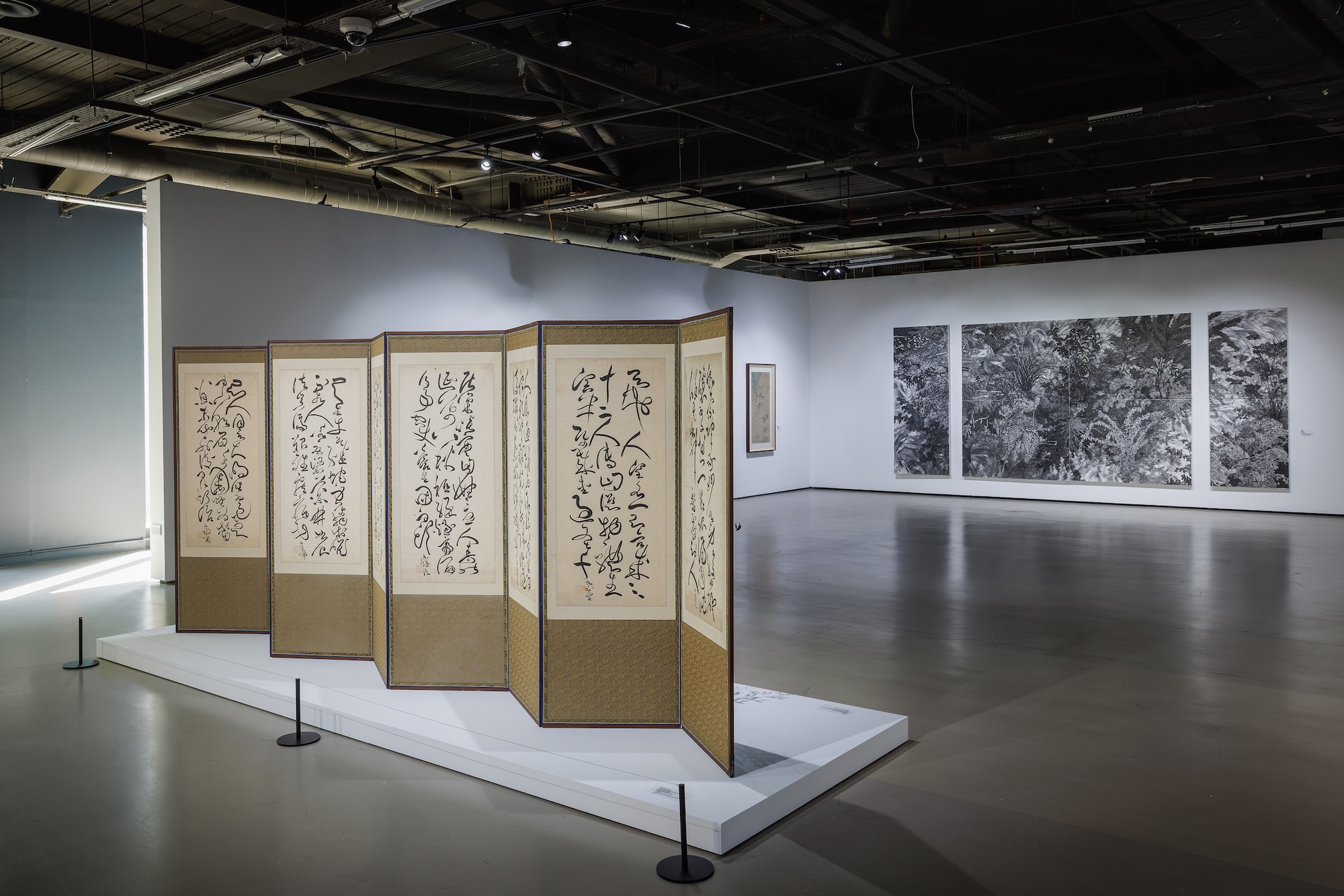 KCC-Traditional Painting in Alter-age- Pure and Hybrid-June 2026_Dan Weill PhotographyInterview: Jaemin Cha
“Tradition isn’t something fixed—it only stays alive if each generation finds its own way into it.”
The exhibition brings together both historical and contemporary artists. How did you go about selecting the contemporary artists?
To answer that, I probably need to explain how the exhibition came about in the first place.
Like many of the exhibitions we organise at KCCUK, this wasn’t something I developed on my own. It’s a collaboration with Ilmin Museum of Art in Seoul through a Korean government partnership that pairs cultural institutions with Korean Cultural Centres overseas. The exhibition was largely developed together with the curator at Ilmin Museum, and throughout the process we kept asking ourselves how we could make it meaningful for audiences here in the UK.
There are many artists in Korea who specialise in traditional painting techniques, but we didn’t want this to become an exhibition simply about technical skill. Instead, we centred everything around a conceptual framework that connects artists across generations.
That idea is Mo, Im, Bang.
Historically, these were the methods used by Korean literati painters. Mo means copying masterpieces, Im is studying and learning from them, and Bang is adapting what you’ve learned into your own artistic language.
Those ideas became the foundation for selecting the four contemporary artists in the exhibition.
Take Hwang Kyumin, for example. His colour chart work is actually a reinterpretation of a painting manual by the nineteenth-century painter Kang Sehwang. At first glance, you might not immediately recognise the connection, but that’s really the point. He’s absorbed the methodology and transformed it into something entirely contemporary. Each of the four artists approaches tradition in that way—they aren’t reproducing historical painting, they’re extending it.
 KCC-Traditional Painting in Alter-age- Pure and Hybrid-June 2026_Dan Weill Photography
Has this dialogue between traditional painting and contemporary practice become more common in Korea?
I think it has become much more widespread.
There have always been artists working with traditional painting in Korea, but what has changed is the confidence with which contemporary artists are incorporating those methods into very different kinds of practice.
It’s probably not unusual to see that in Korea, but it is still quite rare here in the UK. I’ve never really seen an exhibition that looks specifically at Korean traditional painting across different generations in this way. That’s what makes this exhibition special.
 KCC-Traditional Painting in Alter-age- Pure and Hybrid-June 2026_Dan Weill Photography
Do you think this renewed interest is part of a wider revival of traditional making?
I think so.
Like many things, artistic movements come in cycles.
Someone recently described what’s happening as a revival of Korean traditional painting, and I think that’s true. There are many Korean painters receiving international attention now, particularly with events like Frieze Seoul and the arrival of major international galleries in Seoul. At the same time, artists are becoming increasingly interested in expressing specifically Korean narratives and techniques as part of their own identity.
Rather than borrowing from elsewhere, they’re looking again at their own cultural history.
 KCC-Traditional Painting in Alter-age- Pure and Hybrid-June 2026_Dan Weill Photography
Do you also think it’s a reaction against digital culture?
Yes, definitely.
We’re surrounded by screens now, so I think people are becoming more interested in tactile experiences and physical materials again.
Personally, I prefer that direction.
Digital art has its place, but there is something different about making work by hand. Physical materials have their own presence and their own rhythm, and I think audiences are responding to that again.
 KCC-Traditional Painting in Alter-age- Pure and Hybrid-June 2026_Dan Weill Photography
One of the most interesting sections of the exhibition is the discussion around the term “Oriental Painting.” Could you explain why that language has changed?
Historically, Korean traditional painting was often categorised as “Oriental Painting.” That terminology became established during the Japanese colonial period, when different artistic traditions across East Asia were grouped together under one broad category.
Even today, some people in Korea still use the term, but there’s an increasing movement away from it.
Instead, we use Korean traditional painting or Hangukhwa, because these works have their own distinct history and characteristics. It’s important to recognise that Korean painting developed differently from Japanese painting rather than treating everything as one umbrella category.
For audiences who aren’t familiar with Korean painting, are those differences immediately visible?
For me they’re very obvious, because I’ve grown up studying them, but I understand they might not be immediately apparent to someone encountering the work for the first time.
One example is the use of colour.
Earlier Korean painting often relied on very restrained palettes—subtle ink tones, black, white and muted browns. Japanese painting, by contrast, tended to embrace much brighter colours.
One of the artists represented in the exhibition, Pak Nosoo, helped transform that tradition during the twentieth century through his use of watercolour and richer tonal variation. Those kinds of developments became part of a distinct Korean artistic language.
Once you begin looking closely at colour, brushwork and composition, those differences become much easier to recognise.
 KCC-Traditional Painting in Alter-age- Pure and Hybrid-June 2026_Dan Weill PhotographyArtist Q&A
The artists of Korean Traditional Painting in Alter-age discuss tradition, reinterpretation, materiality and making art by hand in an increasingly digital world.
Jean Song KCC-Traditional Painting in Alter-age- Pure and Hybrid-June 2026_Dan Weill Photography
What first drew you to traditional Korean artistic techniques, and what do they allow you to express that contemporary methods alone cannot?
Tradition isn’t something we simply inherit—it’s something we come to understand through continuous study and practice.
People often describe interdisciplinary practice as bringing different fields together, but I think meaningful dialogue can only happen when each discipline has a strong understanding of its own identity. Without that depth, diversity can easily become uniformity.
Studying Korean painting and East Asian art history gave me that foundation. I’ve never stopped researching sumuk (ink painting), hanji paper and the unique qualities of those materials. For me, they’re much more than traditional techniques—they embody a way of thinking and a way of relating to the world.
The more deeply I understand them, the more meaningfully I can reinterpret them within a contemporary practice.
Do you think audiences are looking differently at art today? In an increasingly digital world, does working by hand take on a different meaning?
We live in a time where images circulate endlessly through social media, online culture and increasingly AI-generated content. While those technologies have transformed how we create and consume images, they’ve also made me think more deeply about the difference between the material and the immaterial.
I once lost years of research and writing when my laptop suddenly failed. It made me realise how vulnerable digital things can be—they exist, but they can disappear in an instant.
By contrast, something made by hand has a different kind of presence. The texture of paper, ink and brushstrokes occupies physical space and carries time, attention and lived experience.
For me, working by hand is about preserving those uniquely human traces. Every mark contains something that cannot be separated from the person who made it, and I think audiences are becoming more aware of that connection.
Do you see yourself as continuing a tradition, or redefining it for a new generation?
I think I’m doing both.
My background is in Korean painting, and I have enormous respect for its philosophy and material traditions—especially the relationship between ink, paper and empty space.
Rather than preserving those traditions unchanged, I’m interested in exploring how they can speak to contemporary concerns. My work expands traditional painting into installation and spatial experience while exploring ecological coexistence, overlooked forms of life and the limits of human-centred perception.
Tradition isn’t fixed in the past. It continues to evolve through the questions each generation asks.
Hwang Kyumin KCC-Traditional Painting in Alter-age- Pure and Hybrid-June 2026_Dan Weill Photography
What first attracted you to traditional Korean painting?
It was really the visual spectacle of East Asian painting that first captivated me.
I was fascinated by monumental trees painted in black ink, by brushstrokes that seemed almost impossibly elegant and by the extraordinary discipline required to achieve that level of beauty.
In Korea, the histories of traditional painting and contemporary art were never completely separated. Many artists still spend years training in brushwork before developing their own practice. The result is a fascinating hybrid sensibility that I find incredibly compelling.
The exhibition is structured around the ideas of copying (Mo), studying (Im) and adapting (Bang). Which best describes your own process?
In my day-to-day practice, copying (Mo) probably plays the biggest role.
Within this exhibition, however, I wanted all three ideas to be equally present. My woodblock prints combine copying and studying, while the bench-like painting installation brings together studying and adapting.
Rather than seeing these ideas separately, I think they constantly overlap within the work.
Do you see yourself as continuing tradition or redefining it?
At least in Korea, I think my work has been speaking to a new generation ever since I completed my first woodcut series in 2020.
Redefining tradition is important, but I’m also interested in separating tradition conceptually from contemporary art itself. I want tradition to become a resource that artists can draw upon in any context rather than something confined to history.
Choe Sooryeon
Do you think audiences look differently at handmade art today?
I’m not sure it has changed because of the times we live in.
Personally, I have very little interest in the rapid development of the digital world—and I don’t think I could keep up with it even if I tried.
What fascinates me is working directly with physical materials. Making things by hand is actually much harder to control than many people imagine, and it’s precisely that lack of control that keeps the process exciting for me.
Is there a work in the exhibition that best represents your practice?
Yes—Practice for Decorating a Shrine.

I’d encourage visitors to look beyond its smooth surface and pay attention to the subtle rainwater stains, tears and traces of tape that remain within the work. Those details are just as important as the finished image.
Choi Haeri
The exhibition explores copying, studying and adapting. How do those ideas relate to your own work?
For me, those three concepts aren’t separate stages.
They’re completely integrated into my practice and constantly inform one another.
Is there one work in the exhibition that best represents your practice?
The installation I’ve created consists of eight paintings and one ceramic work, all connected as a single piece.
I think of it as a long sentence written to reverse the flow of time.
I’d like visitors to move through it slowly and experience the entire sentence, rather than focusing on individual works.
Finally… the important question.
BTS have an installation and video at KCCUK. Are you a BTS fan—and if so, who’s your favourite member?
Jean Song:
“I really admire how they’ve introduced Korean culture to audiences around the world. I wouldn’t call myself a dedicated fan, but if I had to choose someone, I’d probably say V—simply because I think he’s incredibly handsome!”
Choe Sooryeon:
“Sorry to disappoint you, but I haven’t really had the chance to discover them properly yet.”
Choi Haeri:
“I know RM visited the Korean version of this exhibition back in 2022. I’ve heard he has a genuine interest in traditional, modern and contemporary Korean art, so perhaps he feels the most familiar to me.”
Hwang Kyumin:
“I wouldn’t call myself a fan, but I do like BTS—especially their earlier music before they became globally famous. It’s difficult to choose one member, but I’m particularly grateful to RM, who shared my work on social media after seeing it in the exhibition Korean Traditional Painting in Alter-age at Ilmin Museum of Art in 2022.”
Korean Traditional Painting in Alter-age: Pure and Hybrid, 26th June – 21st August 2026 KCCUK
Free admission – This exhibition is co-organised by the Korean Cultural Centre UK, the Korean Cultural Centre to Belgium & the EU, and Ilmin Museum of Art, with support from the Ministry of Culture, Sports and Tourism, the Korean Foundation for International Cultural Exchange, Arts Council Korea, and Hyundai Sungwoo Holdings. The exhibition will travel to the Korean Cultural Center to Belgium & the EU from 17th September – 13th November 2026.
About the artists:
Jean Song (b.1998) studied Korean painting at Kyung Hee University in Seoul. Working across traditional techniques and contemporary sensibilities, she explores close observation and everyday encounters through delicate painterly compositions. @jeanxsong
Choe Sooryeon (b.1986) studied painting at Hongik University and Seoul National University in Seoul. Her practice revisits historical painting traditions through acts of repetition, translation and reinterpretation, examining how images continue to evolve across time and cultures. @choesooryeon
Choi Haeri (b.1978) studied oriental painting and visual design at Duksung Women’s University in Seoul. Working across painting and installation, she draws upon historical narratives and literary references to create new dialogues between memory, tradition and contemporary life.
Hwang Kyumin (b.1994) studied oriental painting at Hongik University and Seoul National University in Seoul. His work reimagines Korean painting through playful experimentation, combining inherited techniques with contemporary visual languages. @kyuminq
CategoriesTags