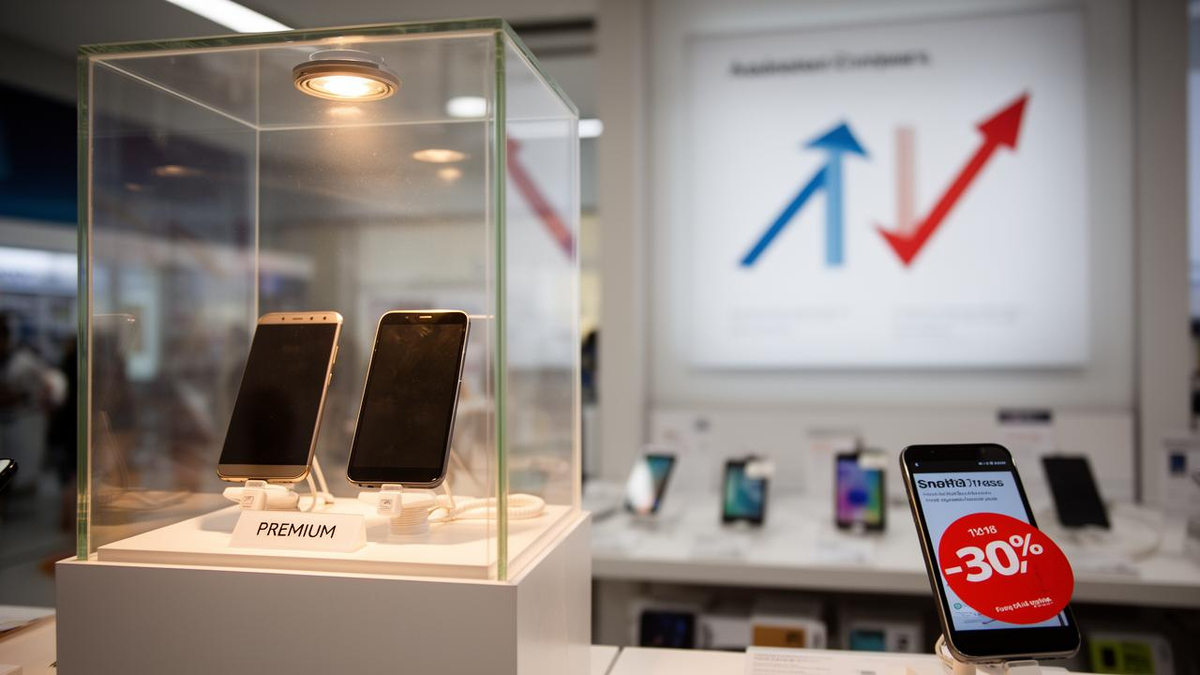
The global smartphone market is taking a direct hit from ‘chipflation’ (chip + inflation), triggered by a sharp surge in memory semiconductor prices. While Apple and Samsung Electronics, which dominate the premium market, are expanding their market share, Xiaomi, which has focused on the mid-to-low-end market, is experiencing a sharp decline in both shipments and revenue, painting a clear picture of diverging fortunes.
According to overseas IT media outlets like MacRumors on the 10th, it is increasingly likely that Apple will significantly raise the price of its next iPhone. The starting price of the iPhone 18 Pro, which Apple is expected to unveil next month, is reported to be $1,399—a $300 increase over its predecessor. There is also talk that Apple’s first foldable phone, tentatively called the ‘iPhone Ultra,’ could reach $2,499 for the highest specification model. Apple had already raised prices on major products like Macs and iPads in June, citing rising memory and storage costs, but the iPhone was excluded from those hikes at the time.
Samsung Electronics also joined the price-hike parade starting with its Galaxy S26 series. Compared to its predecessor, the 256GB model increased by 99,000 won (approximately $70), and the 512GB model by 209,000 won (approximately $148). The recently released Galaxy Z Fold8 Ultra and Z Flip8 also saw price jumps of 198,000 won (approximately $140) each for the 256GB base models.
Price increases by Chinese manufacturers are even steeper. Xiaomi recently raised the price of its Xiaomi 17 series by 400 to 500 yuan (approximately $59 to $74) and its Redmi K90 and Turbo 5 series by 300 yuan (approximately $44). This marks the third price adjustment this year alone. Oppo and Vivo are also raising prices on some products, passing the cost burden onto consumers.
The core driver of these price hikes is undoubtedly memory semiconductors. As investment in AI data centers has surged, major memory companies like Samsung Electronics, SK Hynix, and Micron are concentrating their production capacity on high-value products such as HBM (High Bandwidth Memory). This has tightened the supply of generic DRAM and NAND flash used in smartphones. According to market research firm TrendForce, contract prices for generic DRAM skyrocketed by 90-95% in the first quarter compared to the previous quarter, while NAND prices surged by 55-60%.
This cost pressure is dealing a more fatal blow to the mid-to-low-end smartphone market. According to market research firm Counterpoint Research, Xiaomi’s global smartphone shipment share in the second quarter was 11%, down 3 percentage points from the same period last year (14%). This is the largest decline among the top five manufacturers, which include Samsung, Apple, Oppo, and Vivo. Xiaomi’s Q2 shipments fell 26% year-over-year, and revenue dropped 17%, significantly worsening its profitability.
Counterpoint Research analyzed that Xiaomi’s “business structure, which has a high proportion of mid-to-low-end products, made it vulnerable to the memory supply shortage,” adding that “demand is also accelerating its decline due to price hikes driven by rising costs.” A research director at IDC also predicted, “Cost pressures are forcing companies to reduce shipments, raise prices, and focus on high-end product lines. The era of ultra-low-cost smartphones is now over, and only companies that can sustain demand at higher price points will survive.”
Indeed, for Oppo and Vivo, despite average selling prices (ASP) rising by 9% and 13% respectively, their revenues still fell by 10% and 11% year-over-year. Vivo, in particular, recorded the highest ASP growth rate among the top five companies but failed to convince price-sensitive consumers, failing to reap the benefits of the increase.
On the other hand, Apple and Samsung Electronics, which dominate the premium market, have actually enjoyed a reflexive benefit. Apple’s Q2 shipment share rose to 21% from 17% a year earlier, and Samsung Electronics’ share climbed to 23% from 20%. The analysis suggests that as mid-to-low-end manufacturers experience consumer churn due to price hikes, demand for high-priced products is being absorbed by these premium brands.
According to Counterpoint Research, the sales proportion of premium smartphones priced at $600 or above surged to a record first-half high of 29% in the first half of this year, up from 25% last year. As manufacturers concentrate on selling high-priced products, a rapid premiumization of the market is underway.
There are also signs that rising prices are suppressing overall demand. According to IDC, smartphone shipments in China fell 4.3% year-over-year in the second quarter, marking five consecutive quarters of negative growth. Samsung Electronics, which is struggling in the Chinese market, is reportedly streamlining its business by phasing out local smartphone stores with monthly sales of less than 300,000 yuan (approximately $44,476). Samsung Electronics’ smartphone market share in China was a mere 0.1% in the second quarter.
An industry insider said, “As memory price increases are expected to continue for the time being, Apple will also find it difficult to be free from cost burdens. If Apple also moves to raise prices, a domino effect of price hikes among smartphone manufacturers could begin in earnest.” Concerns are growing that the polarization of the smartphone market brought on by chipflation will intensify further.