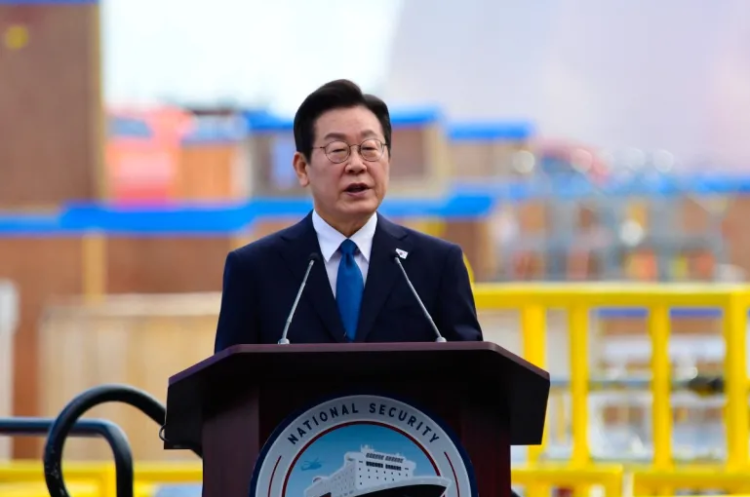
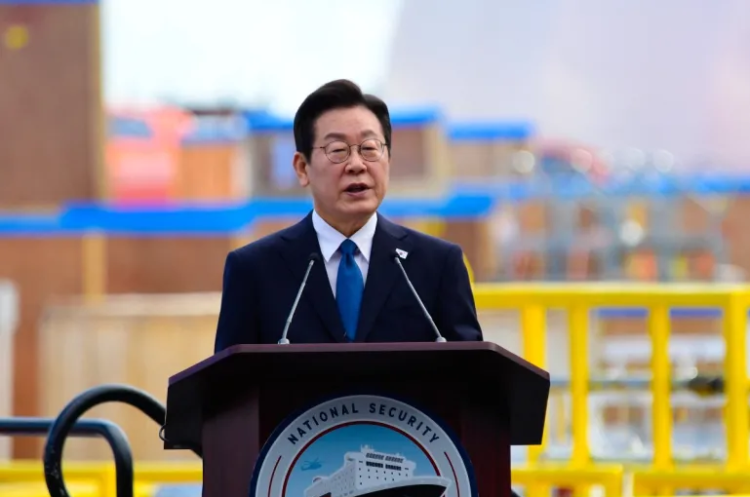
South Korean President Lee Jae Myung has proposed talks with North Korea aimed at formally ending the Korean War and reducing tensions on the Korean Peninsula.
Agence France-Presse reported early Sunday, August 16, 2026, that Lee made the proposal during a ceremony marking Korea’s liberation from Japanese colonial rule, which lasted from 1910 to 1945. He called for dialogue to address the long-standing military confrontation between the two Koreas.
The two countries remain technically at war because the 1950-1953 conflict ended with an armistice rather than a peace treaty. Lee’s proposal therefore seeks to move relations beyond the armistice framework and establish a more stable peace arrangement.
Lee’s call for dialogue comes amid renewed tensions over annual military exercises conducted by South Korea and the United States. North Korea has strongly criticized the drills, describing them as preparations for an attack and warning that it could respond by strengthening its military deterrence.
The South Korean president has previously emphasized dialogue and engagement as ways to reduce military tensions and prevent accidental clashes. His latest proposal also comes as efforts to restore communication between Seoul and Pyongyang remain limited.
The Korean Peninsula has remained divided since the end of World War II, with the border between North and South heavily militarized. Despite decades of political and diplomatic efforts, the two sides have never signed a permanent peace treaty.
The continued military confrontation has also placed a heavy security burden on the region, while North Korea’s nuclear and missile programs remain a major concern for South Korea, the United States and neighboring countries.
Lee’s proposal comes as the peninsula remains politically divided and tensions continue over military exercises, North Korea’s weapons programs and the absence of sustained inter-Korean dialogue. A formal peace agreement would require difficult negotiations over security guarantees, military arrangements and North Korea’s nuclear capabilities.