
South Korea is facing a serious demographic challenge that directly threatens national security. Due to the rapid decline in the birth rate, the traditional model of forming a large army becomes impossible. Under these conditions, Hyundai’s work is seen by Seoul as the only way to maintain defense capability by building a so-called “science-based armed force.”
The Ministry of Defense of South Korea has initiated large-scale negotiations with the Hyundai Motor Corporation regarding the introduction of advanced robotics to the ranks of the armed forces. The main goal of the project is to minimize the need for manpower by using unmanned systems based on artificial intelligence. The main focus is on performing non-combat tasks: reconnaissance, border patrol and transportation of goods in difficult-to-reach areas.
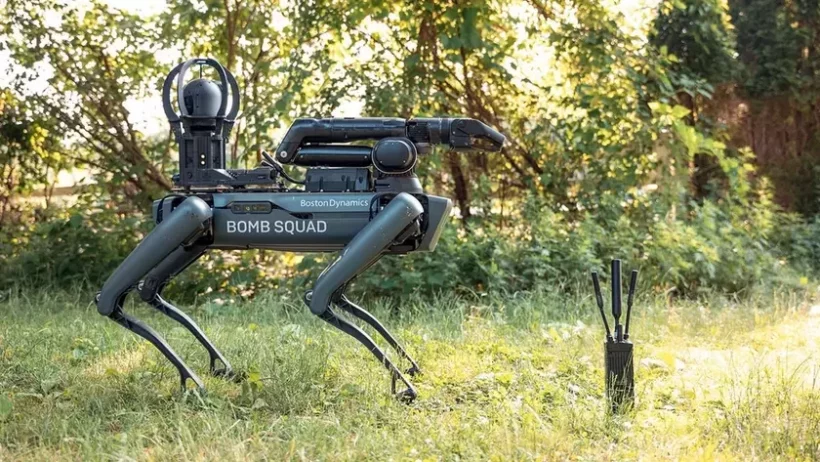
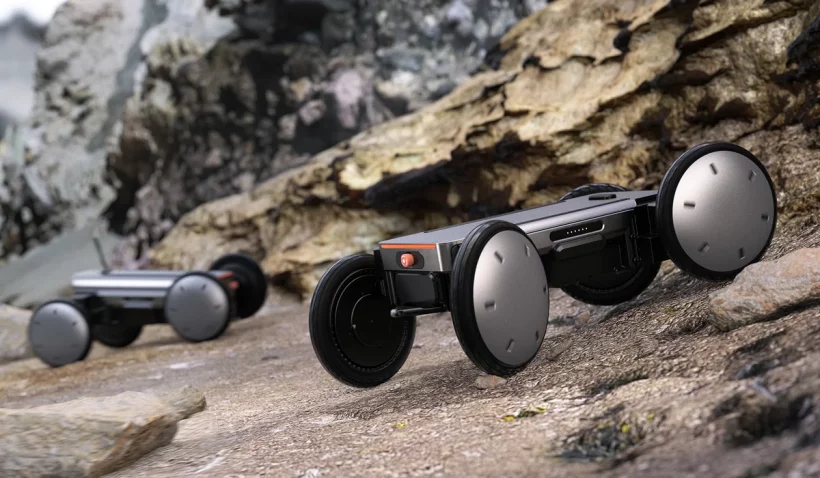
Spot, MobED and X-ble Shoulder features
A key tool for modernization should be the Spot robot from Boston Dynamics, a company owned by Hyundai. This four-legged mechanism has unique abilities to move over rough terrain. The characteristics of the robops allow it to perform the role of an autonomous scout and patrol, replacing people in the most dangerous or exhausting areas.
The MobED (Mobile Eccentric Droid) platform is being considered for logistical needs. Its uniqueness lies in the adaptive four-wheel suspension. It allows the platform to maintain a strictly horizontal body position even when moving up stairs or uneven slopes. This is critical for transporting fragile equipment and ammunition directly to combat positions.
X-ble Shoulder is planned to be introduced to facilitate the physical work of servicemen. It is a wearable device (exoskeleton) specially designed to support the shoulder girdle and upper body. The features of the system allow soldiers to work with heavy loads for long periods of time, significantly reducing the stress on the joints and the risk of injury during the maintenance of heavy equipment.
Features of using military robots
The use of Hyundai developments in the army has a number of specific nuances. The main feature is the blurring of boundaries between civilian and military technologies. The equipment, which was originally created for warehouses and factory inspections (like Spot), is adapted for the harsh conditions of operation in the combat zone. Korea plans to use them primarily for:
24/7 monitoring of difficult areas of the border;
Autonomous delivery of goods without the involvement of trucks;
Work in urban conditions when performing reconnaissance missions.
Integration into the military and the price of the issue
At the moment, the project is at the stage of active discussions. The Ministry of Defense of Korea has confirmed the fact of negotiations with Hyundai, but the exact dates of the start of mass deliveries have not yet been disclosed. It is expected that the implementation will take place in stages: from trials in individual units to full inclusion in the staff in the coming years.
The final specifications of the contract and the total purchase price of the equipment remain confidential. Officials stress that investment in high-tech unmanned systems is a strategic necessity, not just a budget issue, as the price of human resources becomes prohibitively high amid a fertility crisis.
Should we wait for the robotization of the world’s armies?
The experience of South Korea will be an indicator for the whole world. When manpower becomes scarce, robotics ceases to be an experiment and becomes a basis for survival. Given that even giants like Google are considering making their AI designs (Gemini) available to the military, we’re at the dawn of an era where technological superiority is more important than battalion size.
Don’t miss interesting news
Subscribe to our channels and read announcements of high-tech news, tes