
SK Telecom, NVIDIA and Rebellions sign agreement to develop integrated rack-scale system
Rebellions’ Rebel R200 to be connected…aim to improve processing speed and power efficiency
After validating performance and stability at an SK Telecom data center, companies will assess commercialization potential
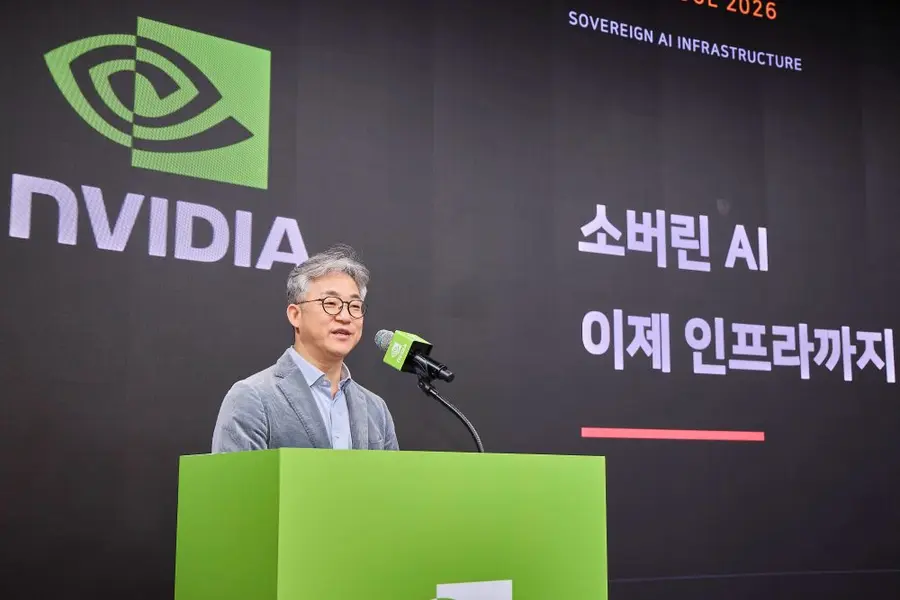 Seok-geun Jeong, SK Telecom CTO and head of its AI CIC, briefs attendees on ‘sovereign AI infrastructure.’ Photo: SK Telecom
When a generative AI system receives a question, an NVIDIA graphics processing unit (GPU) processes the input, while a Rebellions neural processing unit (NPU) generates the answer. SK Telecom will develop and test a system with NVIDIA and Rebellions at an AI data center, splitting inference tasks between the two types of chips.
According to SK Telecom, led by CEO Jae-heon Jung, the three companies signed a memorandum of understanding on Monday at NVIDIA AI Day Seoul in COEX to build sovereign AI infrastructure tailored to Korea. Rebellions’ NPU, the Rebel R200, which is under development, will be connected to NVIDIA GPUs using the company’s high-speed NVLink Fusion technology. The companies plan to develop an integrated system at the rack level, using NVIDIA’s MGX server-rack design standard.
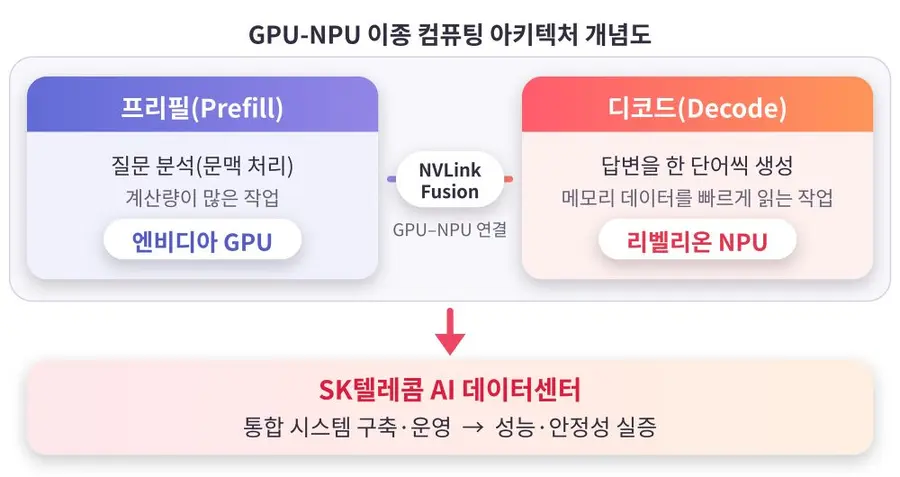 SK Telecom, NVIDIA and Rebellions collaborate to build sovereign AI infrastructure tailored to Korea. Infographic: SK Telecom
The key is “disaggregated inference.” GPUs will handle prefill—the computationally intensive stage in which AI processes input all at once. Rebellions’ NPUs will handle decode, the stage in which the system generates an answer sequentially and quickly retrieves the data it needs from memory. The companies believe assigning each chip the tasks best suited to its strengths could improve processing speed and power efficiency.
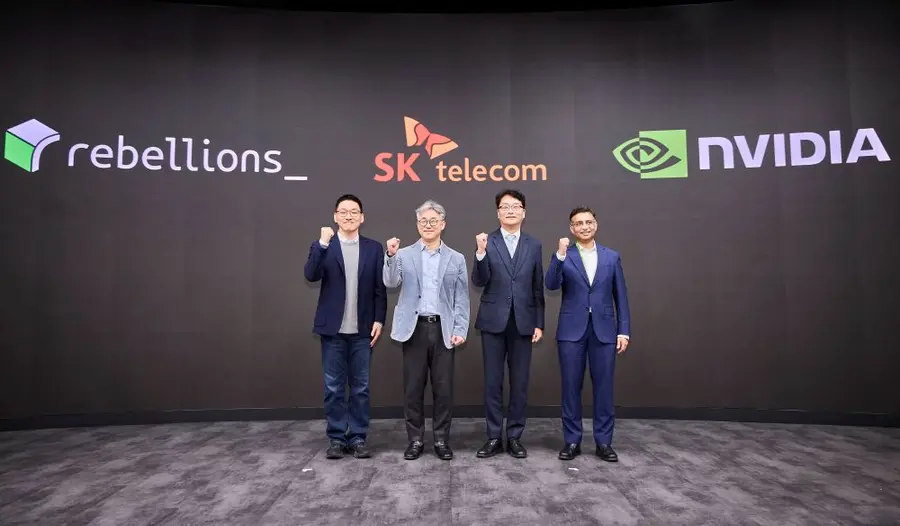 Representatives of SK Telecom, NVIDIA and Rebellions pose for a photo after signing an MOU. From left: Sung-hyun Park, Rebellions CEO; Seok-geun Jeong, SK Telecom CTO and head of its AI CIC; Do-gyu Lee, director general of the Information and Communications Policy Office at the Ministry of Science and ICT; and Ashish Karandikar, NVIDIA vice president of NVLink Fusion. Photo: SK Telecom
SK Telecom will deploy the integrated system at an AI data center to validate its performance and stability. Based on the results, the company will assess whether it can be used in real-world services and brought to market. In the longer term, it plans to connect the infrastructure to its proprietary AI model, A.X K2, and its public-facing AI service, AI for All.
“This collaboration is significant because it will help validate the potential of sovereign AI infrastructure tailored to Korea, combining the strengths of NVIDIA GPUs and Rebellions NPUs to improve inference performance and power efficiency,” said Seok-geun Jeong, SK Telecom’s chief technology officer and head of its AI CIC.