
European Union diplomats sparred Tuesday after several member states called for suspending the bloc’s cooperation agreement with Israel, amid rising anger over the country’s conduct in Lebanon, Gaza and the West Bank.
Spain, Slovenia and Ireland had put the issue of halting the agreement on the table, Spanish Foreign Minister Jose Manuel Albares said on Tuesday ahead of a meeting of EU foreign ministers in Luxembourg.
“Spain, along with Slovenia and Ireland, has requested that the suspension of the Association Agreement between the European Union and Israel be discussed and debated today,” Albares said.
But Germany poured cold water on the idea, with Foreign Minister Johann Wadephul calling the proposal “inappropriate.”
“We have to talk with Israel about the critical issues,” he said at the start of the meeting.
Get The Times of Israel’s Daily Edition
by email and never miss our top stories
By signing up, you agree to the terms
“That has to be done in a critical, constructive dialogue with Israel,” Wadephul said. “That is what we stand for.”
Italian counterpart Antonio Tajani pushed back as well, saying that “no decision will be taken today.”
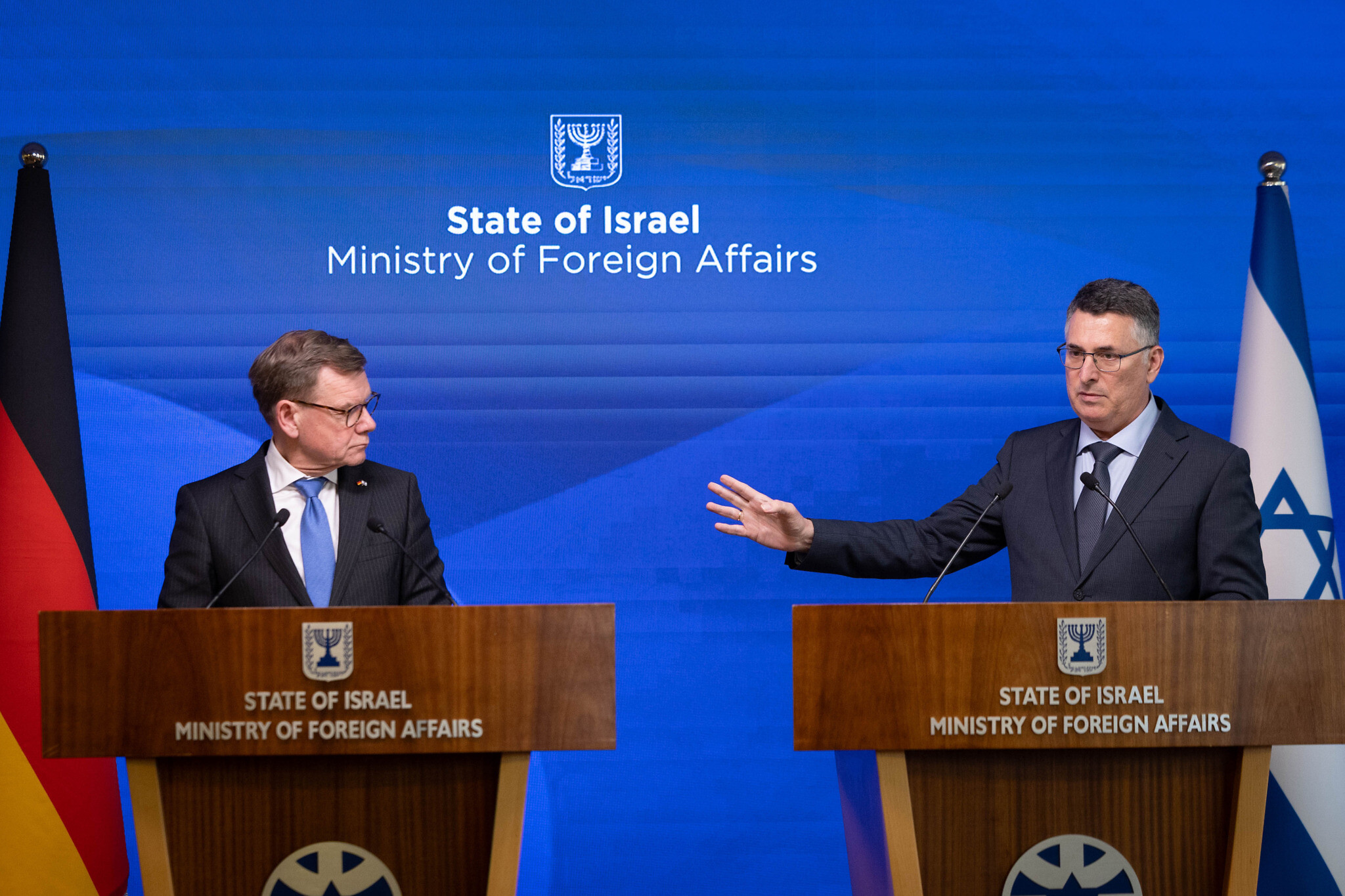
FILE: Foreign Minister Gideon Sa’ar, right, speaks during a joint press conference with his German counterpart Johann Wadephul in Jerusalem, March 10, 2026. (AP Photo/Oren Ben Hakoon)
Attitudes toward Israel among EU member states, already hardened over its conduct in the war in Gaza, stiffened further after Israeli ground operations were launched into Lebanon last month — in response to the Iran-backed Lebanese terror group’s missile fire on Israel — and after the Knesset passed a new law on the death penalty for Palestinian terror convicts in the West Bank.
“We need to act. We need to make sure that our fundamental values are protected,” Irish Foreign Minister Helen McEntee said.
Ahead of Tuesday’s meeting, Belgian Foreign Minister Maxime Prevot called Israel’s actions in Lebanon “completely unacceptable.”
“Of course, we must firmly condemn Hezbollah’s initial attacks, which, in seeking to show solidarity with Iran, dragged Lebanon into a war it did not want, as well as Israel’s disproportionate and indiscriminate response,” the Belgian diplomat said.
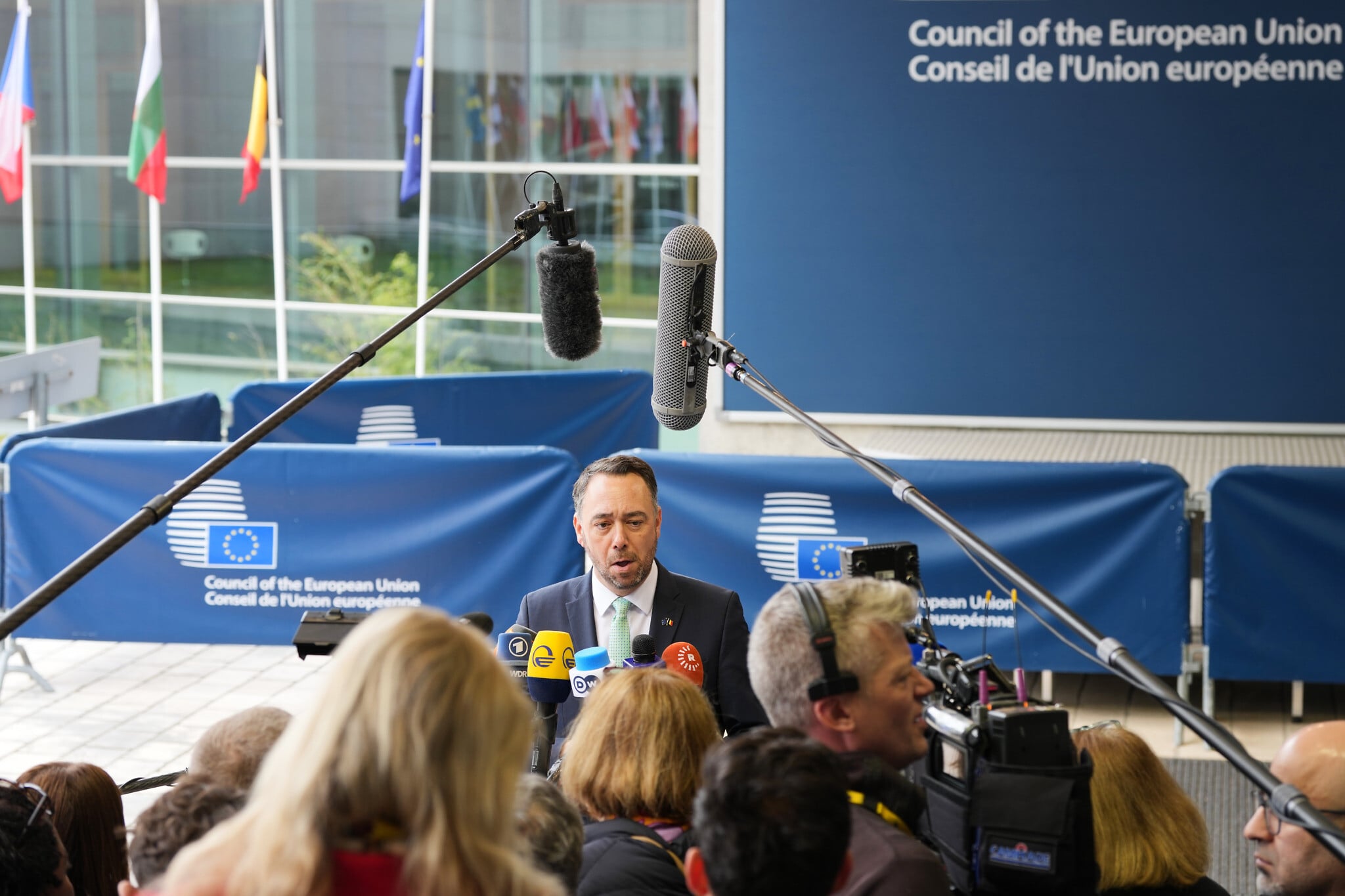
Belgium’s Foreign Minister Maxime Prevot speaks with the media as he arrives for a meeting of EU foreign ministers at the European Council building in Luxembourg, April 21, 2026. (AP Photo/Virginia Mayo)
He also said Brussels was calling for at least a partial suspension of the EU’s Association’s Agreement with Israel, and that Belgium was “aware that a full suspension is probably out of reach given the positions of the various European countries.”
Last week, Spanish Prime Minister Pedro Sanchez said that Madrid would request the EU suspend the agreement, saying that Israel “violates international law” and therefore “cannot be a partner of the European Union… it’s as simple as that.”
Facing alarm at the civilian toll exacted in the Gaza war, the EU last year already put on the table a raft of potential measures to punish Israel, including cutting trade ties or sanctioning government ministers.
But so far none of the steps laid out by Brussels has garnered enough support from member states to be put into action.
Suspending the entirety of the EU’s cooperation agreement, as Spain and Ireland are pushing for, requires unanimity among the bloc’s 27 countries and would almost certainly be blocked by allies of Israel.
This photograph shows an outside view of the Berlaymont building, the European Union Commission headquarters, in Brussels on December 15, 2025. (Photo by Nicolas TUCAT / AFP)
More feasible could be suspending the part of the deal facilitating closer trade ties, a move that only requires support from a weighted majority of EU countries.
That would require a shift in position from EU heavyweights such as Germany or Italy.
Rome has already signaled a tougher line by suspending a defense agreement with Israel last week.
But EU officials and diplomats said it seemed there would not be sufficient support to take those actions — especially after a ceasefire was reached in Lebanon.
“If the opinions of the member states have changed, then we can move forward with these decisions,” said EU foreign policy chief Kaja Kallas.
France and Sweden, meanwhile, re-upped an earlier call from some other EU countries for the bloc to consider halting the import of goods from Jewish settlements in the Israeli-controlled West Bank, which are considered illegal under international law.
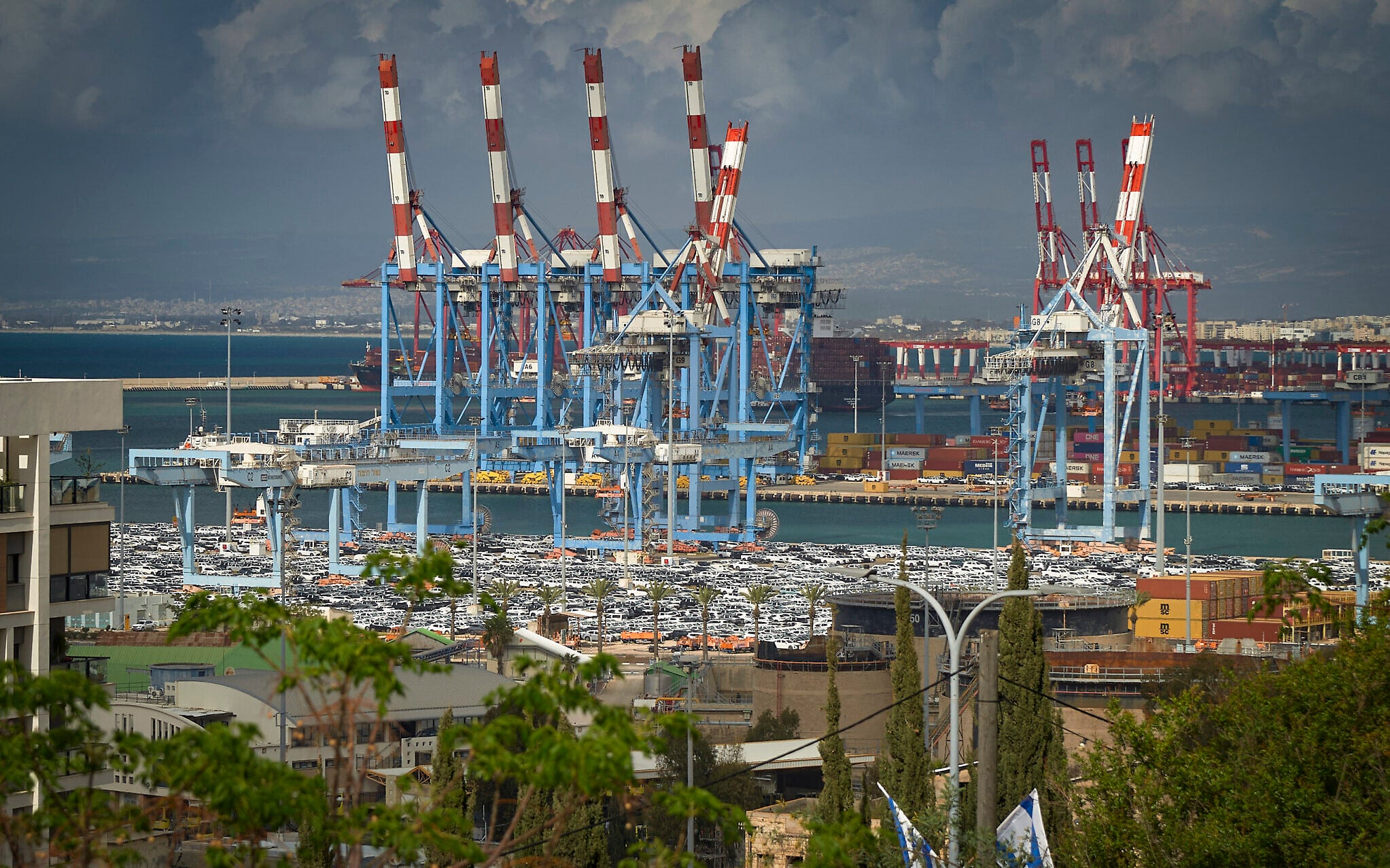
View of the port in the northern city of Haifa, April 10, 2026. (Sharon Leibel/Flash90)
Trade between Israel and the EU, the Jewish state’s largest trading partner, reached €42.6 billion (NIS 166 billion) in 2024, including €15.9 billion (NIS 62 billion) in Israeli imports. The EU accounted for nearly a third of Israel’s total international trade in goods last year.
If the agreement is suspended, the EU’s €6 million (NIS 23.5 million) in financial support to Israel and €14 million (NIS 55 million) in annual support for projects supporting Israel in the context of the Abraham Accords, the normalization agreements between Israel and several Arab countries, would all be put on pause.
Israel insists that it adheres to international law in its military conduct, says it seeks to minimize civilian fatalities and stresses that the terror groups that it is fighting in Lebanon and Gaza use civilians as human shields, fighting from civilian areas including homes, hospitals, schools, and mosques.
You appreciate our wartime journalism

You clearly find our careful reporting of the Iran war valuable, at a time when facts are often distorted and news coverage often lacks context.
Your support is essential to continue our work. We want to continue delivering the professional journalism you value, even as the demands on our newsroom have grown dramatically during this ongoing conflict.
So today, please consider joining our reader support group, The Times of Israel Community. For as little as $6 a month you’ll become our partners while enjoying The Times of Israel AD-FREE, as well as accessing exclusive content available only to Times of Israel Community members.
Thank you,
David Horovitz, Founding Editor of The Times of Israel