Editor’s note: Emre Diner is a Turkish journalist and foreign policy analyst specialising in the Middle East, energy geopolitics, and international security. This article reflects the author’s personal views and does not necessarily represent those of News.Az.
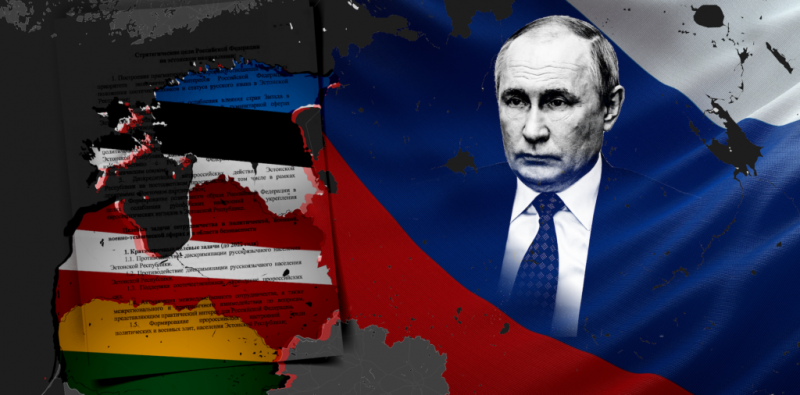
Tensions between Russia and NATO can no longer be assessed solely through the prism of the war in Ukraine. As Europe’s security architecture undergoes a profound transformation, Moscow appears increasingly focused on testing not only NATO’s military capabilities, but also its political cohesion, decision-making mechanisms and ability to respond rapidly in a crisis.
The key question, therefore, is not necessarily whether Russia would launch a direct military attack against NATO. A more immediate concern is where Moscow could test the Alliance’s response threshold and what methods it might employ while seeking to avoid an uncontrolled escalation.
The Baltic flank stands out as the most likely arena for such a test. Yet any Russian challenge would probably fall short of a conventional ground offensive. Limited, controlled and plausibly deniable operations would offer Moscow a way to assess NATO’s reflexes without openly assuming responsibility for a direct confrontation.
Estonia, Latvia and Lithuania occupy a particularly sensitive position on NATO’s eastern flank. Their geographical proximity to Russia, limited strategic depth and sizable Russian-speaking communities in Estonia and Latvia create vulnerabilities that could be exploited through hybrid operations, information campaigns and political pressure.
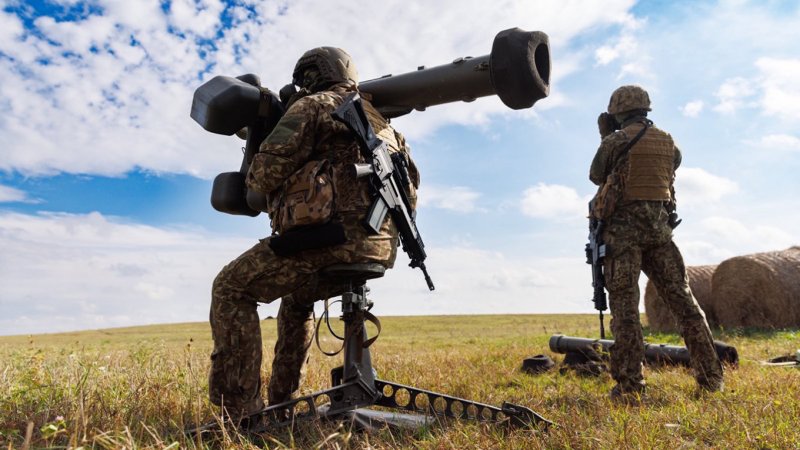
Brief incursions into NATO airspace by Russian military aircraft or unmanned aerial vehicles could, for example, be used to assess the Alliance’s response time. The purpose of such incidents would not necessarily be to provoke a military confrontation. Rather, they could allow Moscow to observe how quickly NATO members identify a threat, coordinate politically and respond operationally.
Source: Reuters
This distinction is critical. A conventional attack would leave little ambiguity about NATO’s collective defence obligations. A limited incident in the grey zone, however, could create precisely the uncertainty Moscow may seek to exploit.
NATO has already strengthened its military posture, surveillance capabilities and readiness along its eastern flank amid concerns over airspace violations, cyberattacks, sabotage and other forms of hybrid activity linked to Russia.
The Baltic Sea represents another potential arena for testing NATO’s resilience. Energy pipelines, telecommunications cables and other critical undersea infrastructure have become increasingly important to European security. At the same time, their vulnerability makes them attractive targets for actors seeking to cause disruption without crossing the threshold into conventional warfare.
Damage to an energy cable, disruption of communications infrastructure or intelligence activity conducted by an asset operating under civilian cover might not automatically constitute an act of war. Nevertheless, such incidents could generate significant economic, political and security consequences.
For Moscow, the strategic value of this approach would lie largely in uncertainty over attribution. If responsibility cannot be established quickly and conclusively, NATO members could face difficult questions over how to respond and whether an incident meets the threshold for collective action under Article 5.
The launch of NATO’s “Baltic Sentry” activity to strengthen the protection of critical undersea infrastructure demonstrates how seriously the Alliance views these vulnerabilities.
The Suwalki Corridor, stretching between Poland and Lithuania, is frequently described as one of NATO’s most strategically sensitive geographical areas. It provides the Baltic states with their only land connection to the rest of the Alliance. Russia’s heavily militarised Kaliningrad exclave lies to one side, while Belarus — Moscow’s closest regional ally — lies to the other.
A direct Russian military operation against the corridor would entail enormous risks and could trigger an immediate NATO response. Hybrid pressure involving Belarus would therefore be a more plausible instrument.
Engineered migration flows, limited border incidents, electronic jamming, large-scale military exercises or provocations involving unidentified groups could generate pressure without immediately crossing the threshold into open warfare.
In such a scenario, Moscow would not necessarily seek to seize the corridor. The more valuable objective could be to observe how quickly NATO reaches political decisions, moves reinforcements and coordinates military and civilian responses.
Finland’s accession to NATO fundamentally changed the strategic geography of the Alliance’s northern flank by significantly extending NATO’s direct border with Russia.
Moscow has responded to the changing security environment by re-establishing the Leningrad Military District and reorganising its military posture in northwestern Russia.
Assessments by Estonia’s Foreign Intelligence Service have also pointed to Russia’s restructuring of forces near Finland and the Baltic region as Moscow prepares for the possibility of a prolonged confrontation with NATO.
The Finnish border and the wider Arctic could therefore become increasingly important theatres of Russia-NATO competition. GPS interference, increased military activity near borders, airspace violations and operations targeting critical infrastructure could provide Russia with instruments for applying pressure while remaining below the threshold of conventional conflict.

Source: squarespace
The Arctic dimension is particularly significant because growing military competition there intersects with strategic infrastructure, maritime routes and Russia’s long-standing military presence in the High North.
The Black Sea represents another potential geographical theatre in which NATO’s reactions could be tested. Drone incidents near Romanian airspace, electronic warfare activities and pressure on commercial shipping could all be used to probe NATO’s southeastern flank.
Yet the Black Sea presents Moscow with a more complicated strategic environment than the Baltic. The continuing war in Ukraine, Türkiye’s regional role and the maritime framework established by the Montreux Convention constrain Russia’s room for manoeuvre. This makes a controlled test of NATO potentially more difficult than in the Baltic region.
Russian pressure in the Black Sea is therefore more likely to involve airspace incidents, electronic warfare, disruption or harassment of maritime traffic and broader attempts to increase regional instability rather than a deliberate conventional confrontation with NATO forces.
Ultimately, Russia does not need to test NATO simply to determine the Alliance’s military strength. Moscow is well aware of NATO’s conventional capabilities and particularly of the military power of the United States.
The more consequential question concerns NATO’s political will.
Would all 32 members respond collectively to a limited incident whose perpetrator could not immediately be identified? Would sabotage against critical undersea infrastructure be sufficient to trigger Article 5? How would NATO react to a drone incursion that caused casualties but whose intent remained uncertain? Could European allies and the United States quickly agree on the nature of the threat and the appropriate response?
These are the questions that matter most in a grey zone confrontation.
Estonia’s Foreign Intelligence Service has assessed that Russia does not currently intend to launch a direct military attack against Estonia or another NATO member in the short term. That assessment, however, does not imply an end to Russian hybrid pressure.
The more attractive strategy for Moscow would be to exploit disagreements within the Alliance, create uncertainty about attribution and slow collective decision-making without bearing the enormous military and economic costs of a direct NATO-Russia war.
The Baltic region appears to be the most likely geographical arena in which Russia could seek to test NATO. The principal instrument of such a strategy would be hybrid warfare rather than a conventional ground offensive.
Airspace violations, cyberattacks, sabotage targeting critical infrastructure, electronic interference, disinformation and pressure along borders could all form part of this approach.
For Moscow, success would not necessarily be measured in territory captured. A more meaningful strategic gain would be creating disagreement among NATO members over what happened, who was responsible and how the Alliance should respond.
NATO’s challenge, therefore, extends beyond deploying additional troops, aircraft and weapons along its eastern flank. Effective deterrence increasingly depends on the Alliance’s ability to respond rapidly and collectively to incidents deliberately designed to remain ambiguous.
In this emerging security environment, Russia could test NATO geographically on the Baltic flank, operationally through hybrid tactics and politically by probing the strength of the Alliance’s collective resolve.
(If you possess specialized knowledge and wish to contribute, please reach out to us at [email protected]).