
Since last summer, all’s been relatively quiet on the Amsterdam Walk redevelopment front, following two years of scaled-back planning, high-profile controversy, and neighborhood pushback that included a yard-sign campaign.
But according to filings made this week with Atlanta’s Department of City Planning, that could be starting to change.
Developer Portman Holdings has filed Special Administrative Permit paperwork as a first step toward remaking the Beltline-adjacent Amsterdam Walk, a former warehouse district wedged between Piedmont Park and some of the eastside’s most upscale neighborhoods.
According to those filings, the nearly 11-acre Amsterdam Walk project will be broken down into two phases.
The project scope for the first phase in question will include 666 multifamily units—or more than half of the total number of apartments approved by Atlanta City Council for the site last year.
Also included in the initial phase will be 96,452 square feet of commercial space, according to Portman’s filings.
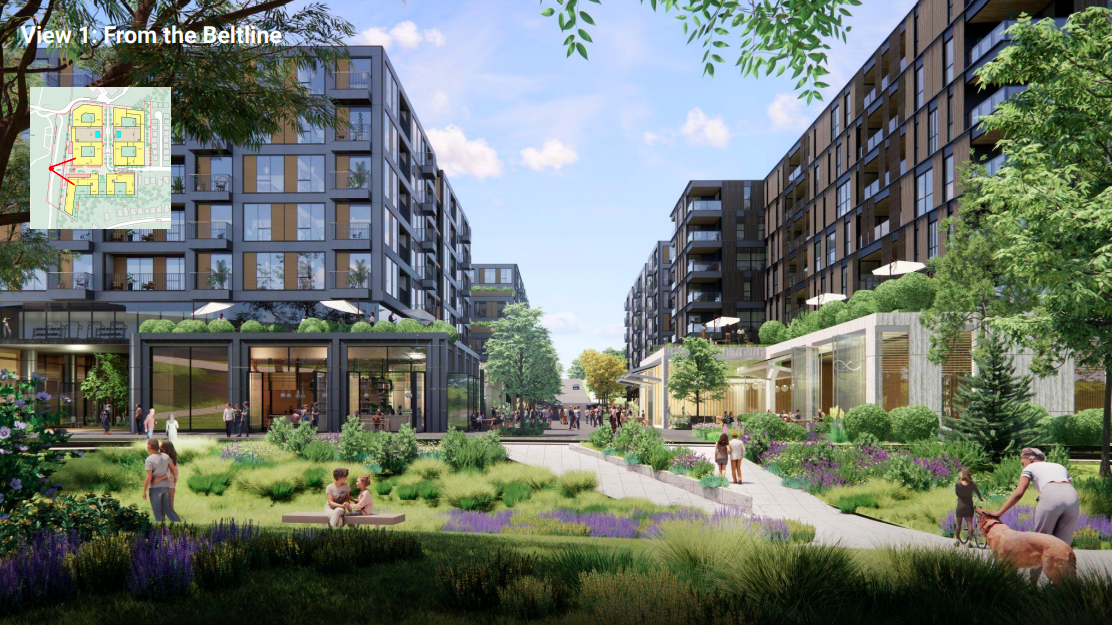
How the Amsterdam Walk project would look when approaching from the Beltline’s Northeast Trail. SOM architects/Portman Holdings
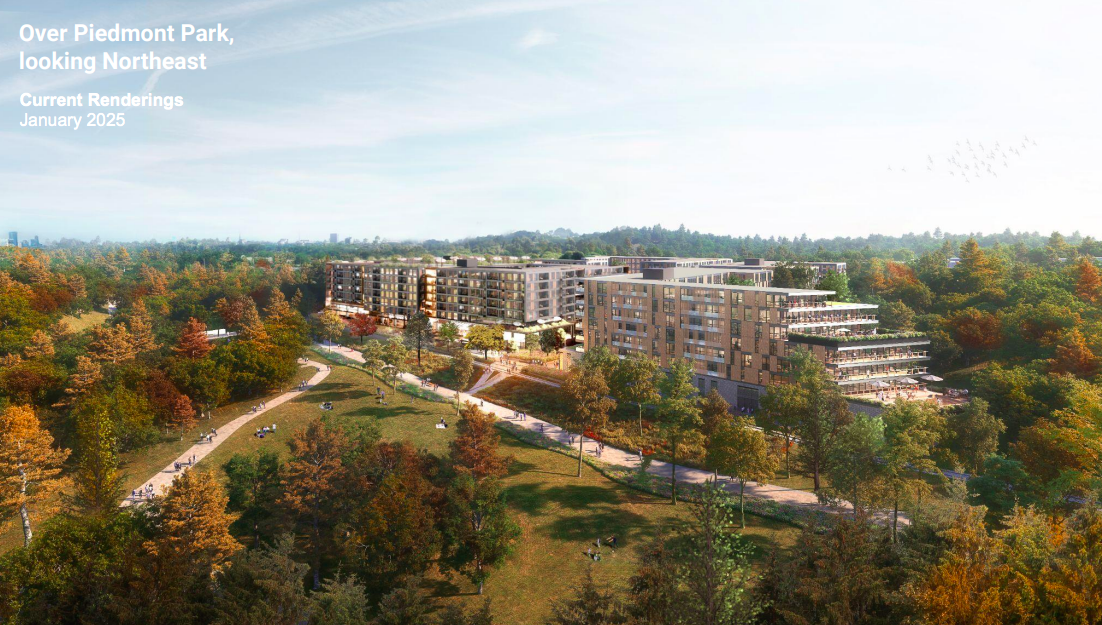
Approved scale for the 11-acre, Beltline-adjacent development. SOM architects/Portman Holdings
The property is already zoned PD-MU, or Planned Development-Mixed Use, a designation that allows for mixes of commercial and residential development and other uses, per Portman.
We reached out early this morning to Portman officials and representatives for more information on a construction timeline, if available, and to learn where exactly the proposed first phase would be located on site. This story will be updated will any additional details that come.
The address used in this week’s filings, 501 Amsterdam Ave. NE, is a building situated next to the Beltline’s Northeast Trail at the southwest corner of the property.
Portman’s scaled-back Amsterdam Walk plans scored Atlanta City Council eight-to-six approval in April.
That came despite a naysaying campaign, an online petition, Neighborhood Planning Unit F’s rejection, and a last-ditch neighborhood board letter decrying the project. Neighbors in favor of blocking Portman’s plans argued the lone artery in and out of Amsterdam Walk, Monroe Drive, is already unsafe and impassable with consistent traffic jams at certain times of day, among other complaints. The project’s 1,430 planned parking spaces point to car-dependency that will lead to an estimated 13 percent bump in daily car trips, the petition asserted.
The finalized plans put together by Portman—a veteran Atlanta developer that’s helped reshape the skyline and another section of Beltline-adjacent land with Junction Krog District—call for up to 1,100 apartments total.
Also included in the 1.2-million-square-foot development will be public plazas and about 150,000 square feet of commercial space across both phases.
Somewhere between 220 and 240 of the apartments will be reserved as rentals below market rate, while about 19,000 square feet of retail will see a 30-percent discount for tenants at ground level, developers have said.
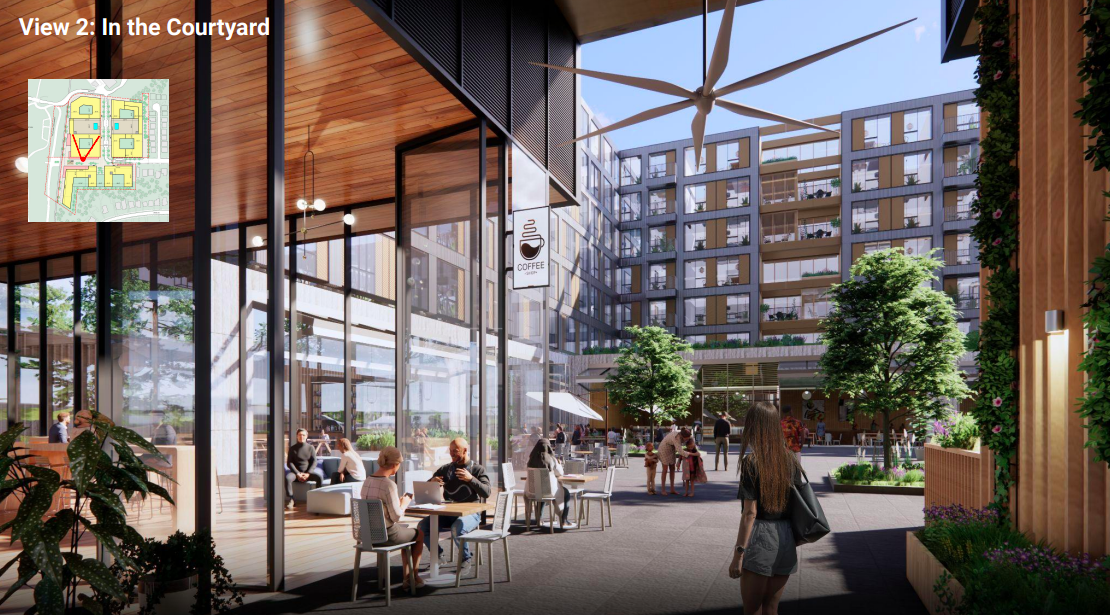
Revised designs for an Amsterdam Walk interior courtyard space. SOM architects/Portman Holdings
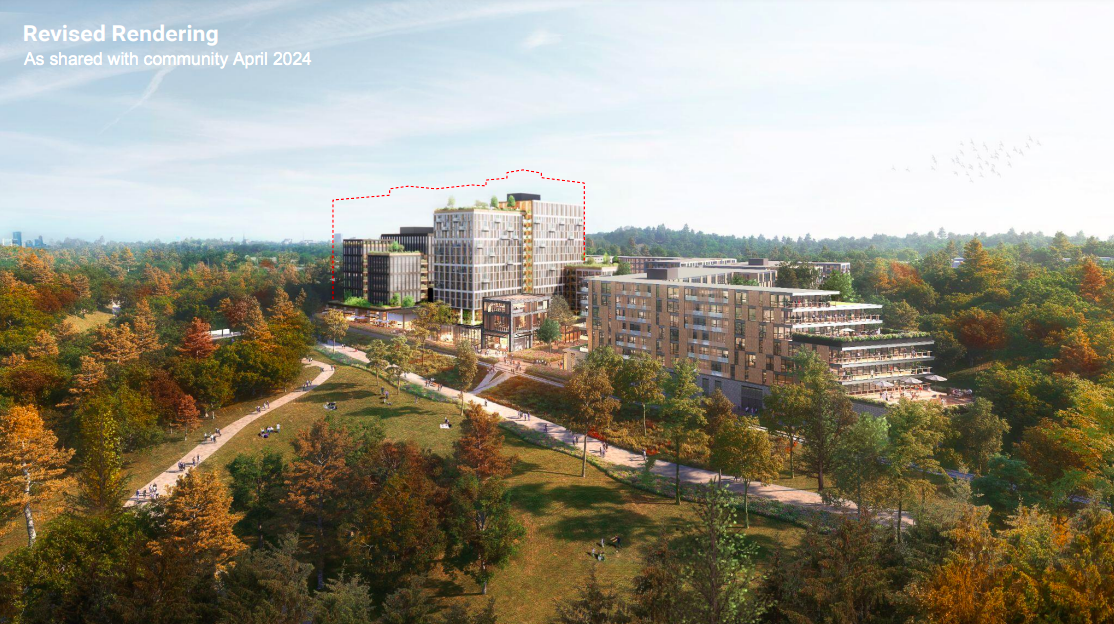
The project’s original scale (outlined) and another version that was also eventually scaled back in Virginia-Highland. SOM architects/Portman Holdings
Invest Atlanta, the city’s economic development arm, approved $2 million in Beltline TAD increment financing in September for the phase-one multifamily component at Amsterdam Walk.
That housing piece would see 135 units reserved for tenants earning between 50 to 80 percent of the Area Median Income or less, according to Invest Atlanta.
On the cheaper end of the spectrum, that means phase-one Amsterdam Walk rents would start at $1,000 monthly for a studio unit (415 square feet) and range up to $1,485 for one of four three-bedroom apartments (1,100 square feet).
At 80 percent AMI, meanwhile, rents would start at $1,600 for the studios and climb from there.
An Invest Atlanta recap indicated Portman is partnering on the affordable units with Mercy Housing, a nonprofit developer most recently behind supportive housing project Thrive Sweet Auburn and another workforce housing venture, Clairmont Family, in Chamblee.
Invest Atlanta’s project recap indicates the $53-million residential component would take two years to build and would open sometime in 2028, with amenities that include a playground, picnic pavilion, business center, and laundry. Commercial space would be situated on the development’s ground floor.
Additional funding is expected to be sourced from Georgia Department of Community Affairs tax credits and federal and state Low Income Housing Tax Credits via Truist, among other sources, per Invest Atlanta.
Find more imagery and context in the gallery above.
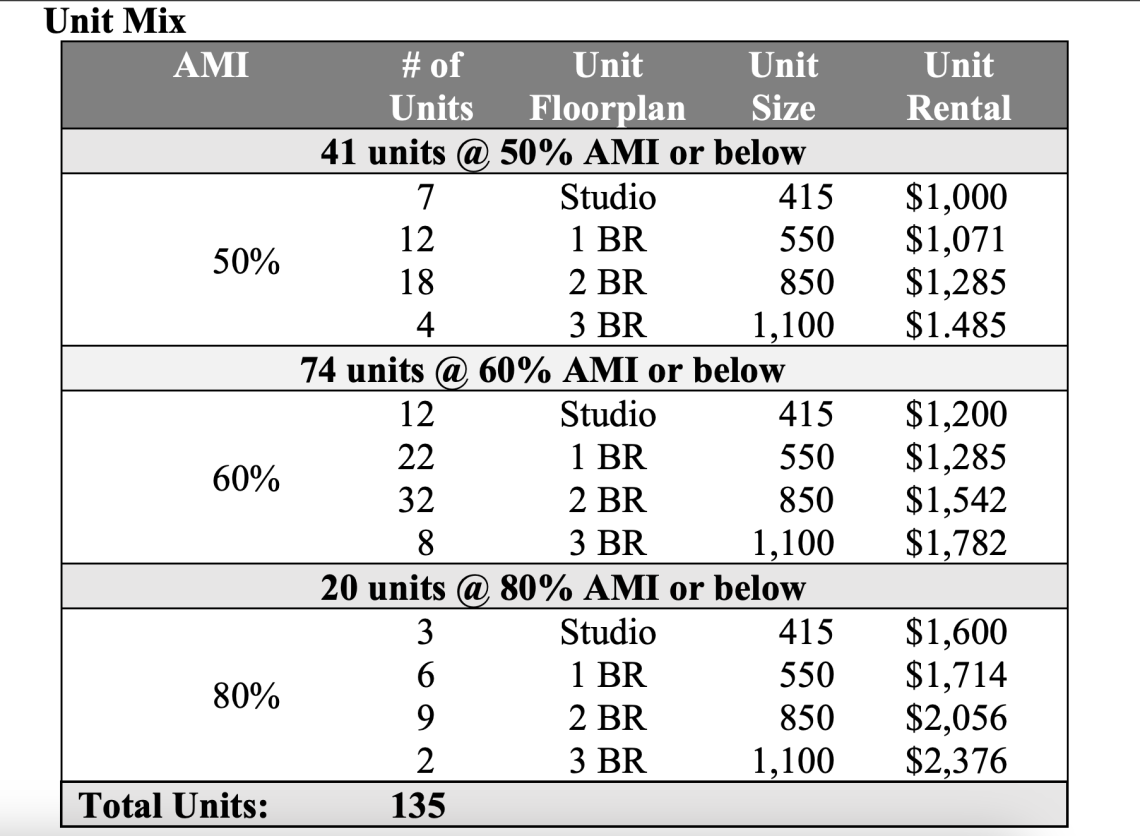
The planned “deeply” affordable housing breakdown at Amsterdam Walk’s initial phase along the Beltline’s Northeast Trail, as detailed by Invest Atlanta in 2025. Invest Atlanta
…
Follow us on social media:
Twitter / Facebook/and now: Instagram
• Virginia-Highland news, discussion (Urbanize Atlanta)