
It’s been one of those days and I’m starting The Morning Dump at 11:42 AM. Technically, it’s still morning. It won’t be morning by the time you read this because even I’m not that fast. You know who is fast, though? Policymakers in the United States, who keep changing the rules on tariffs.
For a company like Nissan, this is super annoying. While Nissan builds vehicles in the United States, it doesn’t think it can build a sub-$30k vehicle here, so it makes those cars in Mexico. There’s essentially a 25% tariff on those vehicles, meaning it’s cheaper to build something in a place like South Korea. Is that fair?


If you thought the original round of tariffs was unfair, you’re not alone. After the Supreme Court ruled that the certain tariffs were unconstitutional, a bunch of companies lined up for refunds. Some of those refunds will be going to hedge funds.
For all the crap Stellantis takes, it’s at least finding a way to bring sales up in what was a tough quarter for most. In fact, Stellantis might be the only large automaker that did better in every market. Even China! It’s a tough place to sell cars these days, and Ford CEO Jim Farley doesn’t want to import that market stateside.
‘It Is Not Feasible’ To Move Cheapest Cars To The US Says Nissan CEO
 Photo credit: Nissan
I finally drove the new Nissan Kicks and, eventually, I’ll tell you about it in detail. It was good, although the high trim version I drove seemed a little expensive. That’s not a coincidence. With a 25% tariff on the Kicks, the company basically can’t make money on the vehicle if it can’t charge a lot for it, according to the company.
This is a strange quirk of the tariffs. The original stated goal was to have “90 deals in 90 days.” It’s been a year and there aren’t 90 deals and, in many cases, the deals that do exist aren’t fully signed or ratified. This means that automakers who build cars in countries that do have a mostly agreed upon or signed deal, like Japan and South Korea, save money relative to places like Mexico.
As with everything trade-related, this isn’t universal. The United States-Mexico-Canada Agreement (USMCA) is still in place, and vehicles that follow those rules are exempt. Well, the content of those cars that is USMCA-complaint is exempt from the newer 25% tariff. This is why Audi got hosed, because the Q5s they were building in Mexico were mostly non-USMCA complaint, with a lot of parts from Europe.
This is what Nissan is complaining about in this Automotive News article as the company’s leaders complain about trying to sell Sentras and Kicks:
“These two products are sourced from Mexico because of the affordability requirements of the segment,” CEO Ivan Espinosa told Automotive News at a media event here.
“At the moment, it’s not feasible to move them to the U.S.,” he said. “We need to continue working on the cost competitiveness.”
Espinosa isn’t the only one who takes issue with this. From the story:
The Trump administration’s 25 percent tariff on imports from Mexico is “unfair,” particularly compared with the 15 percent charged on vehicles from Europe and South Korea, Nissan Americas Chairman Christian Meunier said.
“A 10 to 15 percent tariff is manageable, but 25 percent is not sustainable long term,” Meunier said.
Because few companies make a truly affordable car in the United States anymore, it’s hard to argue that we aren’t just raising the cost of these lower-priced vehicles. However, both Toyota and Honda have found a way to make some Corollas and Civics here, so it’s not entirely impossible.
Nissan’s plans involve increasing the amount of US-sourced parts in the Sentra and Kicks, which does point to the original goal of the White House being somewhat fulfilled. The other big part of the plan, reportedly, is to sell higher trims (Trimflation), which counters the White House’s other goal of making cars more affordable.
Hedge Funds Might Be Getting Your Tariff Refund
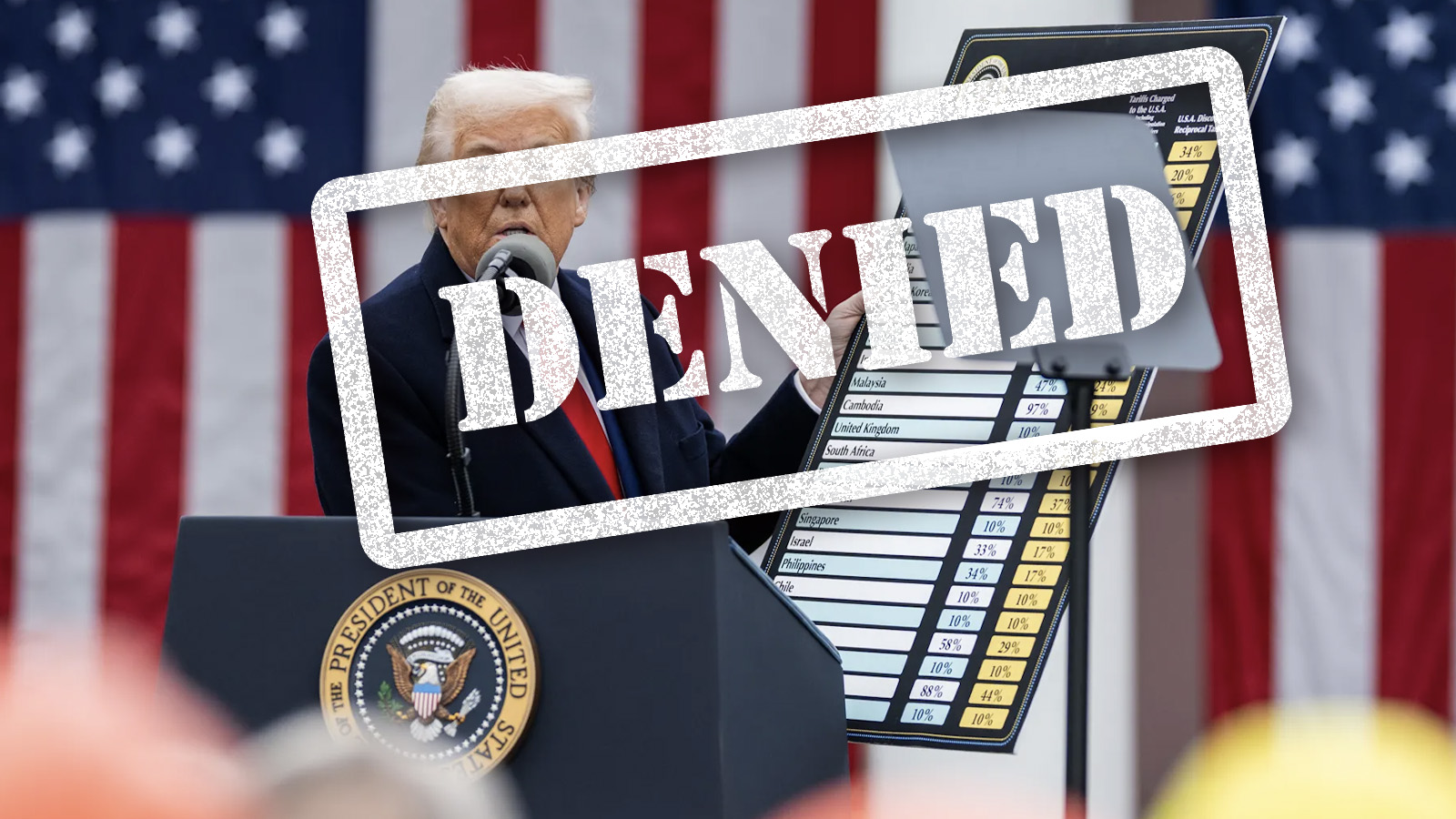 Photo: The White House
When the Supreme Court overturned certain tariffs, numerous companies had already filed lawsuits so they’d be first in line to get refunds. Not everyone can wait for all the capital they lost, which is an opportunity for hedge funds that want to buy those refunds at a discount.
“The Supreme Court decision unlocked the market,” said Wes Harrell, a managing director at Seaport Global, which connects hedge funds with importers holding tariff claims.
“I think ultimately we’ll see more folks come in as a result of higher inflation around input costs and what that’s doing to liquidity concerns,” Harrell said.
Tariff refunds were selling at 20 to 40 cents on the dollar before the Supreme Court’s ruling. But prices have since skyrocketed with major brands taking legal action to get their money back.
Larger claims with high-quality sellers are going for up to 70 cents on the dollar, Harrell said. “The past month or so has been importers getting their ducks in a row, talking to trade counsel, determining how best to protect their rights in this litigation and in the refund process.”
Will you see any of that money? Probably not.
Stellantis Saw A Lift In Every Market
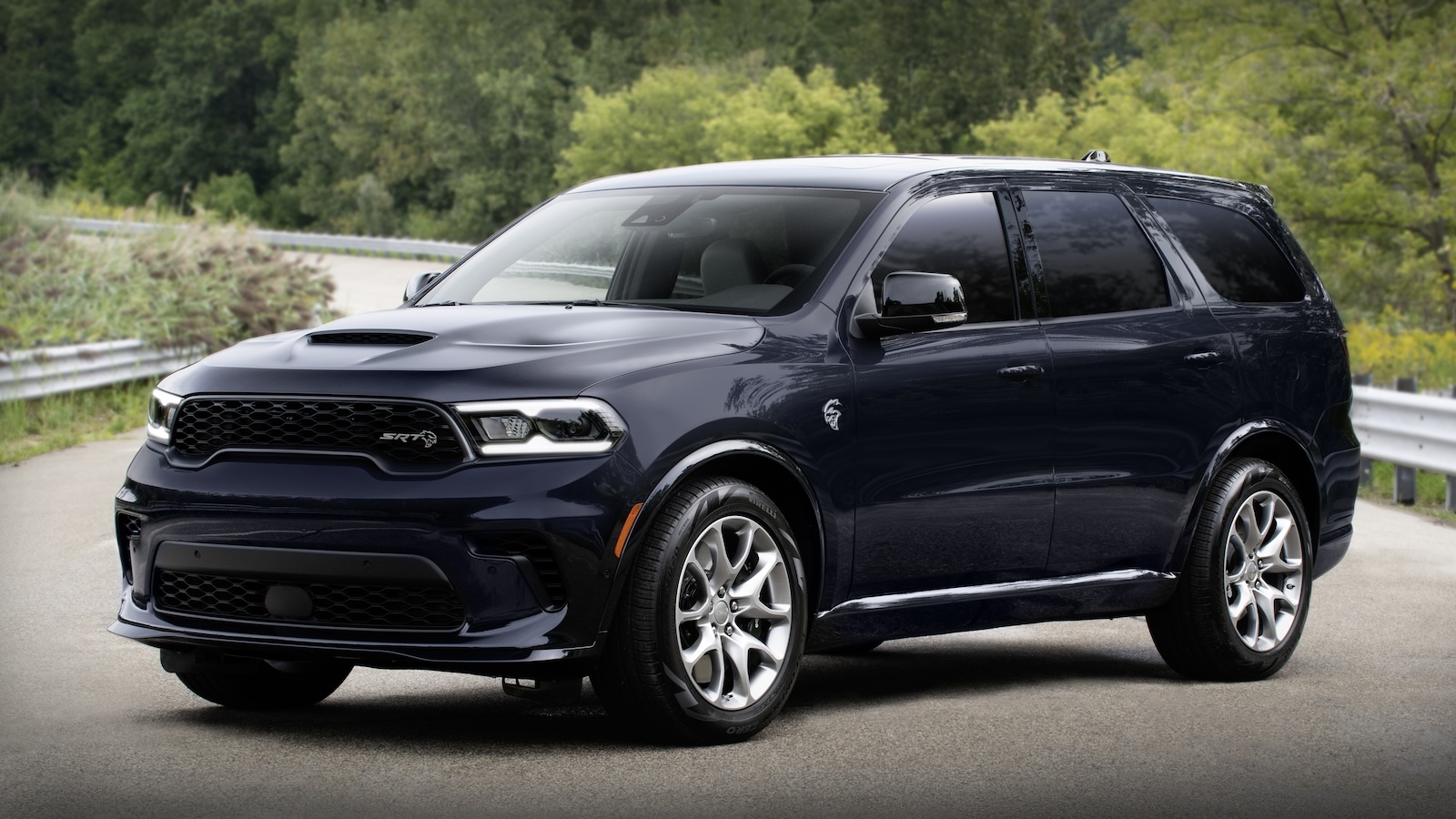 Photo credit: Dodge
While Stellantis has been able to boost North American sales with the addition of the Hemi V8 back to the Ram 1500 (where it belongs), that’s not going to work in Belgium. It turns out that Stellantis, which was near the bottom a year ago, has managed to find ways to sell cars everywhere. Is there any automaker that has improved its sales in every market? Not that I can think of.
As a whole, the company was up about 12% in Q1, including a 17% rise in North America and a 15% rise in Asia Pacific. The company even did well in Europe, as it explains:
In Enlarged Europe, Q1 shipments increased by approximately 69 thousand units, up 12% y-o-y. LCV volumes were stable at approximately 135 thousand units. Passenger car volume growth was driven by new launches. FIAT, Opel/Vauxhall and Citroën brands shipments benefited from the performance of Smart Car platform nameplates (Citroën C3, C3 Aircross, Opel/Vauxhall Frontera, Fiat Grande Panda) which increased by approximately 48 thousand units, or 85% y-o-y. Leapmotor-branded vehicles gained commercial momentum, with shipments increasing by 22 thousand units to approximately 27 thousand units; supported by the success of the T03, in the BEV entry-price segment across Europe, particularly in Italy.
I had an enlarged Europe once, but a doctor gave me a pill and it went back to normal size.
‘We Should Not Let Them Into Our Country’
 Credit: Xiaomi.
Ford CEO Jim Farley may have loved his SU7, but he doesn’t think Chinese automakers should be able to sell cars here. The CEO went on Fox News and basically said it would be a bad outcome if that happened.
From that interview, via InsideEVs:
Ford CEO Jim Farley loves driving Chinese EVs, but he’s also clearly worried about what could happen if they could more easily enter the U.S. market. In a recent interview with Fox News, the CEO said Chinese EVs shouldn’t be allowed on U.S. streets due to the “devastating” impact they would have on the auto industry.
“We should not let them into our country,” he said. “Manufacturing is the heart and soul of our country. For us to lose that to those exports would be devastating for our country.”
This will keep coming up, and it’s approximately correct to say that more so than pretty much anywhere, China has subsidized its industry in a way that makes it an all-consuming beast. That being said, American companies could benefit from competition with world-class EVs. It just ain’t gonna happen here anytime soon.
What I’m Listening To While Writing TMD
You can’t do TMD in 45 minutes without some power, so I turned to The Stooges and “I Want to Be Your Dog.” That’s such a great riff.
The Big Question
What are some of the best American-made affordable cars and why are they the Pontiac Vibe?
Top graphic images: Nissan