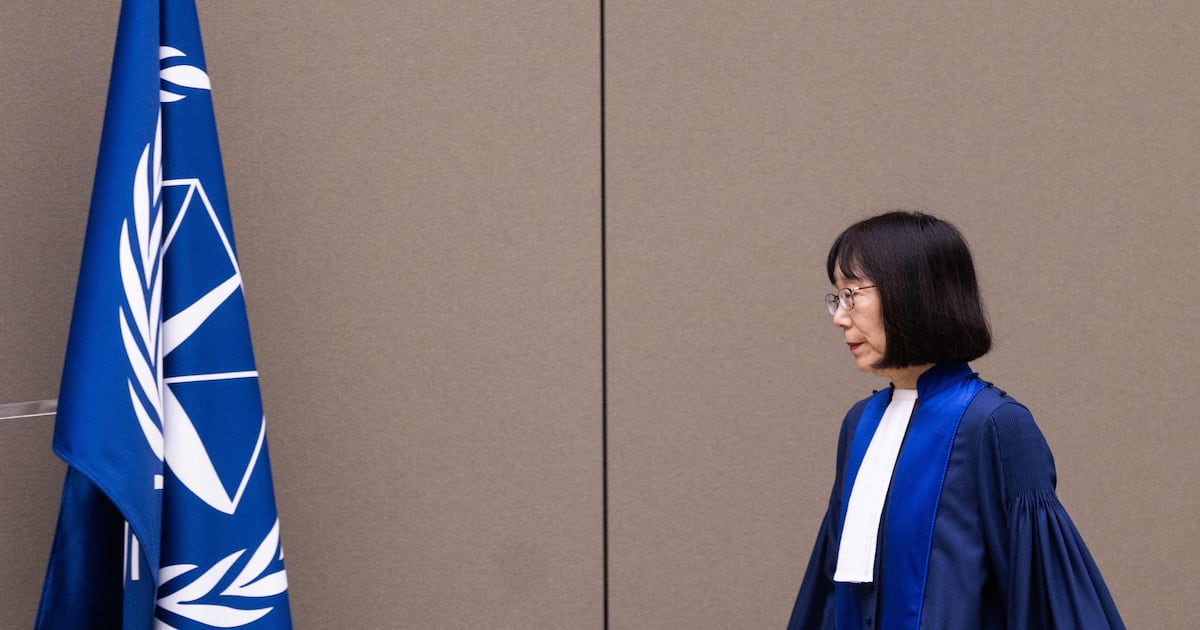
The US on Tuesday imposed sanctions on the president of the International Criminal Court, Tomoko Akane, and senior trial lawyer Abdoulaye Seye, intensifying the administration’s campaign against a court it accuses of threatening American sovereignty.
US Secretary of State Marco Rubio said Ms Akane of Japan and Mr Seye of Senegal had been directly involved in ICC efforts to investigate or prosecute officials from countries that have not accepted its jurisdiction.
“These individuals have directly engaged in efforts by the ICC to investigate, arrest, detain or prosecute officials whose government has not consented to ICC jurisdiction,” Mr Rubio said in a statement.
He described the court as a “corrupt and fatally politicised supranational court” that had “maliciously abused its authority and exceeded its mandate”.
“We will not tolerate its assault on state sovereignty,” Mr Rubio said.
The sanctions mark the latest step by US President Donald Trump’s administration against The Hague-based court, which prosecutes people for war crimes, crimes against humanity and genocide, among others.
Mr Trump has said that the campaign against the ICC was aimed at defending Israeli Prime Minister Benjamin Netanyahu and others from prosecution.
New York’s Mayor Zohran Mamdani called last month for the Israeli leader’s arrest. During last year’s mayoral campaign, he pledged to direct the New York Police Department to arrest Mr Netanyahu if he visited the city, under the ICC warrant issued over Israel’s conduct in the Gaza war.
Neither the US nor Israel is a party to the Rome Statute, the treaty that established the ICC.
Washington has previously imposed sanctions on ICC officials. The court says can exercise jurisdiction over alleged crimes committed on the territory of member states even when the accused are nationals of countries that have not joined the court.
Mr Rubio said the ICC’s actions set a “dangerous precedent for all nations” and indicated that Washington’s pressure campaign would extend beyond sanctions on court officials.
“Our whole of government campaign to dismantle the threat posed by the ICC to national sovereignty will be sweeping,” Mr Rubio said, adding that Washington expected other countries to end their funding and participation in the institution.
The Trump administration was prepared to take further action “to systematically dismantle the ICC until it is incapable of threatening American sovereignty”, he added.
Balkees Jarrah, Middle East and North Africa director at Human Rights Watch, said the US government’s decision to sanction two more ICC officials is “just the latest example of the Trump administration’s utter contempt for international law and a naked attempt to shield American and Israeli officials implicated in serious crimes from justice”.
The ICC has 125 member states and is intended as a court of last resort, taking up cases when national authorities are unwilling or genuinely unable to investigate or prosecute serious international crimes.