The FAA wants a fuel line checked on some Delta, JetBlue and Breeze Airbus A220s. It sounds worse than it is, and here is why.
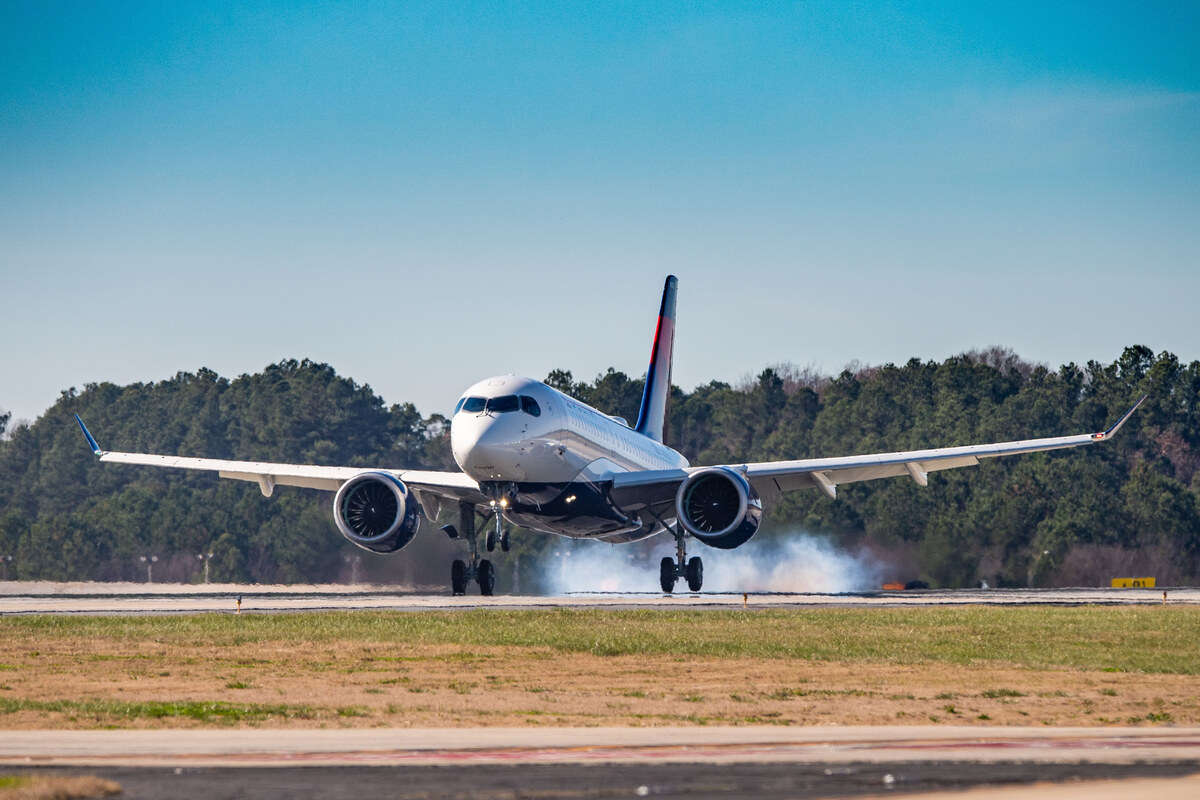
 Landing A220 Courtesy of Delta Air Lines (Photo by Chris Rank/Rank Studios 2018)
The A220 Cannot Catch A Break
Last year I wrote about the A220 family engine troubles grounding a big share of the fleet, and the type has spent much of the past two years living down a reputation for reliability problems it did not entirely earn. The engines were the issue then, a powder-metal defect in the Pratt & Whitney geared turbofans that pulled airplanes out of service across the world, just the like the A320 family. This time it is a fuel line, and the fix is less serious than other air worthiness directives.
The Federal Aviation Administration has proposed a new directive covering a fuel hose on certain A220-100 and A220-300 aircraft, the same jet Delta, JetBlue and Breeze have turned into a staple of short and medium US routes. It would replace a 2021 order on the same part, and it follows a similar directive that Canada’s regulator issued about a year earlier. No aircraft should require extensive grounding as it did with the fan blade issues.
What The Order Covers
The target is the motive-flow flexible fuel hose, a line that helps move fuel inside the wing. On the airplanes in question the hose can develop a twist, and a twisted hose can chafe against itself over time. The worry is not the leak on its own but where the leak would sit. Electrical harness connectors run nearby in the wing, so a chafed line that weeps fuel introduces a possible ignition source. That’s an utterly terrifying situation, though there haven’t been any cases of safety incidents yet.
The fix is a visual inspection of the hose, with a replacement only if an operator finds the twist. The FAA estimates the rule reaches 13 US-registered A220s, nine carried over from the 2021 directive this one supersedes and four newly added. The inspection runs about $850 per airplane. If a carrier does find a twisted hose, the pylon rework climbs to roughly $10,000. No A220 has had a fuel-line fire tied to this condition, and the order is preventive and it affects a relatively small number of aircraft.
It’s a sign of an incredible system of part tracking and tracing to be able to isolate this to just a limited number of aircraft rather than the entire fleet. Obviously, it would be better if the manufacturer was able to identify this problem before it hit the final assembly line, but some problems don’t reveal themselves prior to usage and time.
Why It Is Smaller Than It Sounds
The order reaches 13 airplanes, a fraction of the A220 fleet US carriers fly. Delta operates more than 80 of the type and is adding more, JetBlue flies around 60, and Breeze has built much of its route map on the back of the A220, which is a large part of why the US is the busiest A220 market in the world. Only a small, specific set of tail numbers with the affected hose configuration falls under this directive.
The FAA is also following Transport Canada, which issued its own order on this hose roughly a year before this proposal. I have made the case elsewhere that the FAA moves slowly behind its European and Canadian counterparts, this doesn’t appear to be the case this time.
While some have abandoned the A220 (Swiss retired the A220-100 fleet but still flies the 300, EgyptAir entirely), the A220-300 can make it from Boston to Edinburgh (even with a 20% fuel buffer) in addition to Bogota, and any cross-country route. That makes it incredibly powerful for airlines with lower demand on a route and better economics especially for a 160 seat maximum capacity jet (though for long haul operations with business class, the passenger count would be far lower.) The fan blade issue was one problem but this falls well short of any serious concern for the aircraft as a whole.
Americans Fly The A220 More Than Any Other Region
A minor fuel-line inspection is important because of the size and market impact of the A220 for Americans, and the largest air market. It’s a better passenger experience with its two-three layout with no middle seat on one side, oversized windows, and a cabin quieter than the regional jets it often replaced. Delta, in particular, has pushed the type onto routes that once flew larger narrowbodies. The US is geographically larger with population more spread out than tighter markets like Europe.
The engine defect was serious and expensive, and Pratt & Whitney and the airlines are still working through it, but it was an engine-production issue rather than anything wrong with how the jet flies. A fuel-hose inspection on 13 airframes belongs in a different and far more ordinary category.
Conclusion
A part showed a wear pattern, two regulators documented the occurance, and operators will check a hose that costs almost nothing to inspect. The discovery and correction of the problem should be a sign of the capabilities for regulators to source issues and act on them in a reasonable and quick manner.
What do you think?

Get Daily Updates
Join our mailing list for a daily summary of posts! We never sell your info.
You have Successfully Subscribed!