
🕑7 min read
For years, the American auto industry treated sedans like yesterday’s news. Automakers poured billions into SUVs, crossovers, and pickups while traditional four-door cars slowly disappeared from dealership lots. In the process, brands like Chrysler and Dodge walked away from segments they once were popular in.
In this article▾
Buyers Are Returning To Sedans
The Market Created Its Own Problem
Stellantis Is Down To Just Two Sedans
Chrysler Could Be Preparing A Return
Dodge’s Mexican Sedan Could Point To The Future
Sedans Aren’t Dead After All
Now, something interesting is happening.
Sedans are quietly making a comeback in the U.S. market, and the numbers are starting to back it up. Rising vehicle prices, growing frustration with oversized crossovers, and renewed interest in affordable, efficient transportation are pushing buyers back toward traditional passenger cars. While it’s far too early to call this a full-blown shift, there’s no question the market is changing.
Buyers Are Returning To Sedans
 2026 Honda Accord Hybrid Sport. (Honda).
For nearly a decade, the industry narrative was simple: Americans no longer wanted cars. Every automaker repeated the same message as they phased out sedans one after another. Ford exited the mainstream sedan business entirely. General Motors (GM) has reduced its offerings down to Cadillac. Stellantis eventually narrowed its sedan lineup to just two vehicles in the United States — the Dodge Charger and the Alfa Romeo Giulia.
But recent sales data suggests consumers may not have abandoned sedans nearly as much as automakers thought.
Honda has seen major gains with the Honda Accord, with deliveries jumping more than 40% in April compared to the same month last year. The Honda Civic also posted gains. Meanwhile, the Toyota Camry continues to perform exceptionally well, even briefly outselling the Toyota RAV4 earlier this year. That’s not happening by accident.
Today’s SUVs and crossovers have become expensive. In many cases, buyers are paying significantly more money for vehicles that are larger, heavier, and less efficient than the sedans they replaced. Add in higher interest rates and insurance costs, and suddenly a well-equipped sedan starts looking like a smart financial decision again. For younger buyers especially, smaller cars are regaining appeal.
The Market Created Its Own Problem
 2015 Dodge Dart R/T. (Dodge).
Crossovers became dominant for several reasons. They offered more cargo space, easier entry and exit, and higher seating positions that many customers liked. But from the automakers’ perspective, the biggest advantage was profitability. SUVs and pickups simply generate more money per vehicle.
So automakers marketed them relentlessly. Over time, consumers were conditioned to believe crossovers were superior to sedans in nearly every way. The result was an industry-wide collapse in passenger car offerings, especially from Detroit brands.
Back in 2016, Fiat Chrysler Automobiles (FCA) made one of the boldest decisions in the industry when it announced plans to discontinue smaller sedans like the Dodge Dart and Chrysler 200.
 2016 Chrysler 200S. (Chrysler).
Then-FCA CEO Sergio Marchionne explained the reasoning during the company’s earnings call:
“We have seen a significant shift in the product mix of cars being sold [in the U.S.],” Marchionne said. “There has been, in our view, a permanent shift toward UVs and pickup trucks [in the U.S. market].” He later added, “And so, one of the things that we have decided to do is to effectively de-focus — from a manufacturing standpoint in the U.S. — to de-focus on the passenger car market.”
At the time, FCA believed demand for SUVs and trucks would continue climbing indefinitely. Gas prices were low, Jeep sales were exploding, and Ram pickups were becoming major profit generators. Factories were already operating near capacity, so the company chose to prioritize the vehicles generating the highest margins.
Financially, it made sense.
But strategically? The decision may have left a massive opening for competitors.
Stellantis Is Down To Just Two Sedans
 2026 Dodge Charger SIXPACK R/T Plus. (Dodge).
Today, Stellantis’ American sedan portfolio is shockingly thin. The automaker that once offered a wide variety of four-door passenger cars has narrowed its lineup down to just two sedan nameplates in the U.S.
The new eighth-generation Dodge Charger now serves as Dodge’s only mainstream sedan offering in America, carrying the brand’s performance legacy into a new era. Meanwhile, Alfa Romeo Giulia remains Stellantis’ lone premium-focused sedan in the U.S. market.
Beyond those two vehicles, there’s nothing else.
That absence becomes even more noticeable as competitors continue posting strong sedan sales numbers. Brands like Honda and Toyota are proving there is still a healthy market for traditional four-door cars, especially as affordability becomes a growing concern for buyers.
And honestly, a lot of customers never stopped wanting sedans in the first place. Many buyers still prefer something easier to park, lighter on fuel, and more affordable than today’s increasingly oversized SUVs and crossovers. Others simply miss the driving characteristics that made sedans popular for decades, better handling, a lower seating position, and a more connected feel behind the wheel.
 2026 Alfa Romeo Giulia Veloce. (Alfa Romeo).
Even Stellantis executives are beginning to openly acknowledge that demand is still there. Speaking recently with Car Design News, Stellantis’ Head of Global Design Ralph Gilles said, “A lot of people are asking for sedans.”
Gilles expanded on that thought by explaining how younger designers inside the company are gravitating back toward smaller, more personal vehicles.
“Young designers want hatchbacks like the GTI of the 1980s,” Gilles said. “They want a personal car that’s fun to drive and easy to park. It’s making us rethink different form factors.”
That’s a significant statement coming from one of the industry’s most influential automotive designers. More importantly, it signals Stellantis understands the market could be shifting back toward smaller, more practical vehicles after years of prioritizing SUVs and pickups above everything else.
Chrysler Could Be Preparing A Return
 Chrysler 200 Rendering. (MoparInsiders).
For Chrysler, the return to sedans almost feels inevitable.
The brand desperately needs more products, and there’s clearly growing demand for affordable passenger cars. Former Chrysler CEO Christine Feuell hinted last year that a successor to the Chrysler 300 could eventually happen as well as a smaller car at the Carlisle Chrysler Nationals, while Stellantis CEO Antonio Filosa has openly discussed interest in sub-$30,000 vehicles for brands like Chrysler, Dodge, and Jeep®.
Meanwhile, Stellantis North America design boss Scott Krugger recently told Automotive News:
“We know there’s a place for Chrysler.” Krugger also added that there remains “plenty of interest in Chrysler from the highest levels of this company.” That’s important. For years, Chrysler’s future felt uncertain. But now, there appears to be genuine momentum building behind expanding the brand again. And honestly, the formula might already exist.
Dodge’s Mexican Sedan Could Point To The Future
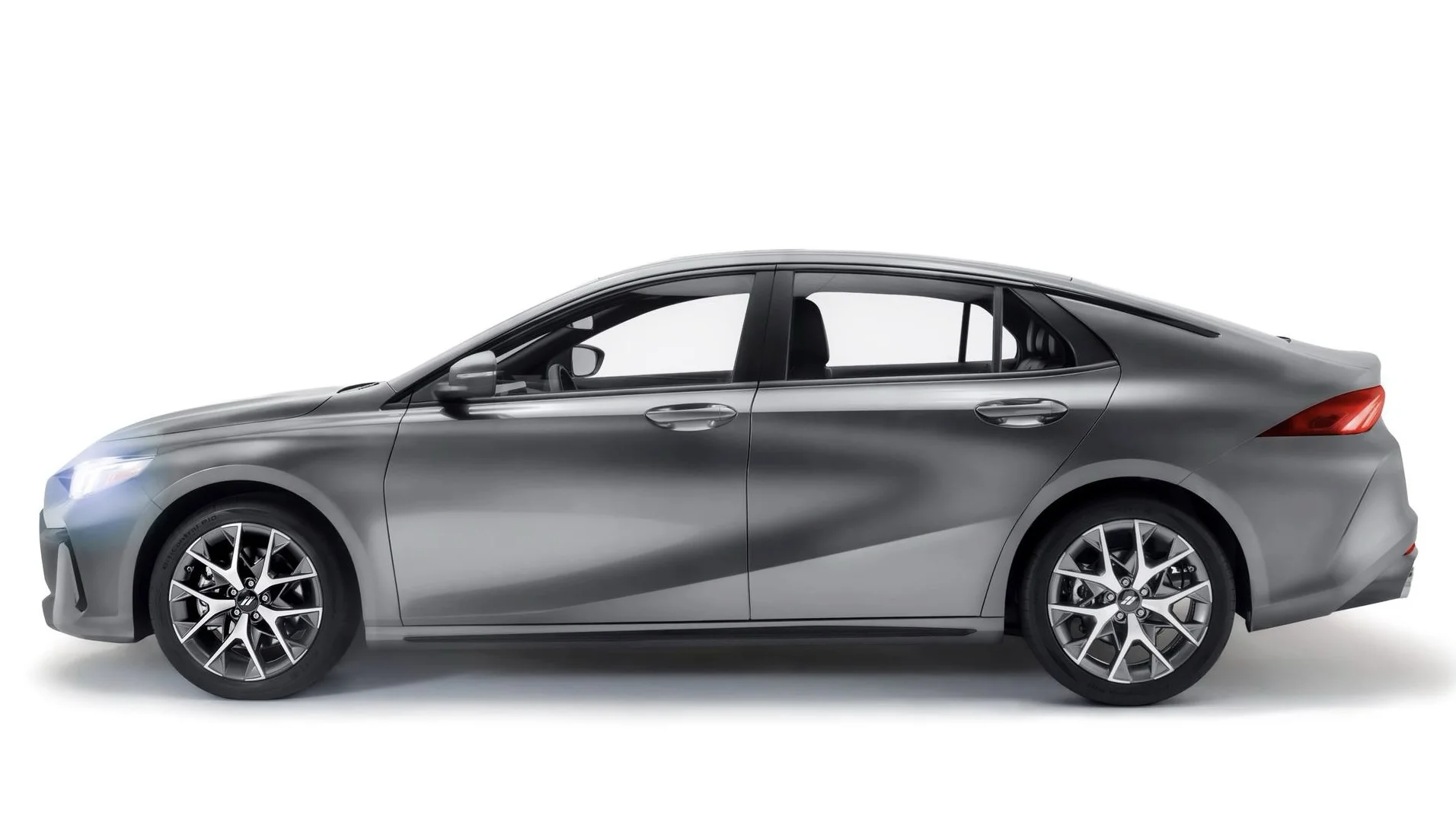 2026 Dodge Attitude R/T Sport. (Dodge Mexico).
One of the most overlooked vehicles in Stellantis’ global lineup is the Dodge Attitude sold in Mexico. Imported from China through GAC, the compact sedan has become one of Dodge’s biggest success stories south of the border. It’s affordable, stylish, efficient, and packed with features buyers actually care about.
Powered by a turbocharged 1.5-liter engine producing 168 horsepower, the Attitude isn’t trying to be a muscle car. Instead, it focuses on value, practicality, and modern design. Pricing starts at roughly $21,000 to $23,500 USD equivalent, with higher trims staying below many crossover competitors.
That matters in today’s market.
Americans are increasingly struggling with vehicle affordability. Average transaction prices continue climbing, while many entry-level crossovers now approach luxury-car pricing territory. A compact Dodge sedan built in North America could potentially fill a massive gap in Stellantis’ lineup.
Now obviously, importing a Chinese-built sedan into the U.S. market would create political, tariff, and manufacturing complications. But the overall concept absolutely makes sense. A stylish, affordable, fuel-efficient Dodge or Chrysler sedan built domestically could attract younger buyers who currently feel ignored by Detroit automakers.
Especially if it looked good and remained affordable.
Sedans Aren’t Dead After All
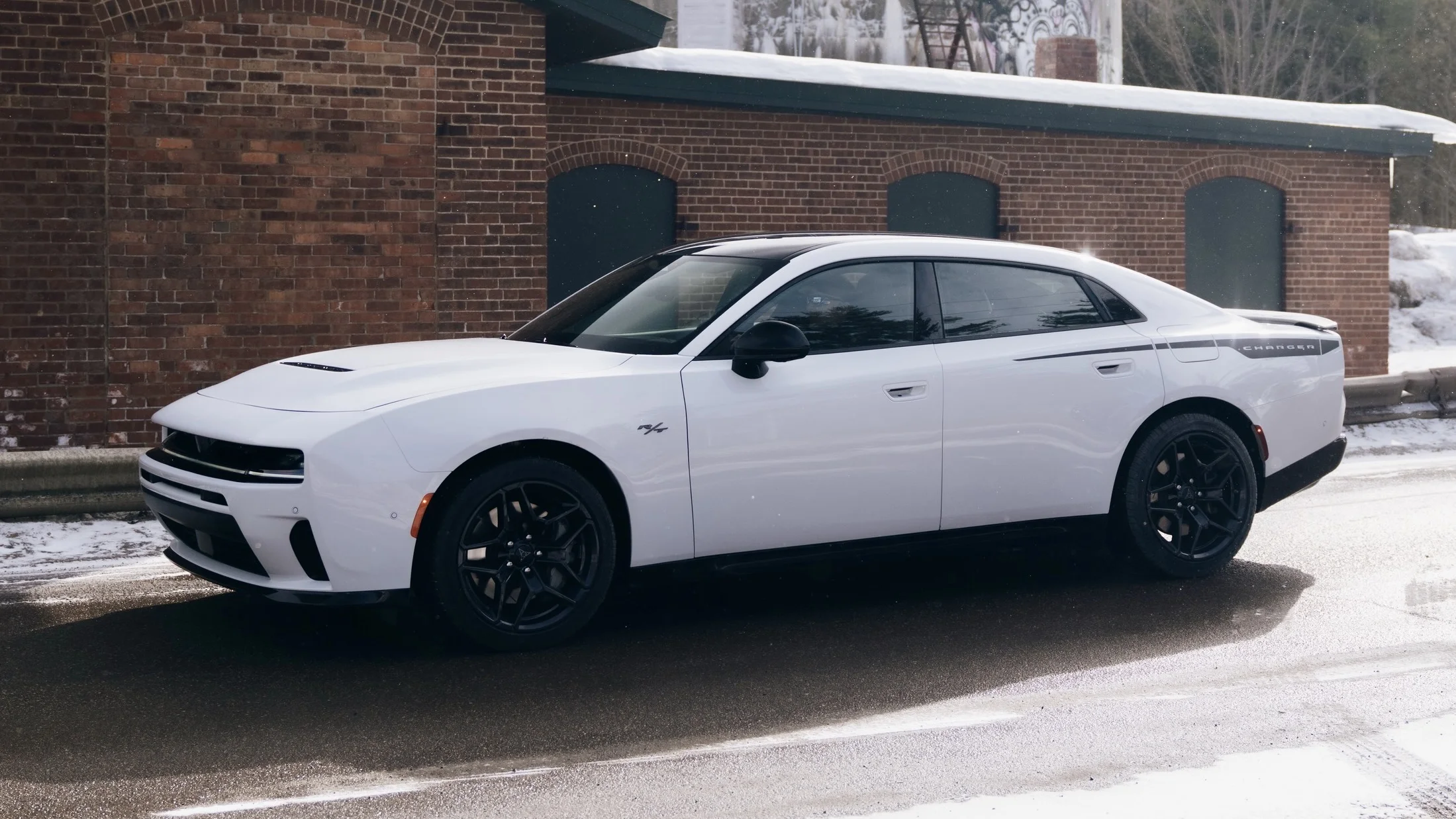 2026 Dodge Charger SIXPACK R/T Plus 4DR. (Dodge).
For years, the industry treated sedans like an outdated format. But the market may finally be correcting itself.
Not everyone wants a massive SUV. Not everyone needs three rows. And not everyone wants a $60,000 crossover with giant wheels and mediocre fuel economy. Sometimes people simply want a comfortable, practical, affordable car.
That realization is beginning to show up in sales numbers, consumer behavior, and even executive comments from within Stellantis itself. Whether Detroit fully embraces sedans again remains to be seen, but the demand clearly still exists.
The irony is the industry may have spent the last decade creating the perfect conditions for sedans to make a comeback.

Robert S. Miller
Like this:
Like Loading…