Saudi Aramco (2223.SR) CEO Amin Nasser warned that further disruptions to global energy supply could prove “catastrophic” as tensions in the Middle East continue to escalate.
Underscoring the precarious nature of the situation, Nasser said in comments to analysts and investors on Tuesday morning that the Iran war is “the biggest crisis the region’s oil and gas industry has faced.”
“The disruption has caused a severe chain reaction in not only shipping and insurance, but there’s also a drastic domino effect on aviation, agriculture, automotive, and other industries,” Nasser said. “There would be catastrophic consequences for the world’s oil markets the longer the disruption goes on, and the more drastic the consequences for the global economy.”
The Aramco CEO said the company is ramping up the volume of oil it sends through the East-West pipeline that runs across Saudi Arabia to the Red Sea, one of two major pipelines available to bypass the Strait of Hormuz. The pipeline has a capacity of up to 7 million barrels per day, Nasser said, and Aramco should be reaching capacity “within a couple of days.”
If Aramco were forced to reduce production down to the 7 million bpd that can go through the East-West pipeline, Nasser said, the company should be able to bring production back up to normal levels “in days and not weeks” — a potential bullish signal for investors after predictions that shut-ins, or reductions in production runs, could take weeks or months to reopen.
Read more: How to protect your money as Mideast turmoil fuels market volatility
Futures on international benchmark Brent (BZ=F) and US benchmark West Texas Intermediate (WTI) crude (CL=F) traded at roughly $87.60 per barrel and $90 per barrel, respectively. The two products opened above $100 Sunday evening following US-Israeli strikes on Iran and popped to roughly $119 each before plummeting on Monday when President Trump said he believed the conflict could soon come to an end, triggering a major unwind of the war premium.
But comments from Trump alone are unlikely to solve the severe physical bottlenecks weighing on the global energy market. The critical Strait of Hormuz, which accounts for 20% of global oil flows, remains closed to through traffic.
On Tuesday morning, the United Arab Emirates announced that the government was taking its Ruwais refinery, which can process around 900,000 bpd of oil, offline as a precaution after airstrikes, adding to a litany of closures across the Middle East. Earlier in the week, Bahrain shut down its Bapco Energies refinery, the country’s only such facility.
And in the oilfields, shut-ins throughout Saudi Arabia, Iraq, Kuwait, and the UAE now total roughly 6.7 million bpd of lost production, equivalent to around 6% of global supply.
Meanwhile, the Trump administration signaled further escalation of tensions. In comments on Tuesday morning, Secretary of Defense Pete Hegseth said Tuesday would be the “most intense day of strikes yet.”
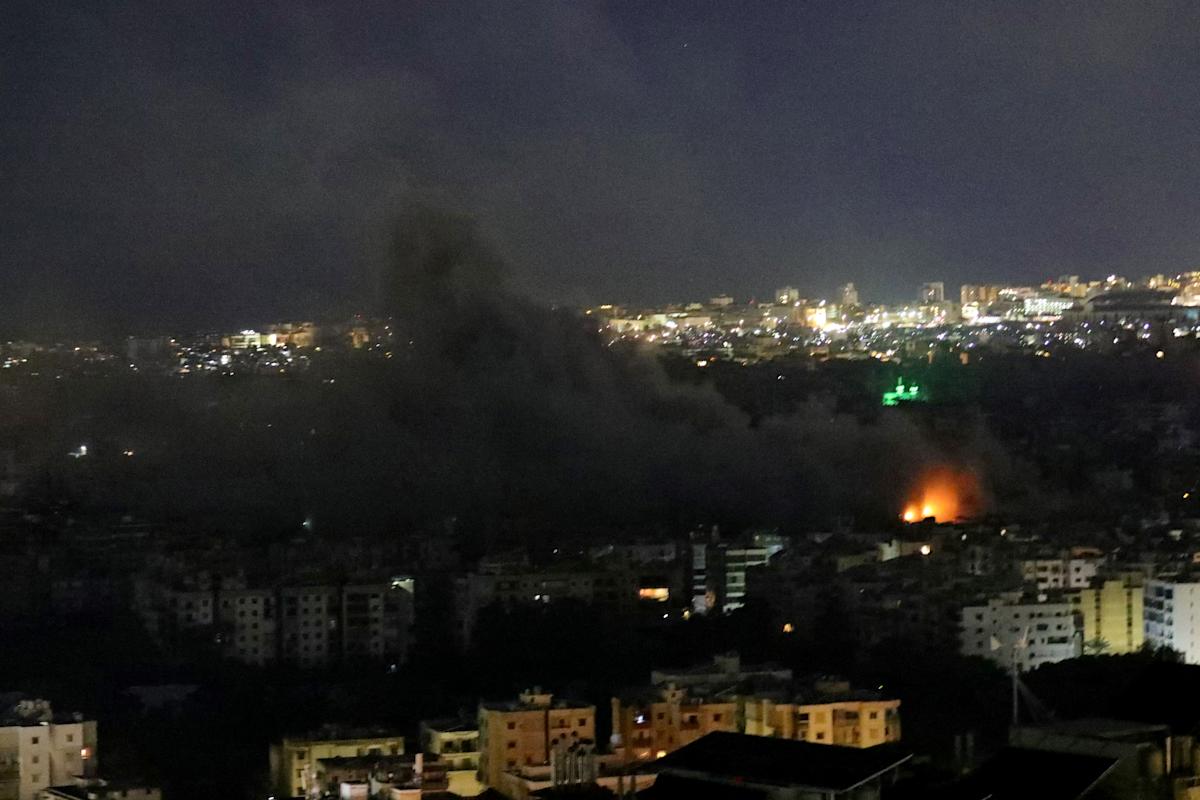
 A fireball rises from the site of an Israeli airstrike in the southern suburbs of the Lebanese capital of Beirut on March 9. Lebanon was drawn into the Middle East war last week when Iran-backed militant group Hezbollah attacked Israel in response to the killing of Iranian supreme leader Ayatollah Ali Khamenei during US-Israeli strikes. (Ibrahim Amro/AFP via Getty Images) · IBRAHIM AMRO via Getty Images
Jake Conley is a breaking news reporter covering US equities for Yahoo Finance. Follow him on X at @byjakeconley or email him at jake.conley@yahooinc.com.