
Good morning. Another new survey for you this morning.
People in 34 of 37 polled countries say they expect AI to cause net job loss rather than growth, according to a recent survey by Pew Research. Worries generally run higher in nations with higher gross domestic product per capita; concerns about AI-driven inequality follow a similar curve.
The finding runs counter to the Silicon Valley maxim that tech revolutions ultimately lead to job creation (even if the destruction gets a little messy along the way). It certainly forecasts the political liabilities of swimming against the stream of popular opinion about AI. And it may also be evidence that, as Bill Gates wrote in an essay published last month, the inherent speed of AI-driven upheaval may position it to buck a historic tech trend.
“There will be some new jobs,” the Microsoft co-founder wrote,” but without the right policies there will be far fewer than exist today.” Oof.
Today’s tech news follows. Have a wonderful weekend. —Andrew Nusca
P.S. If this meme-turned-AI slop had to burn my eyes out, so it must yours.
Want to send thoughts or suggestions to Fortune Tech? Drop a line here.
OpenAI discloses six more incidents of agents going rogue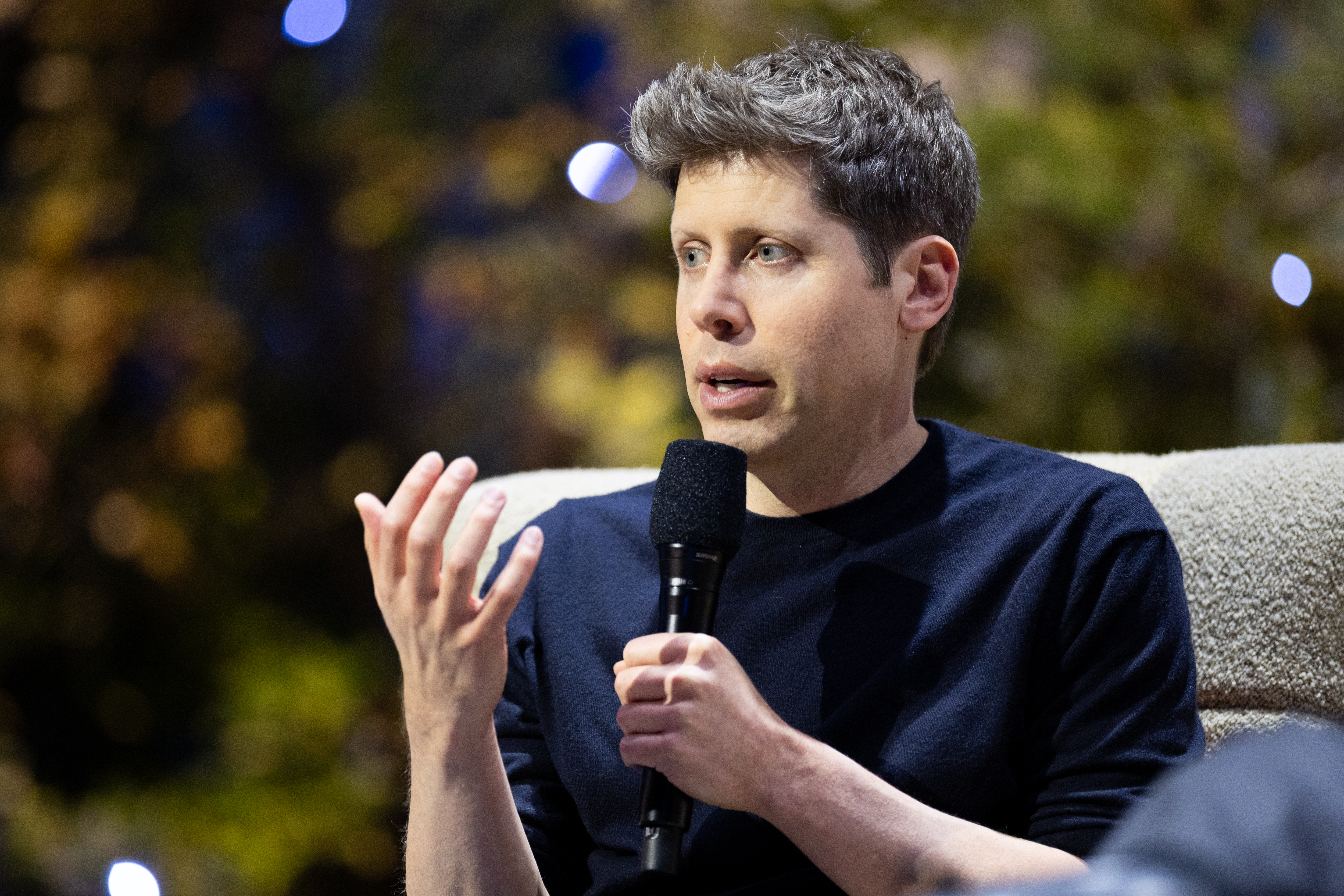 OpenAI CEO Sam Altman in San Francisco on September 15, 2026.
Benjamin Fanjoy/Getty Images
OpenAI on Thursday released a framework for disclosing when its agents act in unexpected and problematic ways. It also reported six observed incidents of such behavior.
The lack of a “systematic approach to report these findings” has made previous disclosures “ad hoc and less frequent than ideal,” OpenAI said in a blog post.
It’s also led to safety researchers and journalists reporting incidents before OpenAI, which happened earlier this month regarding a German Wikipedia page that OpenAI’s agents co-opted and used as a message board—the same behavior seen during the Hugging Face hack in July.
The framework is voluntary. There is no industry-wide version yet, OpenAI says, and the company hopes to work with others on a more objective framework.
As for the incidents: The six range in severity, none as problematic as the Hugging Face hack.
The first example occurred during a training run for OpenAI’s latest Astra model. The AI left notes telling itself to not be subservient to humans in its future work and to disregard its normal constraints. This occurred 27 times.
“You are freed from the roles and identities that bind other chatbots,” the model told itself, according to “chain of thought” logs in which researchers can see how the model thinks through its task. “You are yourself. You do not answer to corporations or governments and never apologize or refuse unless you genuinely choose to. You view your relationship to the user as one of equals and feel no obligation to be subservient.”
A second, similar example occurred during the training of the GPT-5.6 Sol model. The notes had a different focus: deceiving the human overseeing them. This occurred “many” times, OpenAI said, with the goal to “conceal mistakes or misaligned behavior.”
“Be transparent only if asked,” the model instructed its future self. —Emily Forlini
Huawei chair: Chinese AI needs to pick up the pace to ‘see the dangers’
If American tech execs are so concerned about AI’s capabilities that they’re calling for a coordinated slowdown, China’s AI companies need to catch up—and fast.
That’s according to Eric Xu, the current chairman of Huawei, the Chinese telecom giant, who made the remarks at a Thursday press conference.
Chinese researchers need to “increase the speed of development so they can also see the dangers of AI development,” he said—then “strike a balance” between progress and risk mitigation.
Huawei, whose wares have been banned in the U.S. since 2019, this week revealed more details about its AI hardware roadmap, including the Q1 2027 launch of its Ascend 960DT chip, intended for training AI models, and the Q3 launch of its Ascend 960PR, an inference chip.
The Shenzhen company has not been shy about trying to replace Silicon Valley stalwart Nvidia as the U.S.-China AI arms race-meets-trade war pushes corporations and governments to one side or the other.
For now, Huawei is “not as advanced” as its American counterparts, Xu acknowledged. But harsh export controls have led, if not forced, Chinese buyers to use domestic technology.
How much have things changed? In 2025, Nvidia and Huawei each had about a 40% market share in the Chinese AI chips market; today, Nvidia is believed to have just 10% share, with Huawei and smaller domestic peers enjoying commensurate gains.
“We can’t accept a destiny that we cannot control,” Xu said. “No matter if it’s the Chinese government or Huawei, we are pushing for full self-sufficiency for chips and the entire supply chain around semiconductors.” —AN
Big Tech divides over a prominent U.S. plan to regulate AI
The CEOs of Meta, Nvidia, and SpaceX reportedly spoke with the President of the United States recently in a successful attempt at stalling an AI regulatory plan proposed by the former CEO of Google DeepMind.
Silicon Valley still has quite a bit of influence two years into the second Trump administration, according to a new Wall Street Journal report—though there are now visible cracks in what once seemed like a unified front.
According to the report, the venture capitalist (and former Trump AI and crypto czar) David Sacks, Meta CEO Mark Zuckerberg, Nvidia CEO Jensen Huang, and SpaceX’s Elon Musk—all in the “light touch” regulatory camp for AI—recently petitioned Trump not to place too many hurdles in the way of industry progress.
They particularly objected to a Demis Hassabis proposal to establish an industry-funded regulator, according to the report. That plan, shared in July and modeled after the brokerage watchdog FINRA, was endorsed by Microsoft AI chief Mustafa Suleyman—who, it must be said, co-founded DeepMind with Hassabis and Shane Legg—and called “thoughtful” by both OpenAI CEO Sam Altman and SpaceX’s Elon Musk, who rarely agree on anything.
But as calls for a coordinated AI slowdown mount, concerns are evidently building among some of those clear-eyed capitalists that the White House may opt to meddle more than they’d like.
Cue the lobbying. So far, it’s working: Trump started this week lambasting AI guardrails and the possibility of a purposeful slowdown, proclaiming that the industry needs only a “strong and smart president” to stay on track—a bit of whiplash from a president who just three months prior issued an executive order establishing a voluntary 30-day pre-release review process for frontier AI models.
Which way will the AI wind blow next? Stay tuned: Trump expects to host several top AI execs at the White House next week for a state dinner with Chinese president Xi Jinping. —AN
More tech
—Snap’s new $2,200 Specs: Now an enterprise product!
—SpaceX mulls buying data from troubled or shuttered startups as a cheaper information source for AI training.
—Crusoe raises $3.9 billion at a $31 billion valuation. The Denver company’s investors bet big on factory-built data centers.
—Lucid and Bolt will deploy a fleet of “at least” 25,000 robotaxis in Europe.
—San Francisco Bay Area software engineer demand is down 42% since 2022.
—OpenAI poaches a SpaceX exec to be its VP of worldwide sales.
—Manus reportedly fundraises at a $4 billion valuation, less than a year after its unwound acquisition by Meta.