
President Isaac Herzog appeared on Sunday to rebuff Prime Minister Benjamin Netanyahu’s request for a pardon regarding the corruption charges he faces, saying that he would instead push for fresh talks to try and mediate a plea deal between the premier and the Attorney General.
Herzog’s statement came after a report in The New York Times said the president would seek mediation because he believes his job is to foster unity in Israel. Netanyahu’s trial on charges of bribery and fraud and breach of trust, which began in 2020, has divided the country along political lines. Herzog reportedly feels that those tensions have been exacerbated by Israel’s recent wars and this year’s election, which is due to take place in six months.
Herzog’s statement on Sunday confirmed that he wouldn’t be issuing a pardon to the prime minister at this point.
“As he has said several times in the past, President Isaac Herzog sees reaching an agreement between the parties in Prime Minister Netanyahu’s cases as a proper and correct solution,” Herzog’s office said.
“Negotiations for an arrangement are a necessary part of the attempt to bring the parties to an agreement,” he continued. “Therefore, the president believes that it is right to first, before discussing the pardon request itself, exhaust a process that could lead to the formation of an agreement between the parties, outside the walls of the court.”
Get The Times of Israel’s Daily Edition
by email and never miss our top stories
By signing up, you agree to the terms
Herzog has held off on granting Netanyahu a pardon despite immense pressure from US President Donald Trump. Trump has personally lashed out at Herzog multiple times, calling him “weak and pathetic” and demanding that he immediately pardon the prime minister.
Netanyahu’s supporters have echoed that request, insisting on Netanyahu’s innocence and saying the trial was dividing the country. Netanyahu’s opponents, meanwhile, have urged the president not to grant the premier clemency unless he admits guilt and resigns from political life.
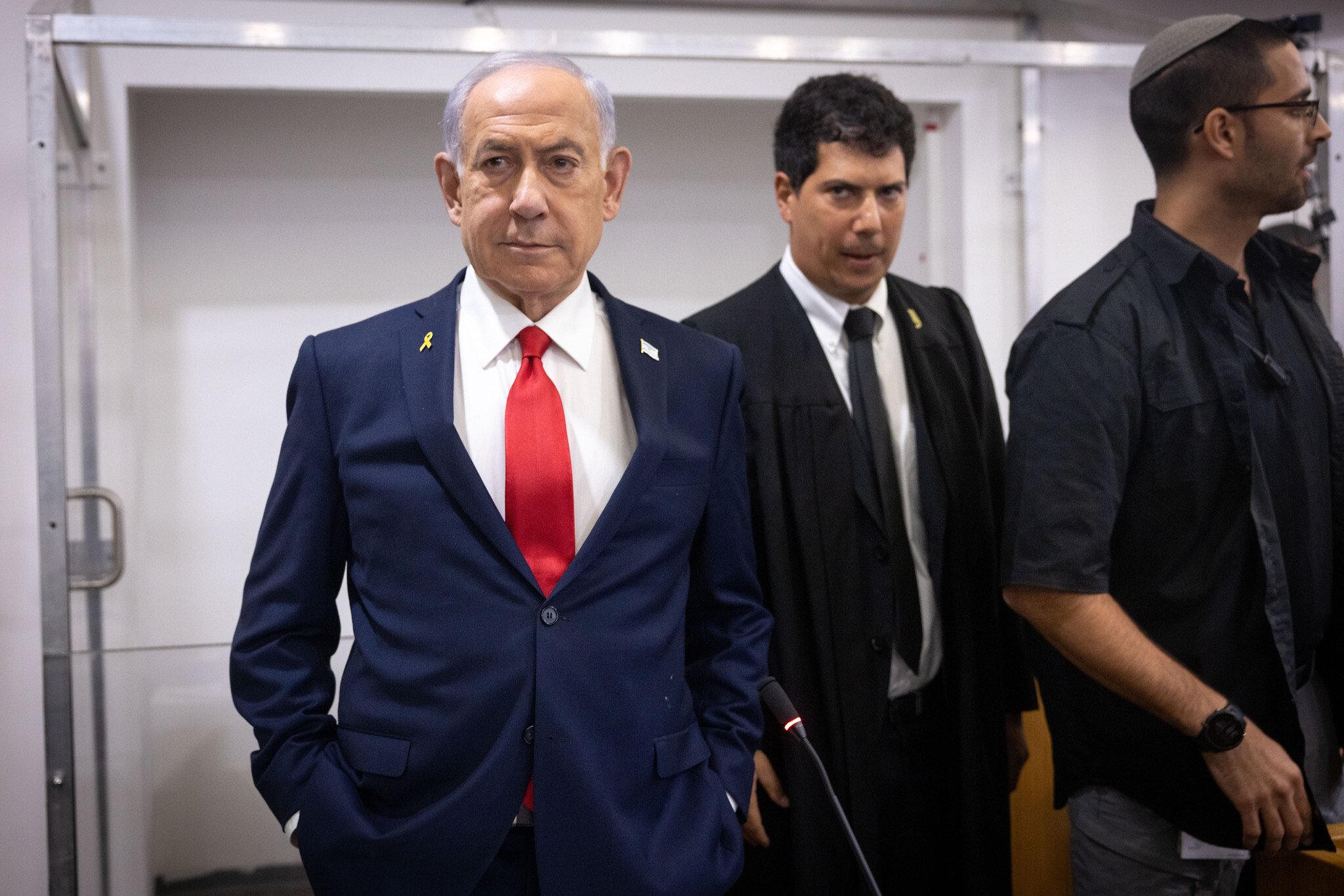
Illustrative: Prime Minister Benjamin Netanyahu arrives at the courtroom of the Tel Aviv District Court in the trial against him, October 28, 2025. (Miriam Alster/Flash90)
Netanyahu is the first sitting prime minister to go on trial. He has consistently denied any wrongdoing and has claimed that the cases against him — which concern allegations that he traded political favors for gifts and favorable press coverage — are a witch hunt fabricated by his opponents.
The prime minister formally requested a pardon in November, arguing that the trial was tearing the country apart and distracting him from his duties. But he did not admit guilt, raising the question of whether he could receive a pardon while his trial was still ongoing.
“Israel is facing enormous challenges, and alongside them great opportunities,” Netanyahu said at the time in a video statement. “To repel the threats and realize the opportunities, national unity is required.”
He argued that the trial’s continuation “stirs divisions and deepens rifts. I am certain, as are many others in the nation, that an immediate end to the trial would greatly help lower the flames and promote broad reconciliation — something our country desperately needs.”
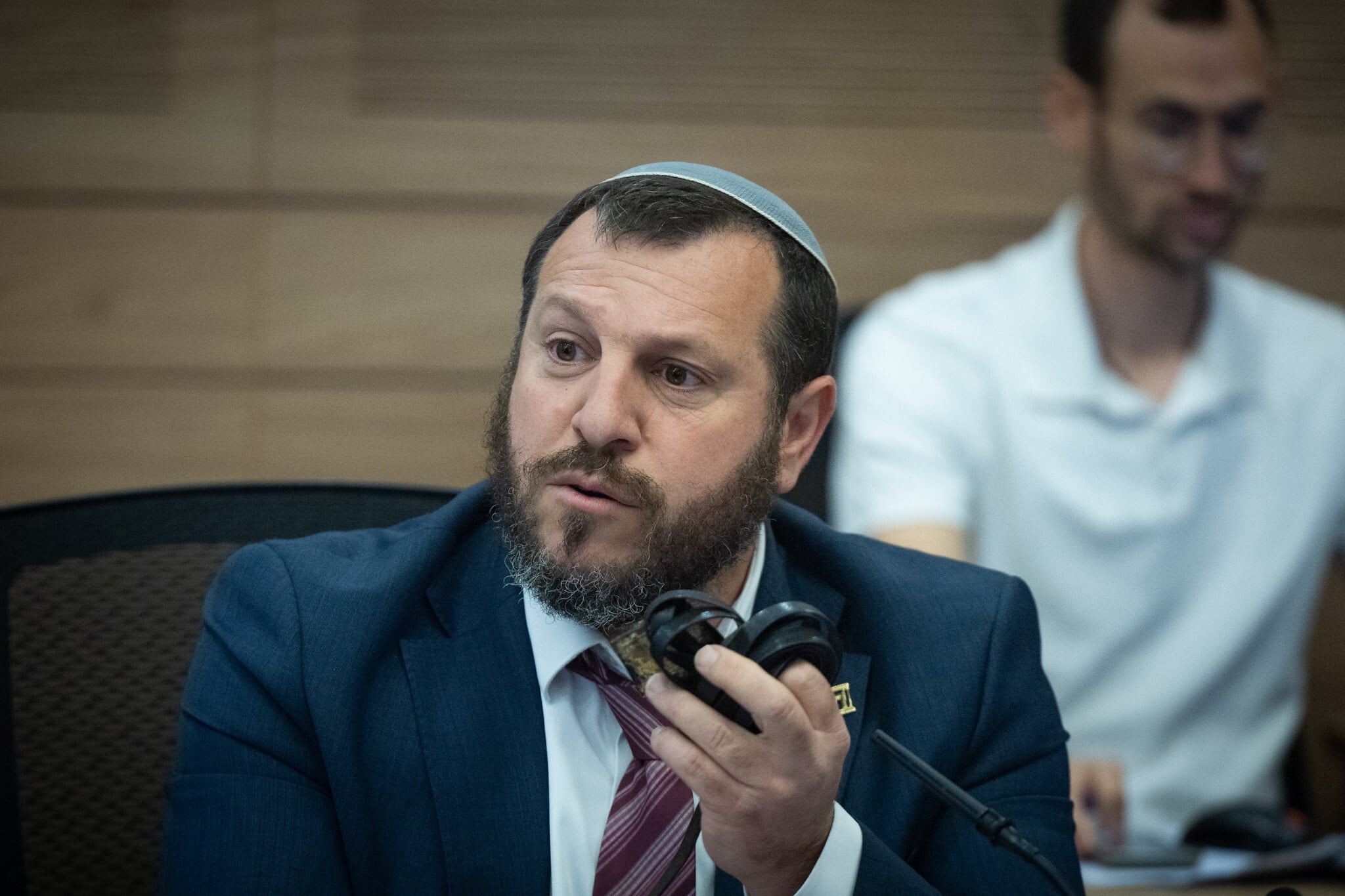
Heritage Minister Amichay Eliyahu during a meeting at the Knesset in Jerusalem, on July 7, 2025. (Yonatan Sindel/Flash90)
Herzog said at the time that he would consider the “extraordinary request” after receiving an expert opinion from the Justice Ministry.
Last month, the Pardons Department of the Justice Ministry published a position paper saying that it would be extremely problematic to grant Netanyahu a pardon since his trial is ongoing and he has not yet been convicted, and since he has not admitted any guilt or expressed any remorse.
“Therefore, based on the factual and legal foundation and the overall set of circumstances currently before us, we cannot determine that the pardon authority established in the Basic Law: The President of the State applies in this case,” the department said in summary.
“Likewise, we cannot recommend that the president take the exceptional and far-reaching step of exercising the pardon authority in a manner that would halt the legal proceedings currently being conducted against Mr. Netanyahu.”
A position paper later submitted by far-right Heritage Minister Amichay Eliyahu reportedly endorsed Netanyahu’s pardon request. Eliyahu was acting in place of Justice Minister Yariv Levin, who recused himself due to a conflict of interest. Herzog’s legal counsel has yet to submit an official recommendation, the Times said.
Eliyahu on Sunday criticized Herzog’s decision to seek a plea bargain.
“It is unfortunate that the president of the country has today chosen the easy way out of legal procedure, rather than the path of leadership,” he posted on X, saying Herzog had “missed a historic opportunity to mend the rift and lead us to victory.”
He called for the government to pursue “necessary fundamental changes in the judicial system,” likely referring to the government’s contentious judicial overhaul, which aims to weaken the courts.
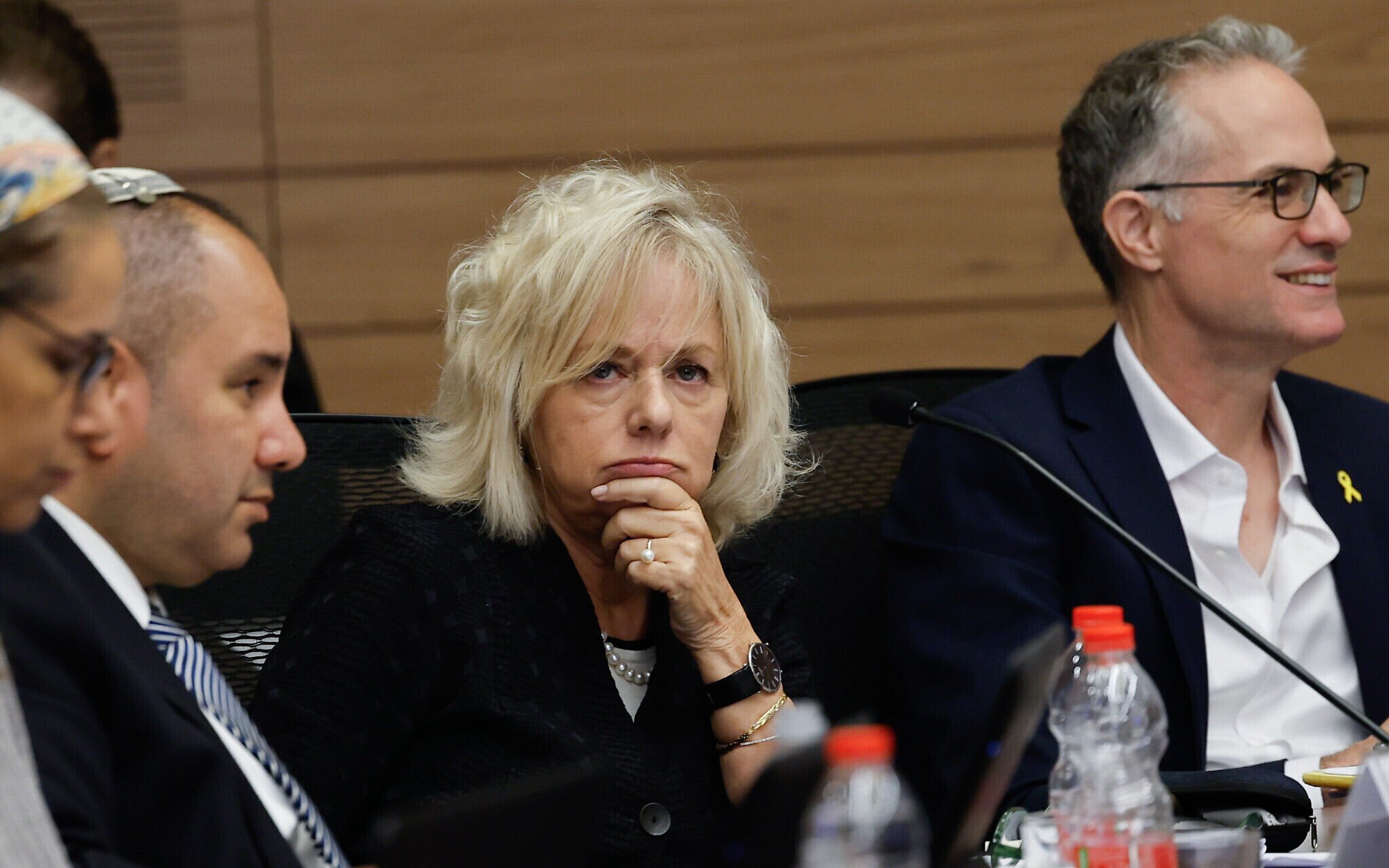
Attorney General Gali Baharav-Miara attends a hearing of the Knesset Constitution, Law and Justice Committee in Jerusalem, September 30, 2025. (Oren Ben Hakoon/ Flash90)
Now, instead of rendering a decision on the pardon request, Herzog will seek to hold arbitration talks in order to reach a deal.
The talks promise to be no small task. According to the Times, they will place Netanyahu’s lawyer Amit Hadad on one side of the negotiating table, opposite Attorney General Gali Baharav-Miara, a bitter ideological foe of Netanyahu’s government.
The premier’s coalition has repeatedly sought to fire Baharav-Miara, who has blocked or refused to defend several of its legislative initiatives because, she says, they contravene the law. Ministers have called on the government to disregard her authority.
Herzog, however, believes the talks have a chance of success, according to the report, which said he feels the “legal landscape leaves room for creativity and innovation.”
You appreciate our wartime journalism

You clearly find our careful reporting of the Iran war valuable, at a time when facts are often distorted and news coverage often lacks context.
Your support is essential to continue our work. We want to continue delivering the professional journalism you value, even as the demands on our newsroom have grown dramatically during this ongoing conflict.
So today, please consider joining our reader support group, The Times of Israel Community. For as little as $6 a month you’ll become our partners while enjoying The Times of Israel AD-FREE, as well as accessing exclusive content available only to Times of Israel Community members.
Thank you,
David Horovitz, Founding Editor of The Times of Israel
Already a member? Sign in to stop seeing this