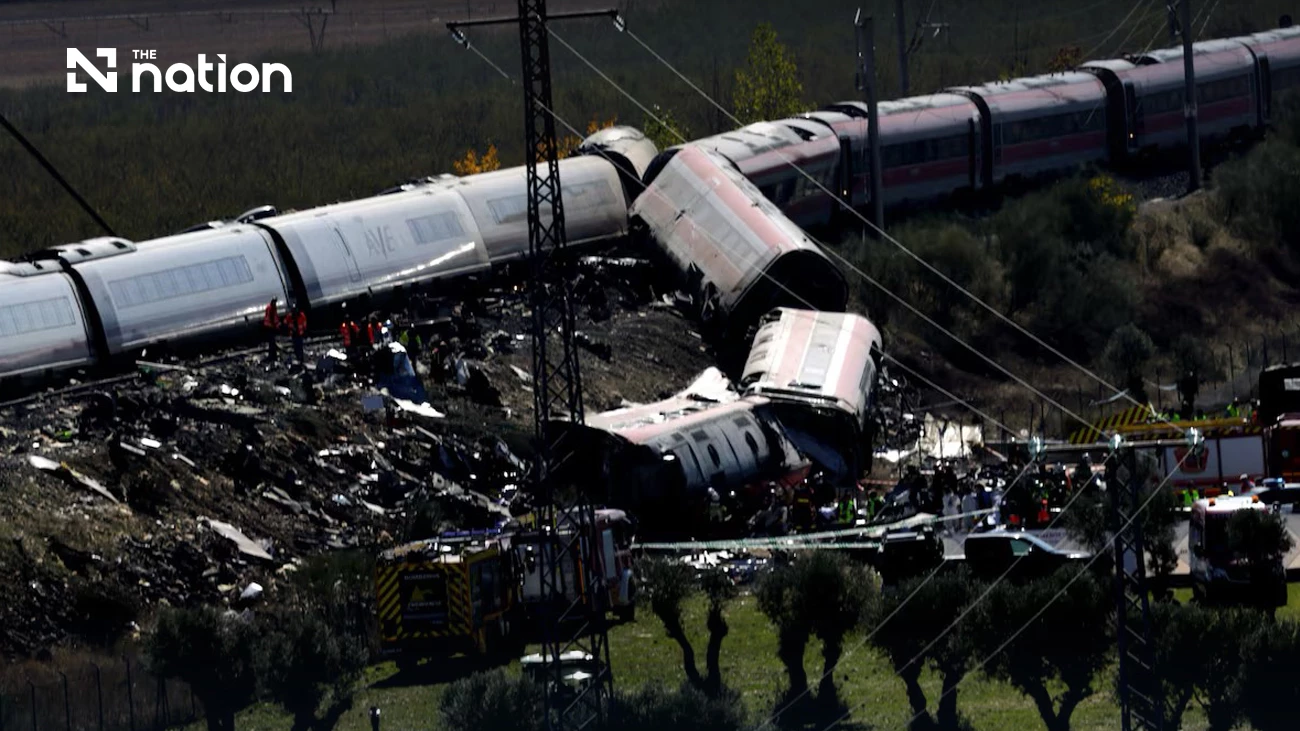
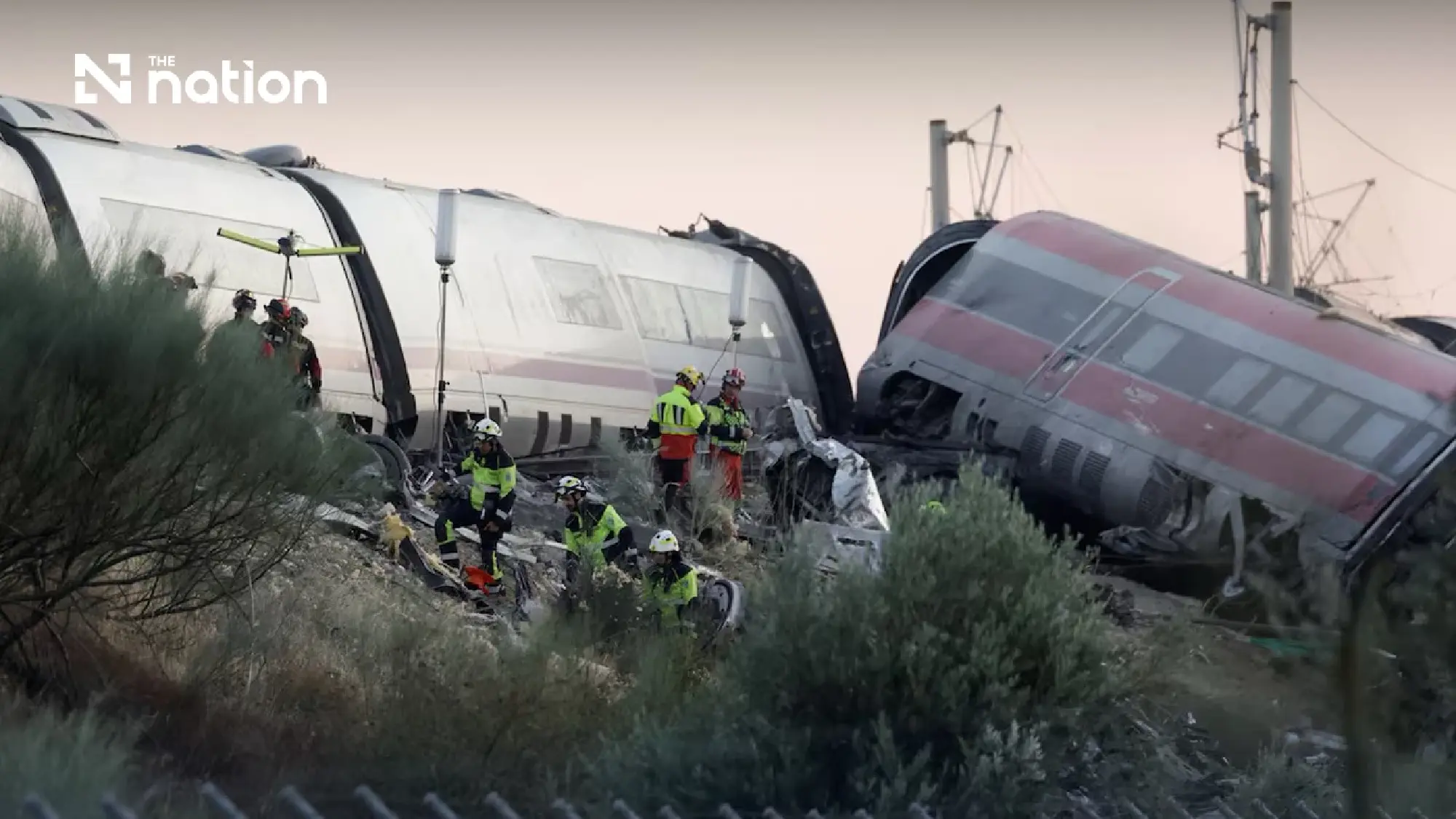
“I was very close to the door, but (other passengers) were breaking the windows to be able to get out. Some people practically couldn’t move because they were trapped amongst the seats,” Arriza said.
Another passenger, Rafael Barcelo, considered himself fortunate to have left his seat for a coffee before the collision. Barcelo said there had been at least eight victims in his carriage.
“We were having breakfast, drinking a coffee when we felt a very strong impact and we were sent flying,” Barcelo said.
Relatives seeking information were directed to a school in Urda. A woman who identified herself as Ana struggled to hold back tears as she described having no news of her husband, Pepe. His name was not among those identified, although police had found the couple’s dog, Trece.

Sánchez promises investigation and action on safety failures
Prime Minister Pedro Sánchez pledged to investigate the crash and address any failings uncovered. Speaking in a televised address near the crash site, Sánchez described the collision as a “terrible tragedy” and said “all of Spain” was in mourning.
Sánchez indicated that the causes of the October collision and January’s fatal high-speed crash appeared to be unrelated.
“If we need to further strengthen safety in order to rebuild confidence in our high-speed rail system, we will do so, because what is unacceptable for a country like Spain is to suffer two high-speed rail accidents in the same year,” Sánchez said.
Spain’s opposition People’s Party cancelled all campaign events scheduled for October 28 ahead of elections in November.
Renfe opened a dedicated telephone line for victims’ families and suspended ticket sales on the Madrid–Andalusia high-speed corridor until December 13.

Second high-speed disaster renews scrutiny of maintenance
Spain’s January crash killed 46 people and involved high-speed trains operated by the same companies on the same line. A train derailed into the path of an oncoming service, triggering debate over investment in railway maintenance.
A preliminary Civil Guard report issued in February identified defects in the track, rail or a weld connecting two sections of track as the leading explanation for January’s accident. Investigators nevertheless kept seven other possibilities open.
Spain’s railway safety authority recorded an increase in accidents, including derailments and collisions, from 45 in 2016 to 57 in 2024 and 69 in 2025.
A Reuters analysis of Spanish competition authority data found that around 25 million passengers travelled on high-speed trains in the first half of 2026. That represented a decline of approximately 14% from the same period in 2025.
European Commission data shows that maintenance investment in Spain’s roughly 4,000km, or 2,485 miles, of high-speed railway has trailed that of other large European countries.
Spain spent an average of about €1.5 billion annually on its high-speed network between 2018 and 2022, more than any other European country. Most of the expenditure went towards new construction, with only about 16% allocated to maintenance, renewals and upgrades.