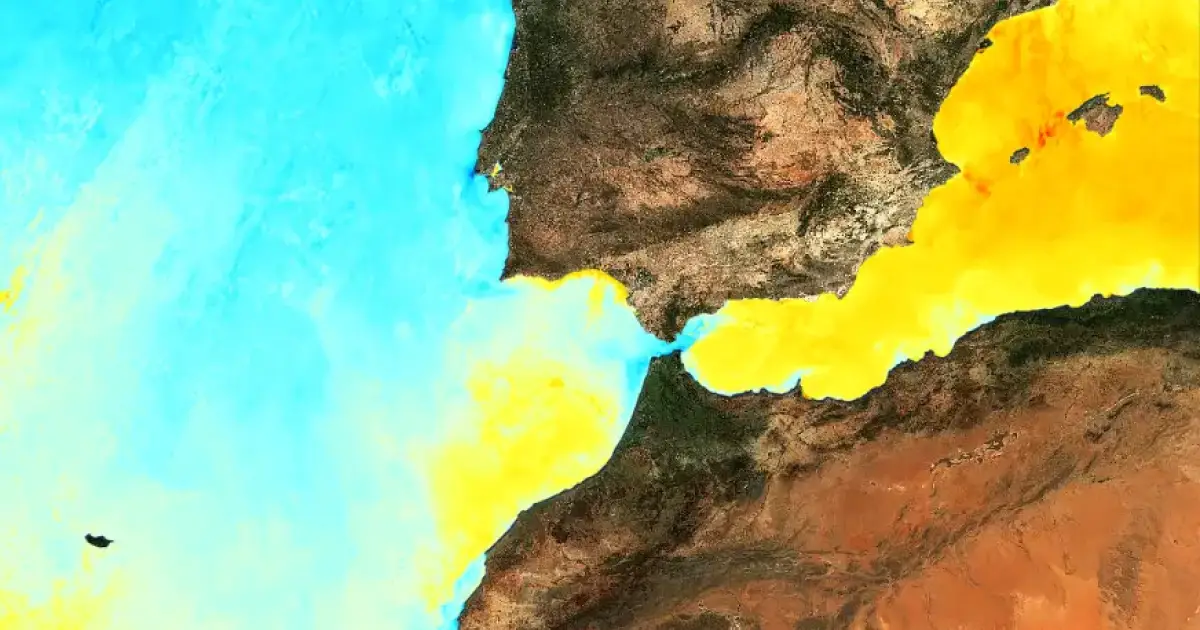
The Spanish port authority has reported that all buoys in the Cantabrian Sea and Galicia, and the majority of those in the Mediterranean, have recorded record-high sea water temperatures for the month of May, with the Mahón, Menorca, buoy recording a standout 26.58°C.
Puertos del Estado receives all information from its measurement networks in real time, and manages and distributes data on temperature and other marine variables, such as wave height and currents
Sea water temperatures have reached new records this May, exceeding the maximum values recorded in historical data for this same month, according to measurements taken by the Puertos del Estado buoy networks.
Twelve of the 15 buoys in the Offshore Network and six of the 14 buoys in the Coastal Network (all those anchored in the Cantabrian Sea and Galicia, and most of those in the Mediterranean) recorded their highest May temperatures in 2026.
In the case of the Offshore Network, the maximum sea water temperature last May was 26.58°C, recorded by the Mahón, Menorca, buoy on 27 May, followed by the Dragonera buoy in Mallorca, with 26.2°C on 30 May.
Meanwhile, in the Coastal Buoy Network – which is closer to ports and beaches – the highlights include 24.5°C, recorded by the Tarragona coastal buoy on 30 May, and 24.2°C measured at the Barcelona buoy on 31 May.
Puertos del Estado operates an Offshore Buoy Network (or deep-water buoys) comprising 15 measurement points, a Coastal Buoy Network with 14 measurement points, a network of 46 tide gauges along the entire Spanish coast, and a network of high-frequency radars comprising 9 stations owned and managed jointly with other institutions. All information is received in real time by Puertos del Estado, which is responsible for managing and distributing the data. (https://portus.puertos.es/).
With Spain considering various measures to combat extreme heat such as closing bar and restaurant terraces during heatwaves, introducing cool protection hubs in public buildings and adjusting working habits to enable people to avoid the heat, changing weather patterns are having an impact on how people travel.
Summers in Mallorca have been getting hotter and this appears to be the model for the future, according to experts. With Mallorca suffering more tropical nights, experts are sounding the alarm about the chance of a “super” El Niño this year, as the latest projections show that the Pacific Ocean is on track for an intense warmup. This could trigger a persistent – or potentially irreversible – climate shift.
According to the World Meteorological Organization, almost every major climate model points to El Niño arriving by May, with average sea surface temperatures on track to rise 2.7 degrees Fahrenheit (1.5 degrees Celsius) by early summer. This would constitute a “strong” El Niño, which would have serious implications for global temperatures and weather patterns. But it could be even worse.