Cyclists in Spain face substantial penalties from the DGT (Dirección General de Tráfico), with fines potentially reaching €1,000 for serious infractions, particularly those involving alcohol consumption. While no specific licence is required to operate a bicycle, riders are nonetheless bound by a comprehensive set of traffic regulations enforced by Spain’s national traffic authority. Non-compliance with these rules can result in financial sanctions ranging from €80 to the aforementioned €1,000, as cyclists are expected to observe many of the same fundamental road rules as other motorists.
Common infringements include using a mobile phone whilst riding, failing to obey traffic lights, cycling without mandatory lights, or neglecting to signal manoeuvres correctly. Each of these actions carries a specific penalty, which every cyclist should be aware of to avoid issues with traffic authorities. The DGT has indeed developed an extensive catalogue of regulations, drawing clear distinctions between urban cycling and riding on open roads, thereby establishing differing requirements based on the type of thoroughfare.
These regulations are primarily designed to ensure the safety of cyclists themselves, as well as that of all other public road users. They establish a clear regulatory framework, though it’s often either unknown or habitually disregarded by many. For instance, using a mobile phone whilst cycling is strictly prohibited and incurs a €200 fine. This restriction also extends to headphones connected to sound receivers or players, as the DGT asserts these devices impair a cyclist’s hearing, potentially leading to dangerous distractions for both the rider and other road users.
Alcohol and Passenger Transport
Regarding substance consumption, the maximum blood alcohol limit set for drivers generally – 0.5 grams per litre of blood or 0.25 milligrams per litre of exhaled air – equally applies to those riding bicycles. Cyclists are legally obliged to undergo an alcohol test if requested by a law enforcement officer. A positive result for alcohol can lead to a penalty ranging from €500to €1,000, contingent on the recorded level and any history of reoffending.
Concerning passenger transport, cyclists are only permitted to carry a child up to seven years old in an approved, additional seat, and only if the rider is an adult. Incorrectly transporting a child on a bicycle carries a €100 fine.
Essential Safety Equipment
Front and rear lights are mandatory whenever cycling at night, through underpasses, or in tunnels. These are crucial for both illuminating the path and ensuring visibility to other road users. Failure to use appropriate lights can result in a €200 penalty. The requirements for wearing a helmet vary depending on the environment. Within urban areas, helmets are compulsory only for those under 16 years of age, though highly recommended for all other cyclists. However, on open roads, helmets are mandatory for all riders, with three specific exceptions: during prolonged ascents, for accredited medical reasons, or in conditions of extreme heat. Not wearing a helmet when it’s legally required also incurs a €200 fine.
Furthermore, when lights are obligatory, cyclists must also wear a reflective garment, enabling other drivers to spot them from a minimum distance of 150 metres. Cycling without these reflective items carries the lowest penalty in the DGT’s catalogue: €80.
Urban Cycling Rules
Riding a bicycle on pavements is generally prohibited, unless the area is specifically marked as a shared-use cycle path for pedestrians and cyclists. This particular infringement can lead to a fine of up to €100. Moreover, pedestrian crossings must be traversed on foot; cyclists are required to dismount their bicycles to cross these areas. Failing to dismount at a pedestrian crossing results in a €200 fine.
Within urban environments, bicycles should keep as close as possible to the right-hand side of the road, maintaining a safe distance from the kerb or parked vehicles. When cycling in groups, riders may proceed in a column of up to two abreast. Cycling in an unorganised group within a city is punishable by a €100 fine. Cyclists must also yield to pedestrians at clearly marked crossings and when turning into another road where pedestrians are crossing, even if no specific crossing is present. Disregarding pedestrian right-of-way carries a €200 penalty.
Road Cycling Specifics
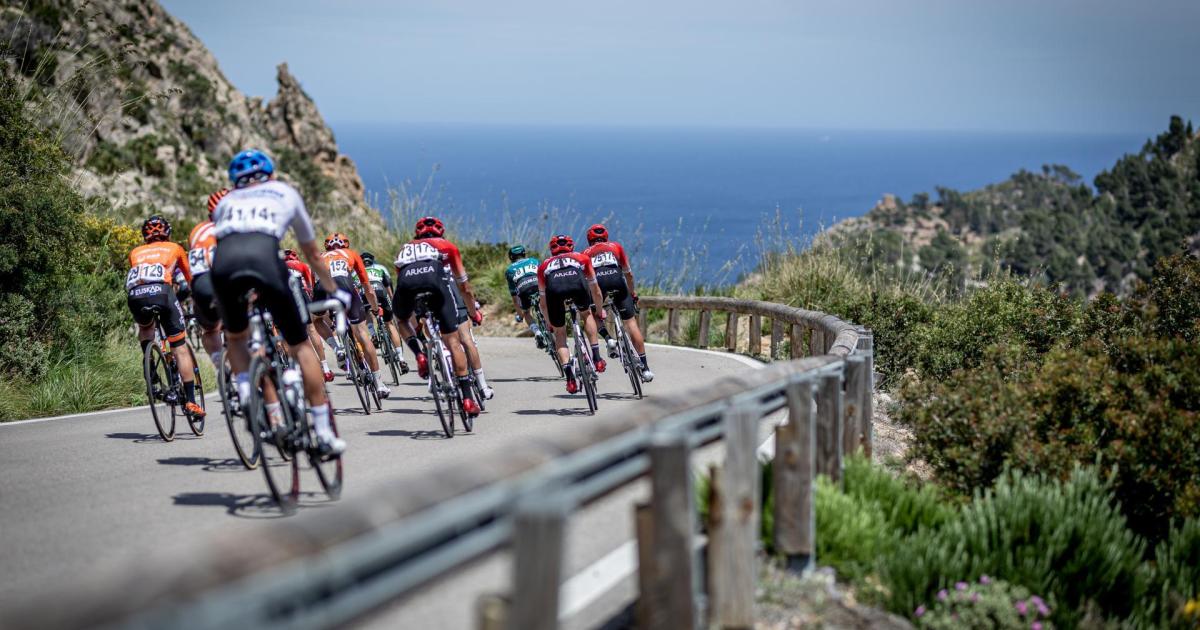
On open roads, cyclists are required to use the hard shoulder on their right, where available, to ensure safe passage. They may only leave the hard shoulder during prolonged descents and under conditions that guarantee safety. Occupying the main carriageway when the hard shoulder is available for use is subject to a €200 fine. Cyclists are permitted to ride in pairs abreast on roads, keeping as far to the right of the carriageway as possible. However, on sections with limited visibility, such as sharp bends, or when forming large groups, they must not ride in parallel and should instead form a single file. Cycling in an unorganised group on a road also incurs a €100 fine.
Manoeuvres and Right of Way
Before setting off, all cyclists must observe the road they intend to join, verify that no other vehicles are approaching or are at a safe distance, and signal their manoeuvre. Dangerous incorporation into traffic is penalised with a €200 fine. Signalling turns, changes of direction, and lane changes is mandatory. Signals can be made either with the right arm, extended horizontally at shoulder height, or with the left arm, bent at a right angle. Failing to signal a manoeuvre correctly results in a €200 fine.
While not compulsory, a cyclist may indicate sudden braking by moving their arm alternately up and down with short, rapid movements. This signal is advisable to prevent rear-end collisions, though it does require briefly releasing the handlebars in a rapid reaction situation.
Traffic light signals and vertical signs, such as stop signs, yield signs, or speed limits, are obligatory for all drivers, including cyclists. Disregarding a traffic light can lead to a penalty ranging from €150 to €500, depending on the circumstances and the danger posed by the infringement. Failing to respect priority at an intersection is penalised with €200. Nevertheless, cyclists do have priority over motor vehicles when riding on a cycle lane, a specific cycle crossing, or a properly marked hard shoulder. Cyclists riding in a group also enjoy priority at roundabouts, just as at other intersections, once the first rider has entered the roundabout. This priority extends to all members of the group, from the first to the last.