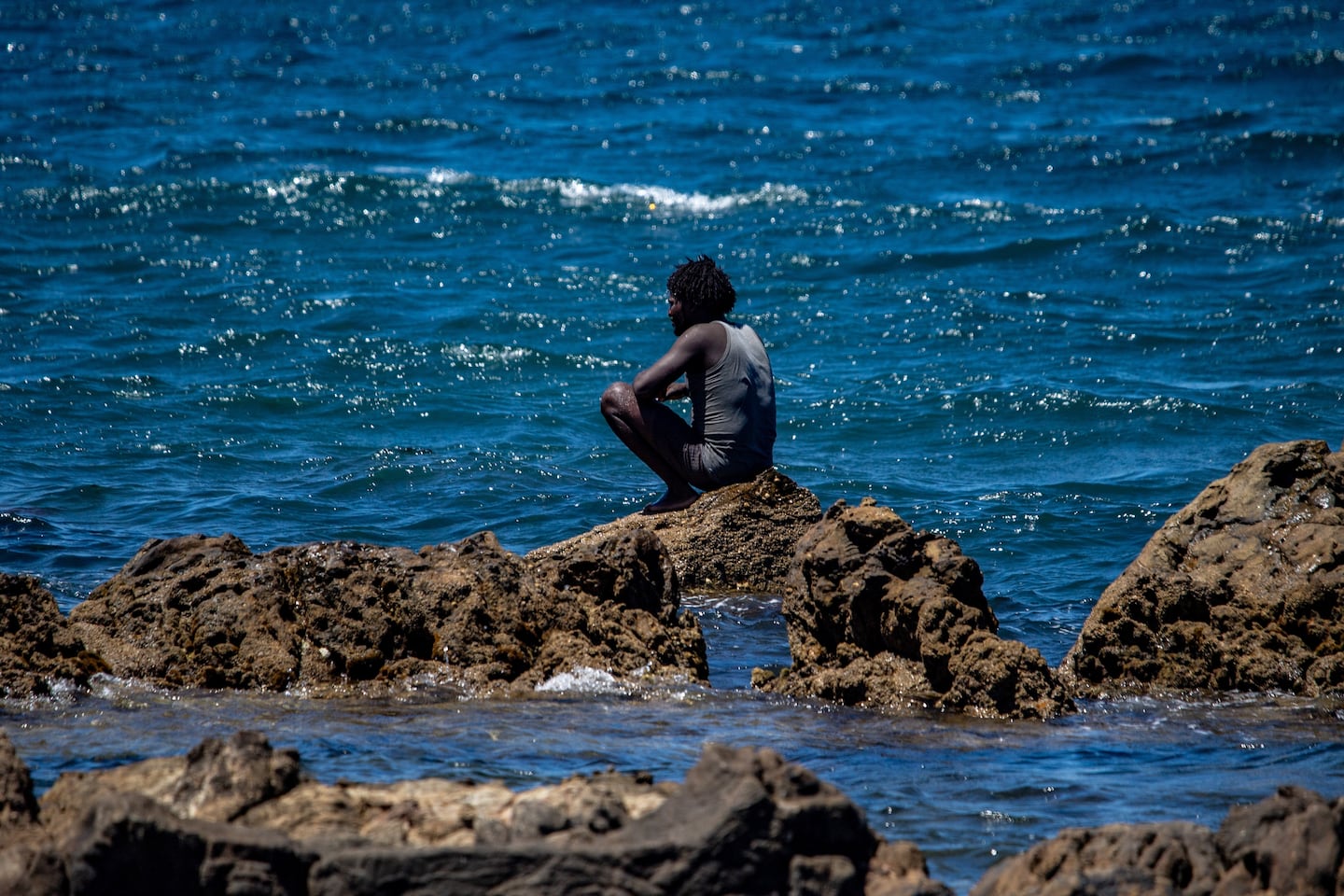
Though the mass crossing into Ceuta — a humanitarian tragedy in which roughly 60,000 people entered the Spanish territory from Morocco and at least 60 died, though the true death toll may be higher — unfolded thousands of miles from the United States, Trump immediately recognized and seized its value to Republicans at home.
Get The Gavel
A weekly SCOTUS explainer newsletter by columnist Kimberly Atkins Stohr.
But the reality of what happened in Ceuta is considerably more complicated than Trump’s cliched, hyperbolic warning about liberal immigration laws and an approaching invasion. The surge was smaller and more temporary than the president’s language suggested, its causes remain contested, and Morocco’s cooperation proved crucial to ending it.
All the same, what we know about Ceuta reveals more than another cautionary tale about an open border. It shows how migration itself becomes a vehicle for misinformation, diplomatic leverage, and electoral fear.
Tens of thousands of people managed to cross from Morocco into Ceuta by land and sea in a matter of hours. But that mass movement reversed almost as quickly: About 48,000 of those who had entered returned within a day or two.
That quick return helps dispel perhaps the biggest myth about the surge into Ceuta. This was not quite the territorial invasion Trump conveyed.
“You’ve got this real disjuncture between the limited practical impact of what happened [in Ceuta] and this enormous sense of vulnerability,” Andrew Selee, president of the Migration Policy Institute, a Washington, D.C.-based nonpartisan think tank that focuses on global migration, told me in an interview. “In terms of practical impact, it had very little.”
Not to minimize the horrific loss of life, but this point is worth making: The scale of the initial rush was extraordinary but so was its brevity.
Which begs an important question, why and how did so many people move at once? The simplistic explanations offered by politicians obscure a more complicated confluence of factors.
First, an official data point that highlights the economic desperation in Morocco: One-quarter of Moroccans aged 15 to 24 are neither working nor enrolled in school or training. Second, social media posts reportedly misled people with incorrect information about a recent Spanish supreme court ruling establishing that authorities cannot summarily deport migrants arriving by sea without due process. Some of those posts allegedly sent the flatly inaccurate message that the Spanish border was open and that people could cross without papers, according to Spain’s largest newspaper, El País.
Additionally, analysts suspect at least passive Moroccan “assistance” with the crossings, in which Morocco seemed to have stopped enforcing its border with Ceuta temporarily to cause problems for Spain; it sounds plausible when recalling a similar but smaller migrant breach in Ceuta in 2021 that followed a diplomatic dispute over Western Sahara between Spain and Morocco. “It is impossible for nearly 50,000 people to cross the border between Morocco and Spain in a single day without Morocco having a hand in it,” Lorenzo Gabrielli, a researcher at Barcelona’s Pompeu Fabra University, told The New York Times.
The Moroccan government has denied involvement. But it wouldn’t be the first government accused of weaponizing migrant flows as diplomatic leverage or to send a political message.
That possibility matters because Spain doesn’t secure this border alone. “Spain manages migration control from Africa very actively with Morocco and to some extent with Senegal and Mauritania,” Selee said. “There’s a really tight cooperation.”
In practical terms, that arrangement ultimately worked: Morocco resumed cooperating with Spain and most of those who crossed returned. Symbolically, though, the images told a different story, one of border collapse.
That takes me to the most important lesson from Ceuta: A border is only as secure — or as fragile — as the cooperation between the governments on either side. The same dynamic helps explain what is happening at the US-Mexico border, which has largely disappeared from the headlines.
“There just isn’t a large number of people coming in anymore,” Selee said. “A big part of the story is cooperation between the Mexican and US governments to keep the border quiet.” And when that cooperation breaks down, it can lead to migration surges, he said.
That relative quiet at the southern border creates an awkward political reality for a president who has made border chaos central to his appeal. With no American border crisis to campaign on, Trump borrowed one from Spain.
If there is one thing Trump has always been masterful at it is following the old political adage: Never let a good crisis go to waste. Facts are another matter.
Marcela García is a Globe columnist. She can be reached at marcela.garcia@globe.com. Follow her on X @marcela_elisa and on Instagram @marcela_elisa.