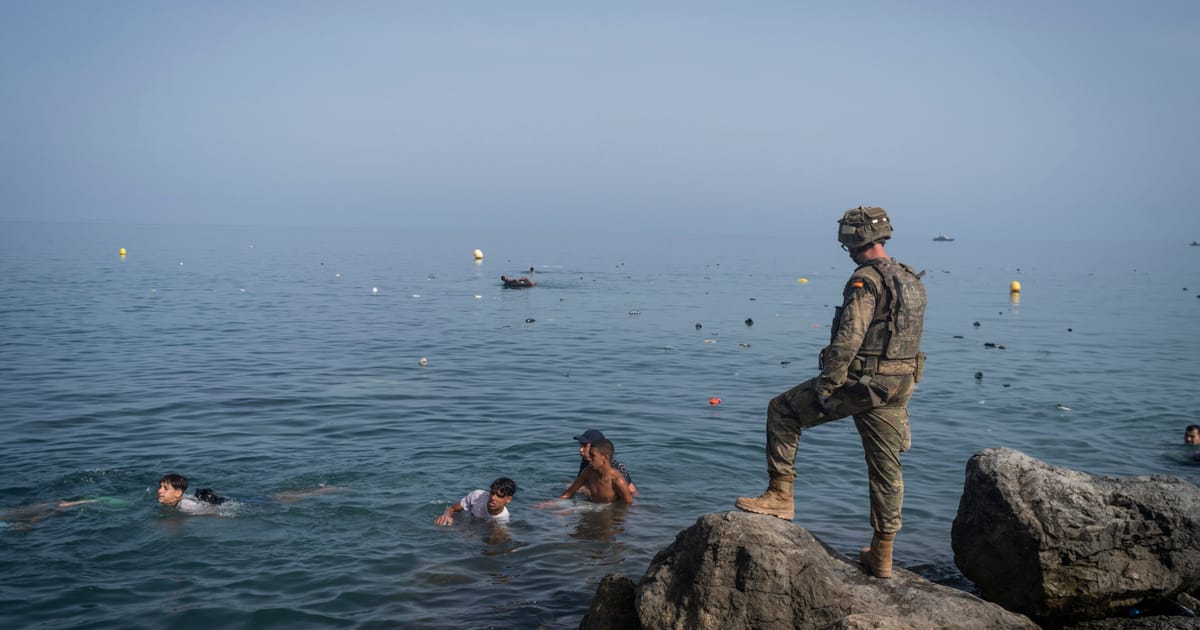
The interior ministers are expected to seek further rapprochement. Tuesday’s discussion will focus on lessons learned from Ceuta, ways to beef up controls at the bloc’s external borders and how to respond to potential future episodes of instrumentalized migration, rather than assigning blame for the crisis, three of the diplomats said.
“Everyone is both very willing and very eager to help, and acknowledged this has been a very difficult situation for Spain,” one of the EU diplomats said after the ambassadors’ gathering. The diplomat said Monday’s meeting had been calmer than the weekend’s public exchanges.
Twenty-two national leaders, in a letter initiated by Italy and Denmark, had on Saturday called for tougher external borders and warned against policies that could act as “pull factors” — an apparent reference to Spain’s plan to grant legal status to more than 1 million undocumented migrants. Madrid saw the letter as an attempt to blame the Spanish government for a crisis not of its making.
Tuesday’s videoconference will be chaired by Ireland’s Justice Minister Jim O’Callaghan. Officials from EU border agency Frontex, the EU Asylum Agency, Europol, the European External Action Service and Schengen-associated countries will also participate.
The crisis has already pushed migration higher up the EU agenda. The issue was already meant to feature at the October European Council summit, but officials now expect it to play a much more prominent role in the run-up to that meeting, the diplomats said.
The Commission is expected to consider possible new migration measures in September, after examining what caused the sudden influx and whether social media or other actors helped organize or amplify it, three of the diplomats said. Strengthening Frontex is one option, with the Commission indicating to ambassadors Monday that it could propose additional steps to reinforce the agency’s role, according to the diplomats.
Max Griera contributed reporting. This article has been updated.