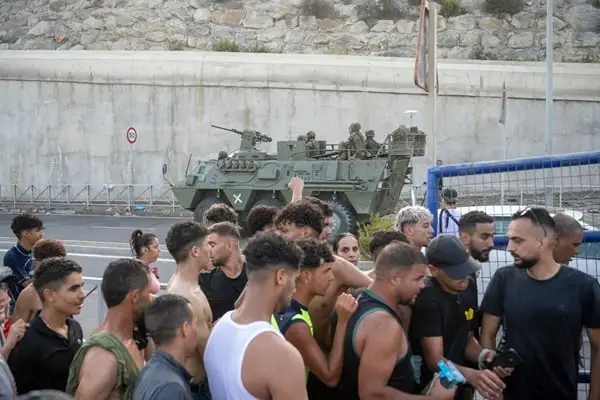
Spain has cancelled all leave for military personnel stationed in Ceuta as authorities brace for a possible fresh mass migration attempt from Morocco, amid reports that people-smuggling networks are using social media to organise another assault on the territory.
The order, issued by Spain’s Defence Ministry, suspends holidays and other time off for troops in the North African exclave until further notice, except in “exceptional duly justified cases”.
The directive cited “service requirements” and the need to increase military activity in Ceuta in response to the migration crisis.
The decision comes after a major influx of migrants into the Spanish territory and growing warnings that another attempt could be mounted around August 15.
Spanish authorities are reportedly monitoring online group chats and social media channels where information about a potential new crossing is circulating.
Ceuta is one of the European Union’s few land borders with Africa and has repeatedly become a flashpoint during periods of heightened migration pressure.
The latest security measures underline the extent to which Madrid views the threat as more than a conventional border-management problem.
People-smuggling networks have increasingly used social media to circulate information, attract migrants and exploit uncertainty surrounding border controls.
TikTok said it had activated a dedicated task force to monitor the developing situation and direct users searching for relevant information towards sources it described as reliable.
A spokesperson said: “In response to the evolving situation in Ceuta, we have mobilised a dedicated task force as part of our well-established global protocol for responding to emergency events.
“We are also connecting our community to reliable information, including from Newtral in Spain and MapExpress in Morocco, when they search for related keywords.”
Meta, which owns WhatsApp, Facebook and Instagram, said its teams were monitoring developments and removing content that facilitates or solicits human-smuggling services.
The Spanish military presence has already been reinforced in response to the crisis, placing additional pressure on personnel stationed in the territory.
The cancellation of leave is therefore a significant escalation in Madrid’s preparations, effectively keeping troops at maximum readiness as officials attempt to determine whether the online warnings represent a genuine operational threat or coordinated misinformation.
For Spain, the timing is particularly sensitive.
A large-scale attempt to breach the Ceuta border would place fresh pressure on Spanish security forces and could rapidly become an international political crisis involving Madrid, Rabat and the wider EU.
It would also test the effectiveness of the physical border, surveillance systems and security deployments put in place after previous migration surges.
With troops ordered to remain on duty and social media companies monitoring suspected smuggling activity, Ceuta is now waiting for the next move.
The question confronting Spanish authorities is whether the warnings are the early signs of another organised assault — or a digital campaign designed to create panic at Europe’s southern frontier.