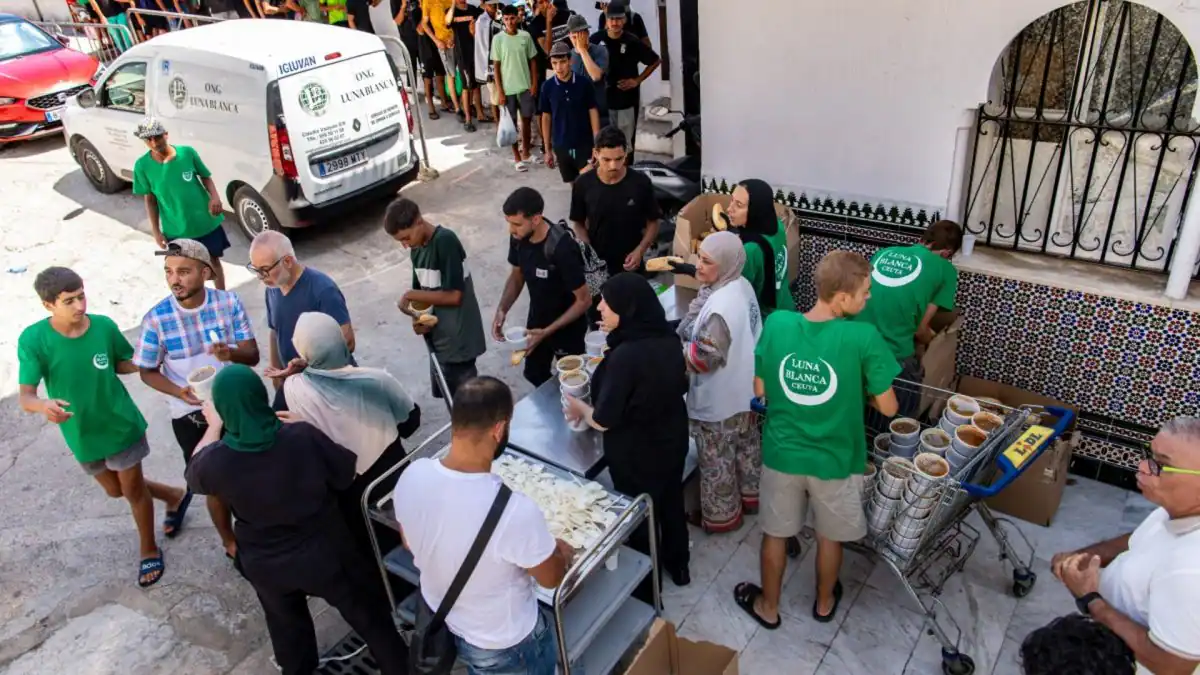
Online posts urging a mass crossing on Spain’s national holiday prompt major security buildup after 72,000 migrants arrived in the North African exclave last month
Thousands of Spanish and Moroccan security personnel have been deployed along the border of Ceuta as authorities on both sides step up preparations for a possible mass migrant crossing following a wave of online messages calling for a new incursion into the Spanish exclave in North Africa.
The heightened security comes after an unprecedented influx of around 72,000 migrants into Ceuta last month.
According to a Politico report, social media posts circulating in recent days have called for another large-scale attempt to enter the territory on Saturday (August 15), which is a national holiday in Spain.
Authorities in Spain and Morocco have been closely monitoring the online calls and coordinating measures to prevent a repeat of last month’s arrivals.
Moroccan Interior Ministry spokesperson Rachid El Khalfi said on Wednesday that Rabat was preparing to prevent any attempted mass crossing.
The country was “taking all necessary measures to counter any attempt at illegal crossing,” El Khalfi said.
Moroccan authorities have since increased their security presence around Fnideq, the border town located opposite Ceuta. Local journalists reported a significant buildup of Moroccan troops and security forces in the area on Friday as concerns over a possible coordinated attempt grew.
 More from World
On the Spanish side, Interior Minister Fernando Grande-Marlaska visited Ceuta on Thursday to assess preparations and inspect the territory’s border infrastructure.
Grande-Marlaska also examined a newly installed sea barrier intended to prevent migrants from reaching Ceuta by swimming from the Moroccan coast.
Spanish authorities have further reinforced security in the exclave, deploying an additional 300 police officers and around 2,000 soldiers.
The measures reflect concerns that social media calls could trigger another large-scale movement toward the border, similar to the influx witnessed last month.
“We do this to dissuade anyone who aspires to enter Ceuta and Melilla irregularly,” said Grande-Marlaska.
“None of them will remain in Ceuta, none of them will make it to the Iberian Peninsula, none of them will be given legal status.”
Ceuta and neighbouring Melilla are Spanish territories on the North African coast and have long been flashpoints in Europe’s migration debate. Their land borders with Morocco make them potential entry points for migrants seeking to reach European territory.
The prospect of another mass crossing has also drawn criticism from European politicians opposed to Spain’s migration policies.
Austria’s conservative Europe, Integration and Family Minister Claudia Bauer referred last week to reports of a possible August 15 surge and urged Spain to significantly strengthen security around Ceuta and Melilla.
In a written statement, Bauer called on Madrid to “immediately and significantly reinforce border protection in its African enclaves and ensure that this time it will hold.”
Italy has also cited the possibility of a large-scale migrant arrival in mid-August.
Prime Minister Giorgia Meloni’s government referred to the potential mass crossing last week while defending its decision to continue border checks on travellers arriving from Spain.
The latest security buildup comes amid heightened concern across Europe over irregular migration and the possibility that online campaigns could be used to coordinate large groups of migrants.
Spanish and Moroccan authorities are now maintaining a close watch on the border ahead of August 15, with security forces on both sides preparing to respond if the calls for a new mass crossing translate into an actual movement toward Ceuta.
With inputs from agencies