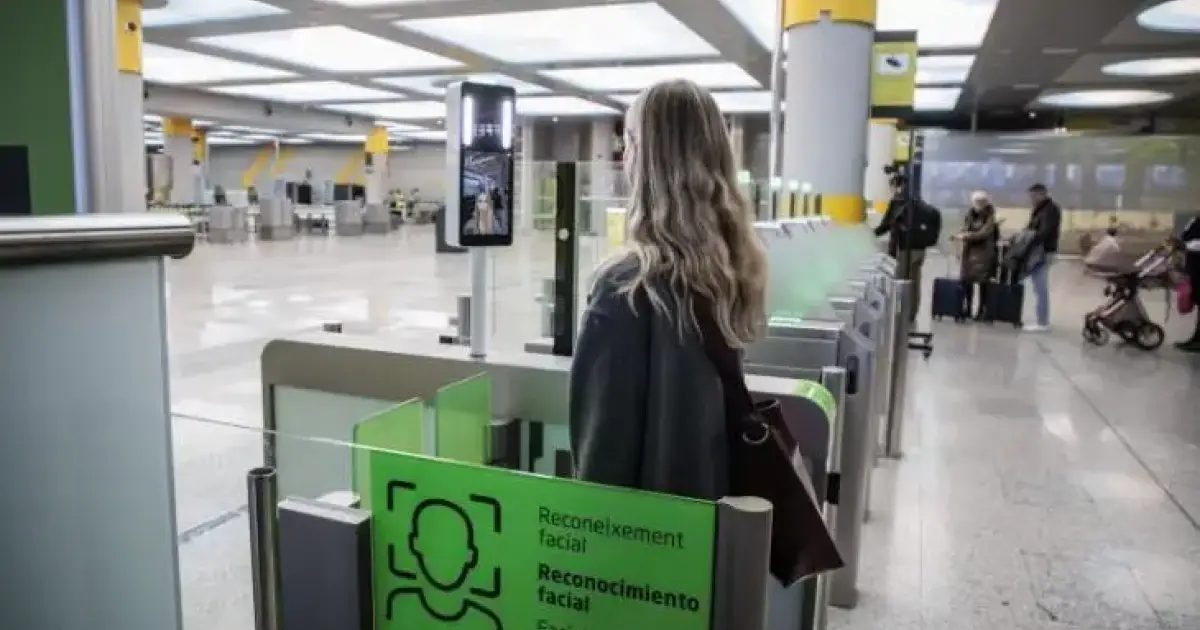
Following reports of confusion as to whether British children under 12 had to comply with the new EES European Union border control rules of providing fingerprints an d having faces scanned ABTA has made it clear that under 12s will have to have face scans.
EES officially became fully operational on 10 April 2026. This means the system is now live across participating European countries
It will register all entries and exits to and from the participating European countries, which basically means it will register your movements every time you cross a border in or out of the EU/Schengen area. When you go through passport control on your arrival to, and departure from your destination, as well as providing your passport you will also need to have a photo of your face taken, and your fingerprints scanned.
Travellers should expect EES checks to be in operation at participating European countries, including biometric registration such as facial image and fingerprints, as well as questions about their stay. However, implementation may still vary between countries and individual border crossing points. Travellers should be aware that it will take longer to go through passport control, so they should allow extra time at the border.
It applies to those travelling for a short stay, from what the EU call a ‘third country’. This is people who are not EU citizens or citizens of the Schengen area. So it will apply to most people travelling from the UK. A short stay refers to visits, holidays or business trips that have a duration of up to 90 days and are taken within a 180-day period. The vast majority of travel between the UK and Europe will be classed as a short stay.
Irish passport holders are exempt from EES. If you are a British passport holder but have EU residency, you are also exempt from EES. People of all ages will need to go through the EES checks. Children under 12 will not need to provide fingerprints, but they will need to have a facial scan taken.
There is an app you can download which allows you to provide some EES details in advance of your trip, however currently it isn’t in operation for most countries. The “Travel to Europe” mobile app allows travellers to pre-register passport details and a facial image, as well as complete the entry conditions questionnaire. This can be done within 72 hours prior to travel and is intended to make it easier and quicker to go through the passport control, although it does not replace border checks.
The app is not yet in use across all EU countries, and where it is available, the specific functionalities may vary between Member States. You can find more information, including where to download the app, here: https://travel-europe.europa.eu/ees/Travel-to-Europe-mobile-app