 Port Polska is analysing solutions that have already been tested on high-speed lines across Europe with a view to using them in the design of Poland’s future high-speed network.
The company’s experts studied in Spain how noise from high-speed trains is managed and carried out measurements on a line currently in operation, where trains travel at speeds of up to 300 km/h.
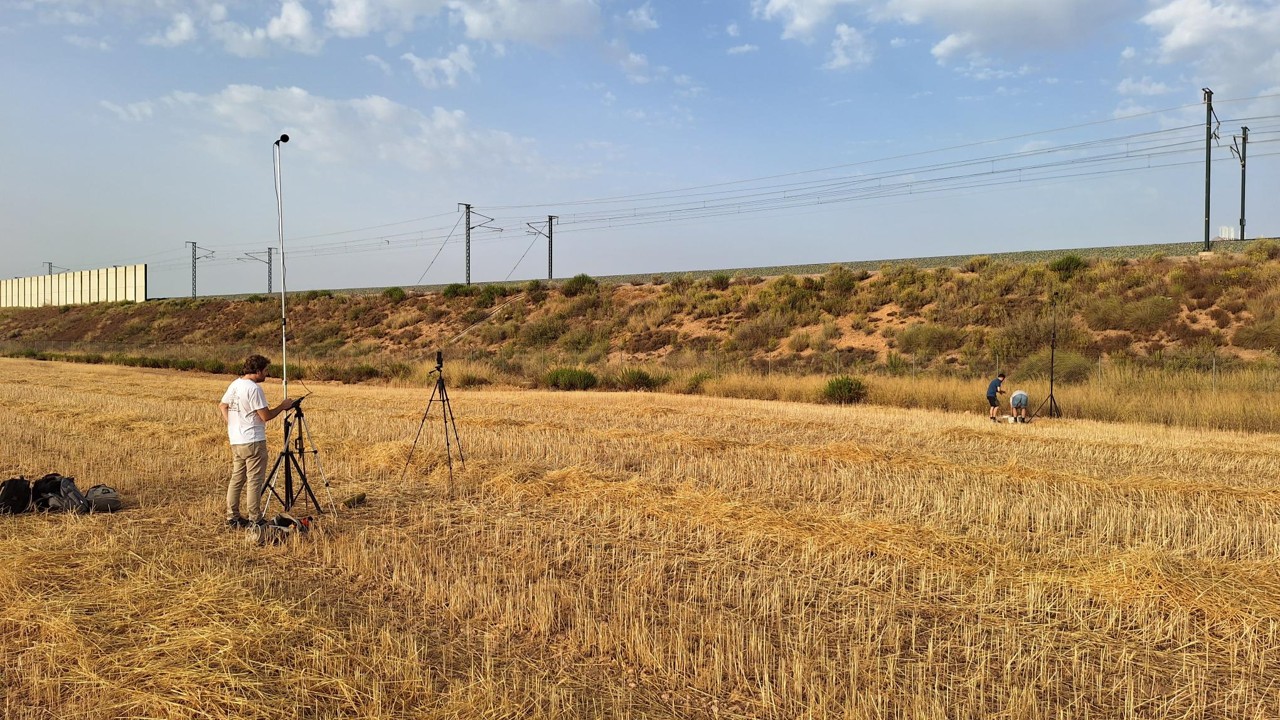
The measurements were carried out in the province of Alicante and focused on both the noise levels generated by the trains and the effectiveness of the noise barriers installed along the infrastructure. The results will be used in the analyses for the design of high-speed lines in Poland.
In Spain, the experts carried out measurements on trains travelling at speeds of up to 300 km/h, and the results, together with the experience of international partners, will contribute to the development of future high-speed lines in Poland.
The construction of the high-speed rail network is one of the central elements of Port Polska’s investment programme. In addition to designing new lines, the company is analysing solutions to limit the infrastructure’s impact on the environment, including noise levels in areas where noise protection requirements apply.
Poland does not yet have an operational high-speed network, so the experience of countries that have been building and operating high-speed lines for several years is an important source of information. Spain is one of Europe’s leaders in this field, with nearly 4,000 km of high-speed lines.
Experts from Port Polska analysed solutions already in operation in Spain and carried out their own measurements to assess their performance under real-world conditions.
The visit was organised with the support of the Spanish consultancy firm Ineco and the high-speed rail infrastructure manager Adif, with whom Port Polska signed a memorandum of cooperation in June.
Measurements carried out on an operational high-speed line
The measurement session took place in July in La Encina, in the province of Alicante. Over 50 trains of five different types run daily in this area, at speeds ranging from 250 to 300 km/h. The line is also equipped with noise barriers 5 and 6 metres high.
Over a two-day period, the experts carried out measurements at various distances from the track, both in areas protected by noise barriers and in sections without such systems. The team also monitored trains passing through tunnels and other engineering structures to gain a better understanding of how different elements of the infrastructure influence noise propagation.
Thus, the analysis was not limited to documentation and design assumptions, but enabled an assessment of how these solutions perform on a high-speed line currently in operation.
Spain’s experience will be utilised in the design of lines in Poland
Spain’s experience is particularly relevant due to the size of its network and the expertise it has gained in operating high-speed trains. In recent years, Spain has also developed noise barrier systems as new lines have extended into increasingly densely populated areas, including the province of Alicante.
The results of the measurements carried out by Port Polska and the exchange of experience with Spanish specialists will be incorporated into future analyses of solutions for high-speed lines in Poland. These will enable a comparison of different approaches and an assessment of their effectiveness under real operating conditions.
Noise protection is an area in which there is no one-size-fits-all solution. Design decisions must be preceded by an analysis of the specific conditions of each section of the line and the selection of appropriate measures to limit noise impact.
Cooperation with international partners enables Port Polska to capitalise on the experience accumulated over several decades in the construction and operation of high-speed rail networks across Europe and to utilise solutions that have already been tested in real-world conditions.
Share on: 


