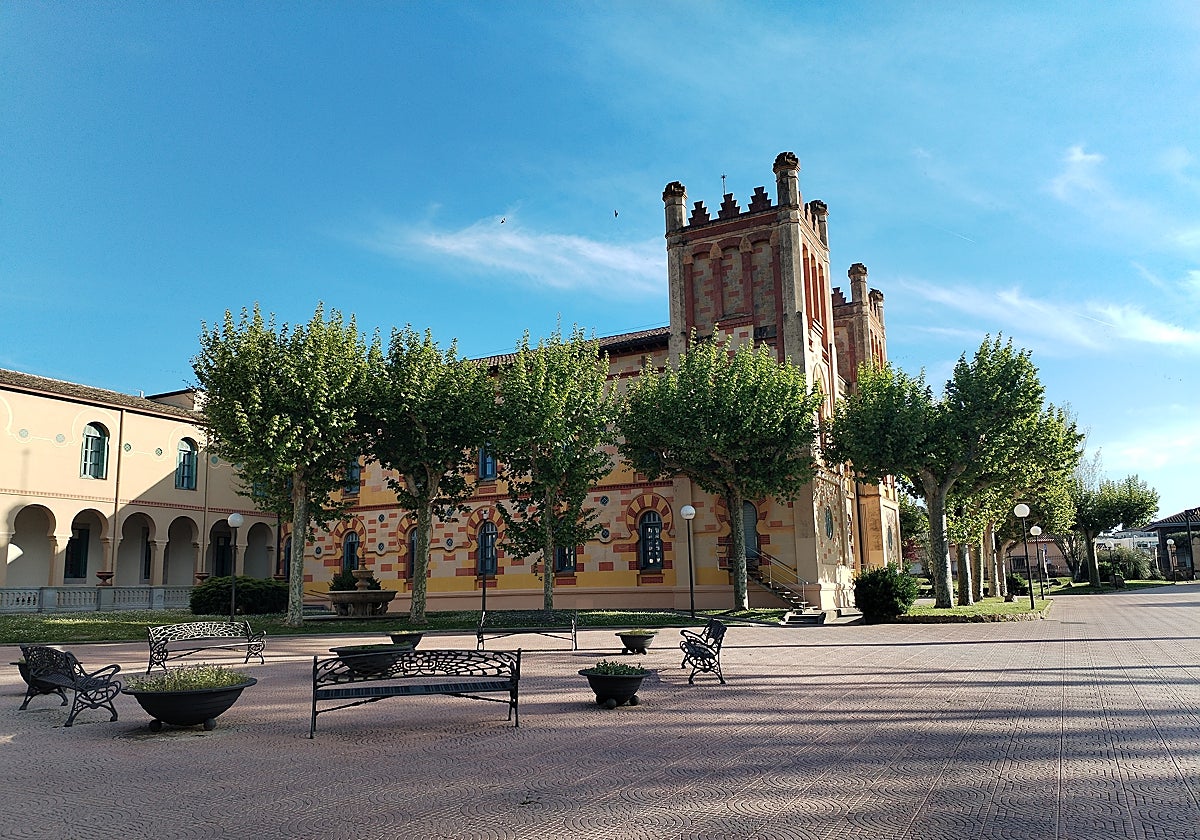
Caldes de Malavella is situated in Catalonia and has been renowned since ancient times for its underground mineral-rich thermal springs, from which natural gas emerges and the water reaches temperatures of up to 60 °C.
Rich in salts and carbonates
In 1870, the naturopath Modest Furest i Roca, who practised medicine in Girona and the surrounding villages, stopped off in Caldes de Malavella and was surprised to see the healing effects that the water from the spring, known as Puig de les Ànimes, had on livestock. Further medical studies subsequently confirmed that the water had a composition rich in salts and carbonates.

The history depicted in photos.
(AMS)
In 1881, Dr Furest acquired the mineral water spring and the surrounding land with the aim of building a spa resort modelled on the great European thermal centres. To promote his waters, in the years that followed the owner attended major national and international exhibitions, where he received important awards, notably the Gold Medal at the Barcelona World Exhibition held in 1888, and the Medal of Honour at the World’s Fair in Paris in 1889.
The Neo-Mudejar aesthetic
Construction of the spa began in 1891. The building was designed by the architects Cayetano Buigas, Manuel Almeda, and Frederic Porcalla. The building’s architecture draws on the Neo-Mudejar aesthetic typical of Andalucia, combined with a historicist style intended to evoke ancient Arab baths. The two-storey building is flanked by towers at the corners and is rich in decorative elements and a colour scheme clearly inspired by the Alhambra in Granada. In addition to the coloured arches, there is a fountain reminiscent of the Fountain of the Lions. It is hardly surprising that this impressive complex is now included on the List of Architectural Heritage of Catalonia.
The two-storey building is flanked by towers at the corners and is rich in decorative elements and a colour scheme clearly inspired by the Alhambra in Granada
The resort opened in 1898, and a couple of years later the company ‘Vichy Catalan Limited’ was founded. Today, the ‘1881 Balneario Vichy Catalan’ has over 80 rooms, as well as an Art Nouveau chapel dedicated to Saint Joseph and Saint Stephen.
With a touch of retro..
(AMS)
The spa hotel features a spa centre, a thermal centre, a restaurant, and other facilities. It offers a wide range of wellness services, all of which centre on its waters. The thermal treatments menu features procedures and massages that follow the traditions of 19th-century hydrotherapy, whilst also incorporating modern methods of relaxation and wellness. One of the complex’s most attractive features is its 20,000-square-metre gardens, where centuries-old trees create nooks reminiscent of small Art Nouveau-style scenes, as well as a large swimming pool.
The factory and its products..
(AMS)
Incidentally, right next to the hotel, is a working bottling and production plant for well-known brands such as ‘Vichy Catalan’ and ‘Font Vella’. Nowadays, the company produces a wide range of natural mineral, sparkling and flavoured waters in various colours. It is worth noting that the company offers informative guided group tours of the operational bottling plant, during which visitors can see how natural mineral water flows from an underground spring straight into the bottle.