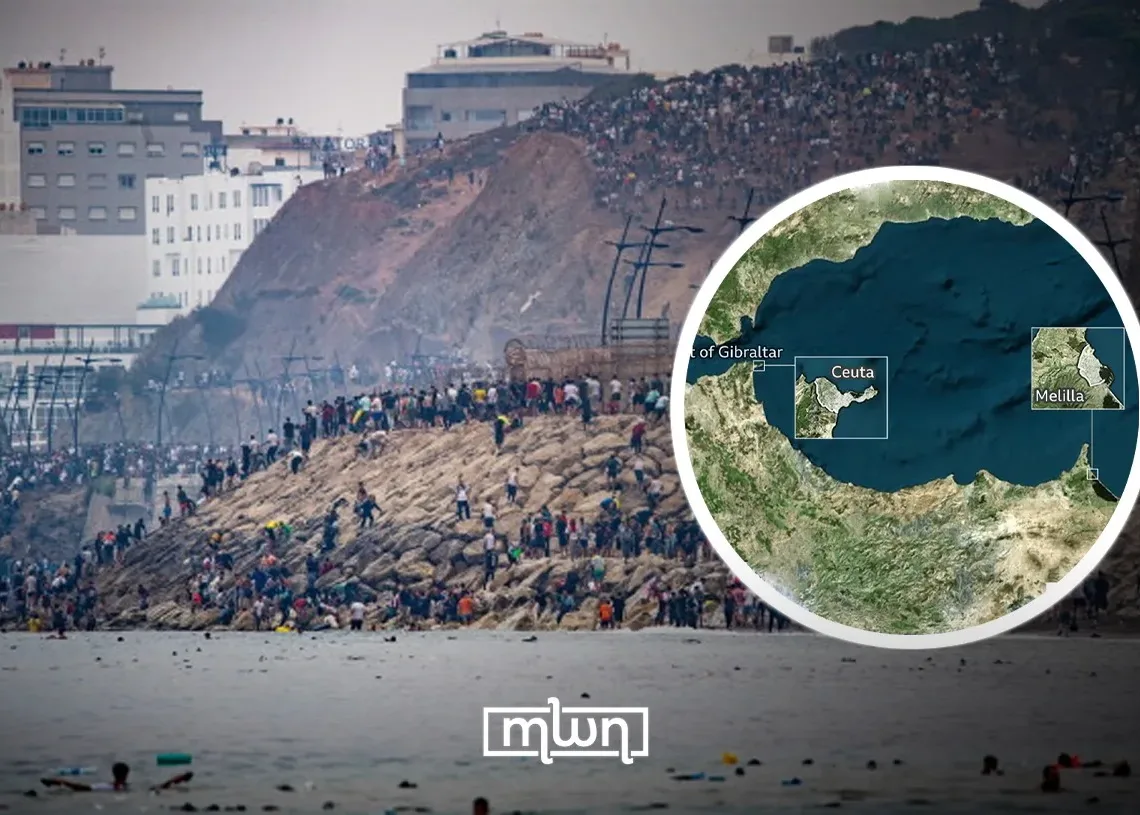
Rabat – Spain will declare a “situation of interest for national security” on Tuesday over the migration crisis in Ceuta, following the mass entry of migrants from the Moroccan border in late July, Spanish media reported.
Spanish Prime Minister Pedro Sánchez is expected to make the declaration after an extraordinary meeting of the National Security Council, which will bring together 17 government ministers and Ceuta President Juan Jesús Vivas.
The measure will place the crisis at the highest level of seriousness under Spain’s civil protection system. Territorial Policy Minister Ángel Víctor Torres will take overall command of the response, a move that Vivas had repeatedly requested.
First Deputy Prime Minister and Economy Minister Carlos Cuerpo said the decision could mark “a before and after” in how the migrants remaining in Ceuta are managed.
Cuerpo said the unified command would help speed up the processing of migrants’ cases, including the return of those who do not have the right to remain in Spain, as well as the handling of asylum applications and cases involving unaccompanied minors.
He stressed that the process must be carried out quickly while respecting humanitarian and legal guarantees.
More than 80,000 migrants entered Ceuta from Morocco on July 30 and 31, according to Spanish authorities. The large-scale arrivals created pressure on the city’s services and authorities and triggered a wider political debate in Spain over migration management and the country’s border with Morocco.
The Spanish government also announced a package of “shock measures” for Ceuta to address the effects of the crisis.
These measures will focus on strengthening security, managing migrant returns, and supporting the city’s economy.
Cuerpo said the government plans to meet with social partners, associations, key sectors and the Ceuta government during the week to finalize the measures. The government wants the package to be presented and approved as soon as possible.
The announcement comes nearly four weeks after the mass arrivals.
The crisis has also increased attention on Spain’s management of its border with Morocco and the broader relationship between Madrid and Rabat.