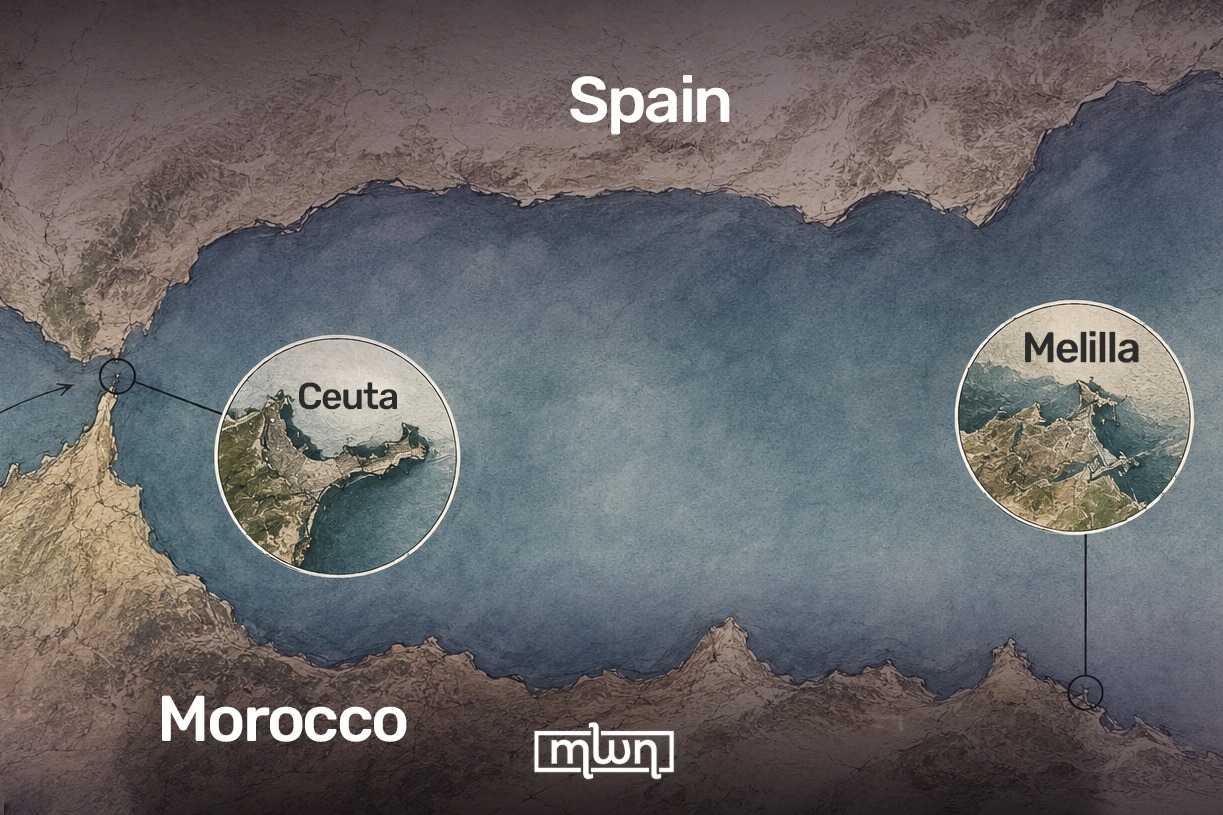
Rabat – Spain has once again drawn a clear line on the status of Ceuta and Melilla, after recent remarks by Morocco’s Minister of Habous and Islamic Affairs, Ahmed Toufiq, that referred to Ceuta’s deep-rooted historical and emotional connection to Morocco.
“Ceuta and Melilla are Spanish,” government spokesperson Elma Saiz said Tuesday at a press conference. “They are our southern borders, as well as the borders of Europe. There is nothing more to add.”
Her remarks came a day after Toufiq addressed King Mohammed VI during a religious ceremony at the Royal Palace in Rabat on the occasion of Eid Al Mawlid Annabaoui.
While presenting the annual report of the Higher Council of Ulema and local religious councils, Toufiq spoke about scholars from Ceuta and their contribution to Morocco’s religious heritage.
He also cited “Dalail al-Khayrat,” a renowned work of Islamic devotion, in reference to the historical role of religious texts in mobilizing Moroccans to reclaim coastal territories held by foreign powers during the early modern period.
Toufiq did not announce any new government policy toward Ceuta or Melilla. His remarks nevertheless drew attention in Spain, where the status of the two cities remains a politically sensitive issue.
The exchange comes after Moroccan Justice Minister Abdellatif Ouahbi recently reiterated Morocco’s territorial claims over Ceuta and Melilla, adding another layer to a debate that has resurfaced amid broader tensions between Rabat and Madrid.
The issue has taken on added weight following the recent migration crisis in Ceuta, when tens of thousands of people attempted to reach the Spanish enclave. The unprecedented influx placed significant pressure on local authorities and prompted Madrid to strengthen its response.
Spain has since classified the situation in Ceuta as a matter of national security interest and established a unified command and crisis committee to coordinate the government’s response.
At the same time, Morocco has taken measures to curb further attempts to reach the enclave and has remained a key partner for Spain on migration and border security.