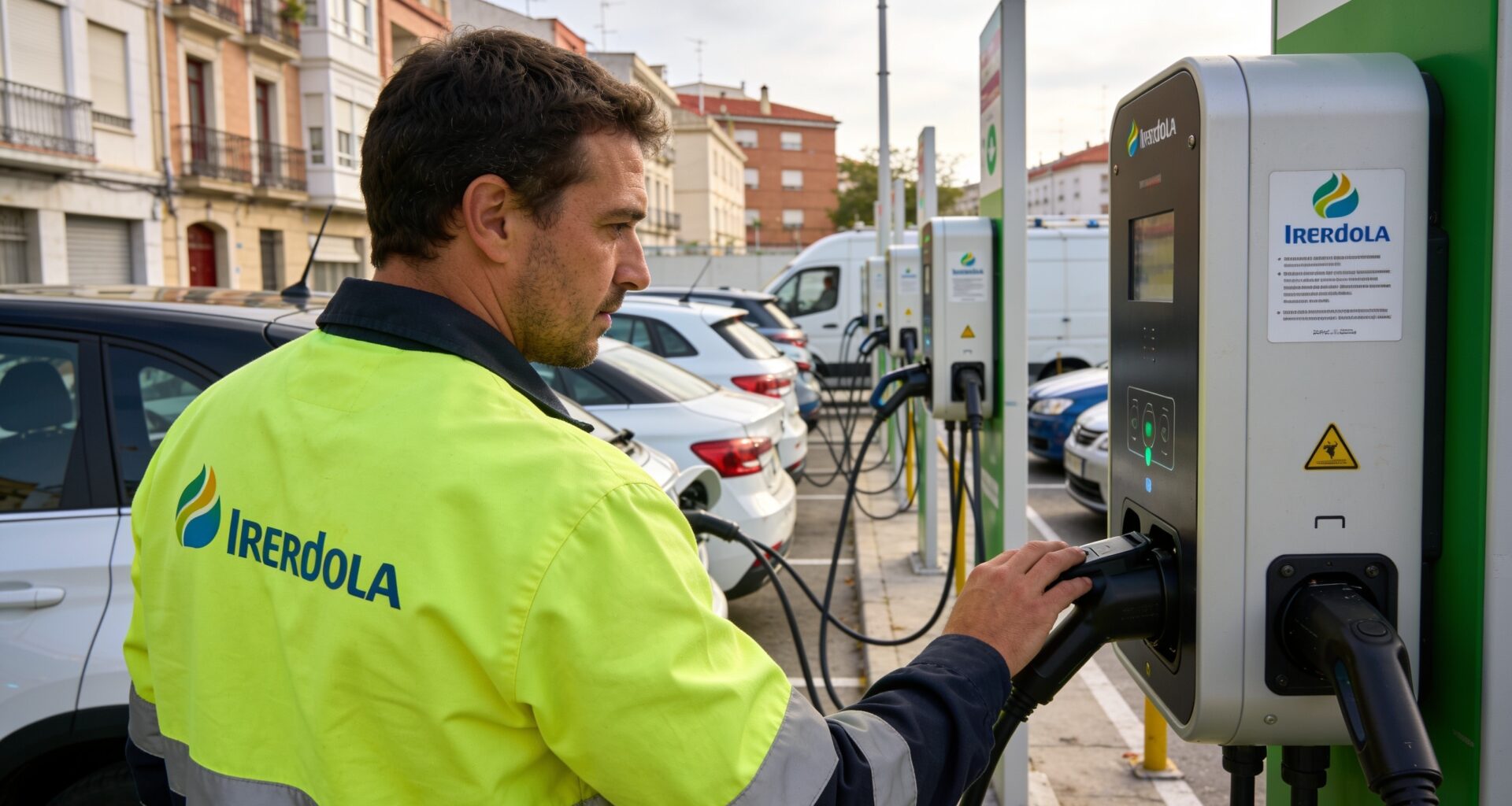
Iberdrola, Spain’s leading electric vehicle charging operator, expects its charging division to turn profitable before 2030. Heavy investment and slow market growth have delayed returns, but usage is rising and the company is holding prices steady.
Iberdrola, the largest operator of electric vehicle charging points in Spain, is pushing ahead with its expansion despite ongoing financial losses. Jorge Muñoz, head of Smart Mobility at Iberdrola, told EL ESPAÑOL-Invertia that the company expects its charging division to reach profitability before the end of the decade, even as the sector remains unprofitable for most players today.
According to Muñoz, the main obstacle is the scale of investment required to build out Spain’s charging infrastructure. “We’re still in the phase of recouping those investments,” he explained, noting that the pace of electric vehicle adoption has been slower than initially forecast. However, Muñoz sees a clear acceleration in usage over the past year, which he believes will eventually translate into sustainable returns. “The entire sector is waiting for utilization rates to rise enough to hit profitability targets,” he said.
The entire sector is waiting for utilization rates to rise enough to hit profitability targets.
Jorge Muñoz
Charging Together, the joint venture between Iberdrola and bp pulse launched at the end of 2023, has yet to break even. In 2024, the company posted losses of €12.8 million, which deepened by 27.6% to €16.3 million in 2025. These losses are directly tied to rapid network expansion: total assets grew 14% year-on-year in 2025, reaching €273.9 million, driven by new installations and network development.
Today, Iberdrola operates 11,800 charging points across Spain—about 20% of the national total. Of these, roughly 3,500 are high-power chargers, while the rest are AC points mainly located in cities and at destinations, often in partnership with other companies. Despite rising costs, Muñoz confirmed that Iberdrola has kept its charging prices unchanged since 2024, regardless of sector fluctuations. Looking ahead, he suggested that prices could become more competitive as the market matures.
While battery-powered vehicles are gaining ground, hydrogen fuel cell technology remains at a much earlier stage, especially for industrial transport. Muñoz pointed out that hydrogen’s cost per kilometer is three to five times higher than battery electric vehicles, mainly due to inefficiencies and the lack of refueling infrastructure. “For light transport, hydrogen will have no real role. In heavy transport, there may be some niche uses, but we don’t see it becoming widespread,” he said, emphasizing that batteries are likely to dominate both light and heavy vehicle segments.
The challenges facing Spain’s charging infrastructure are not unique. Other companies have also had to adapt to the realities of electric mobility, as seen when Carrefour restricted electric vehicles from upper parking levels in some stores due to safety concerns—a move that highlighted the tension between new technology and existing infrastructure. (Read more about Carrefour’s EV parking restrictions.)
As the Spanish market continues to evolve, Iberdrola’s strategy reflects both the risks and the long-term potential of electric mobility. According to data from elespanol motor, the company’s commitment to expansion and stable pricing could position it as a key player once the sector reaches critical mass. For now, the path to profitability remains tied to how quickly Spanish drivers embrace electric vehicles and how efficiently operators can scale their networks.