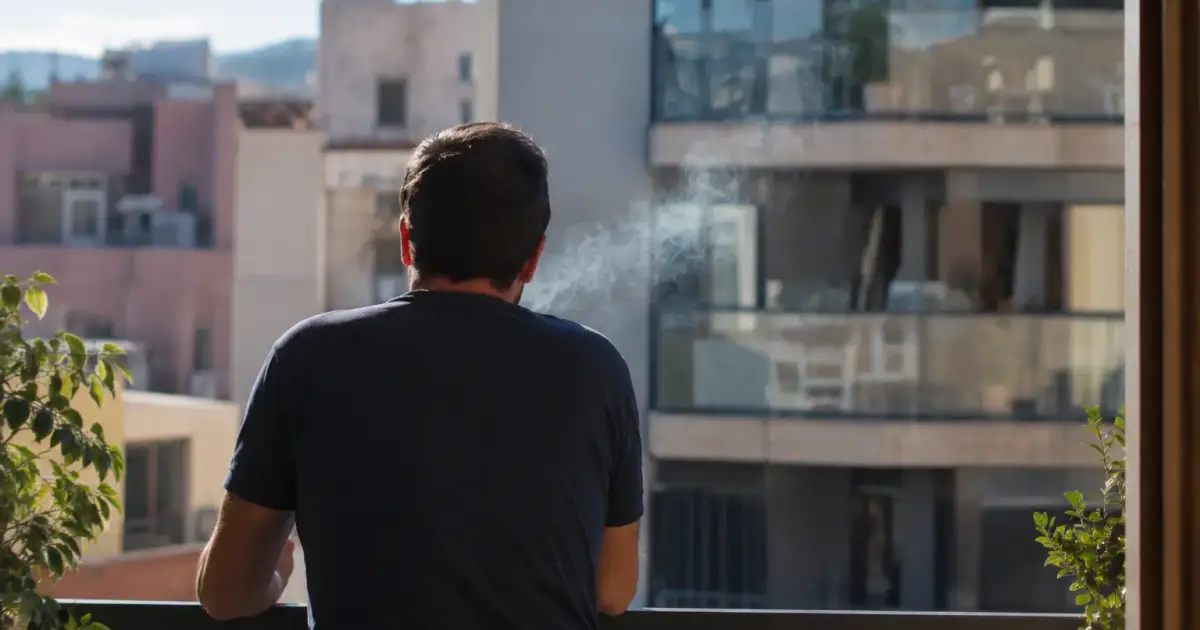
Cigarette smoke drifting from a neighbour’s terrace into another home can become more than just a nuisance. Under Spain’s Horizontal Property Act (Ley de Propiedad Horizontal, LPH), residents’ communities can take action when smoke causes a persistent and demonstrable disturbance that affects neighbours’ ability to peacefully enjoy their homes.
The legal basis is Article 7.2 of the LPH, which prohibits owners and occupants from carrying out activities that are banned by community rules, damage the property or create unhealthy, harmful, dangerous or unlawful nuisance. While the legislation does not specifically mention smoking, the provision can apply when cigarette smoke repeatedly enters neighbouring properties and can be shown to have gone beyond what is reasonably tolerable.
The first step is normally to try to resolve the dispute without going to court. The community president, either on their own initiative or at the request of an affected owner, can formally demand that the neighbour stop the activity causing the nuisance. The warning is intended to give the person responsible an opportunity to put an end to the problem before legal action is considered.
What happens if the smoking continues?
If the problem persists despite the warning, the community can take the case to court, provided the owners’ association has approved the action at a general meeting. It can then bring a legal claim seeking an order to stop the activity permanently.
However, neighbours will need evidence that the nuisance is serious, persistent and demonstrable. This could be crucial in establishing that smoke from the terrace is significantly affecting other residents’ use and enjoyment of their homes. The LPH, introduced by Law 49/1960, provides the legal framework governing relations between owners in the same building or residential development, including their rights and responsibilities and the management of communal areas.
If a court finds that the nuisance has been proven, a judge can order the activity to stop. In a case involving cigarette smoke, this could potentially result in a ban on smoking on the terrace if it has been established that the smoke is causing harm to neighbours. A judge may also award compensation for damages suffered by affected residents, including material and non-material losses.
In particularly serious cases, the law allows a judge to withdraw the right to use the property for up to three years. If the person responsible is a tenant rather than the owner, the court can also order the termination of the tenancy agreement and the tenant’s eviction.
Before a dispute reaches that stage, communities can also introduce specific rules governing the use of terraces and balconies through their statutes or internal regulations. Mediation and direct dialogue between neighbours may also help resolve complaints over cigarette smoke without resorting to the courts.