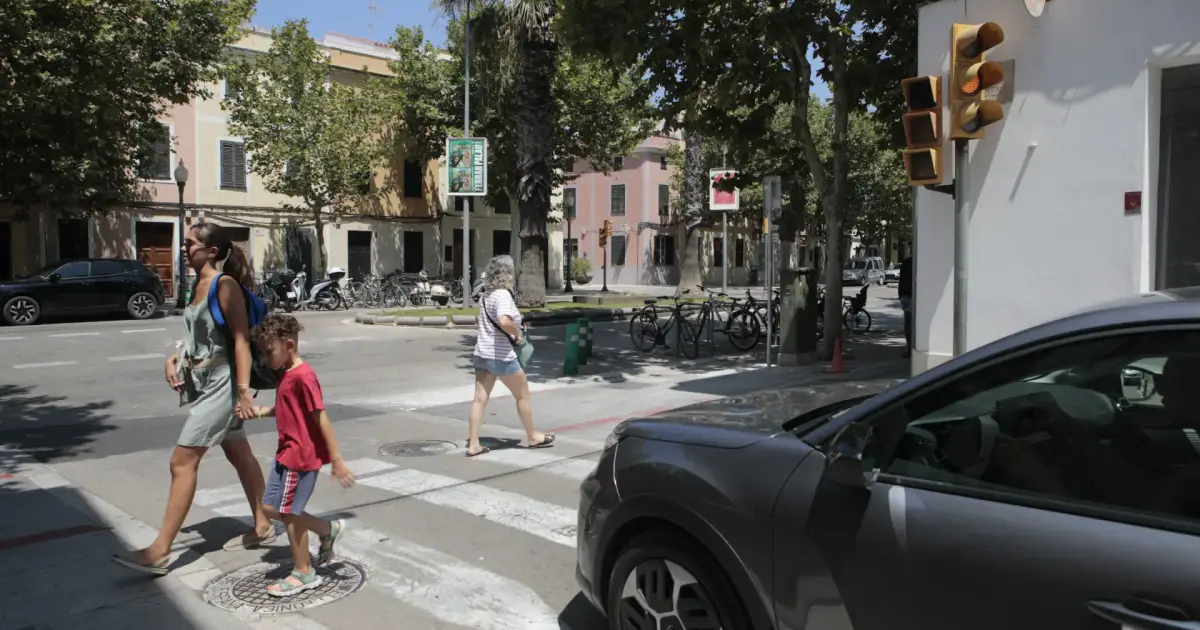
From October 1, drivers across Spain, will have to adapt to a significant change to the way some traffic lights operate. Under the new rules, a flashing amber light for vehicles will generally no longer be allowed to operate at the same time as a green pedestrian signal at controlled crossings. Introduced by the Government through Royal Decree 518/2026, the change is aimed at reducing confusion and improving safety at urban junctions, particularly for vulnerable road users.
Until now, some junctions have allowed vehicles to proceed with caution when faced with a flashing amber light while pedestrians have simultaneously had a green signal to cross. This combination could create potentially dangerous situations, particularly when vehicles were turning, as it was not always immediately clear who had priority. Royal Decree 518/2026, approved in June, is intended to remove this ambiguity by introducing a clearer and safer sequence of traffic lights.
Under the changes to Spain’s General Traffic Regulations, from October 1, a flashing amber light for vehicles cannot coincide with a steady green pedestrian signal at controlled pedestrian crossings. Instead, the vehicle signal must be preceded by a steady red light. This means that when pedestrians are given the green light to cross, vehicles will be stopped, making priority much clearer and reducing the risk of collisions at urban junctions.
What does the new traffic light rule mean?
The change is particularly relevant at busy urban junctions where several traffic movements and different types of road users can increase the risk of accidents. One common example is a vehicle turning into another road and immediately encountering a pedestrian crossing. The risk can be greater on roads with several lanes or where large vehicles such as buses and lorries restrict visibility for drivers and pedestrians.
Although drivers were already required to take particular care and give way to pedestrians where appropriate, the new traffic light sequence is designed to remove any uncertainty. When the pedestrian signal is green, pedestrians will have a much clearer right of way. The measure is intended to improve safety at some of the points where pedestrians and vehicles are most likely to come into conflict.
The changes do not mean flashing amber lights are being scrapped. They will continue to be used in other traffic situations, warning drivers to proceed with caution and give way when necessary. The change only affects situations where a flashing amber vehicle signal currently operates at the same time as a green pedestrian signal at a controlled crossing.
The new rules will apply across Spain, including the Balearic Islands and Mallorca, but the changes to individual sets of traffic lights will not necessarily happen overnight. Although the legislation comes into force on October 1, councils and other road authorities will be responsible for updating their traffic light systems, meaning the changes will be introduced progressively.
This means not every set of traffic lights in Mallorca will change on October 1. Drivers should pay attention to announcements from their local council for information about when the new system will be introduced in their area.
Traffic lights in Mallorca will change gradually
The measure forms part of a wider update to Spain’s traffic regulations designed to improve the safety of vulnerable road users. These include pedestrians, cyclists, motorcyclists, moped riders and people using personal mobility vehicles such as e-scooters.
Urban roads account for a significant proportion of collisions involving these groups, with pedestrian crossings and turning manoeuvres at junctions among the areas where conflicts with vehicles are most likely. The new rules target one particular source of confusion by preventing traffic signals that could previously give drivers and pedestrians conflicting indications.
The changes do not affect the penalty for running a red light. This remains a serious traffic offence carrying a €200 fine and four points off a driving licence. The main effect of the new rules will therefore be on the way certain traffic lights are programmed and synchronised.
When pedestrians have a green signal to cross, vehicles will no longer be shown a flashing amber light at the crossings covered by the new rules. The aim is to make a common situation at busy urban junctions easier to understand and, above all, safer for pedestrians.
Spain’s General Traffic Regulations set out the rules governing road traffic and the signals used on public roads. They are intended to improve road safety, keep traffic moving and protect all road users, with particular emphasis on those most at risk.
The regulations are updated periodically to reflect changes in traffic conditions, technology and road safety requirements. The latest changes to the way traffic lights operate are intended to prevent accidents and make the interaction between vehicles and pedestrians clearer and more predictable.