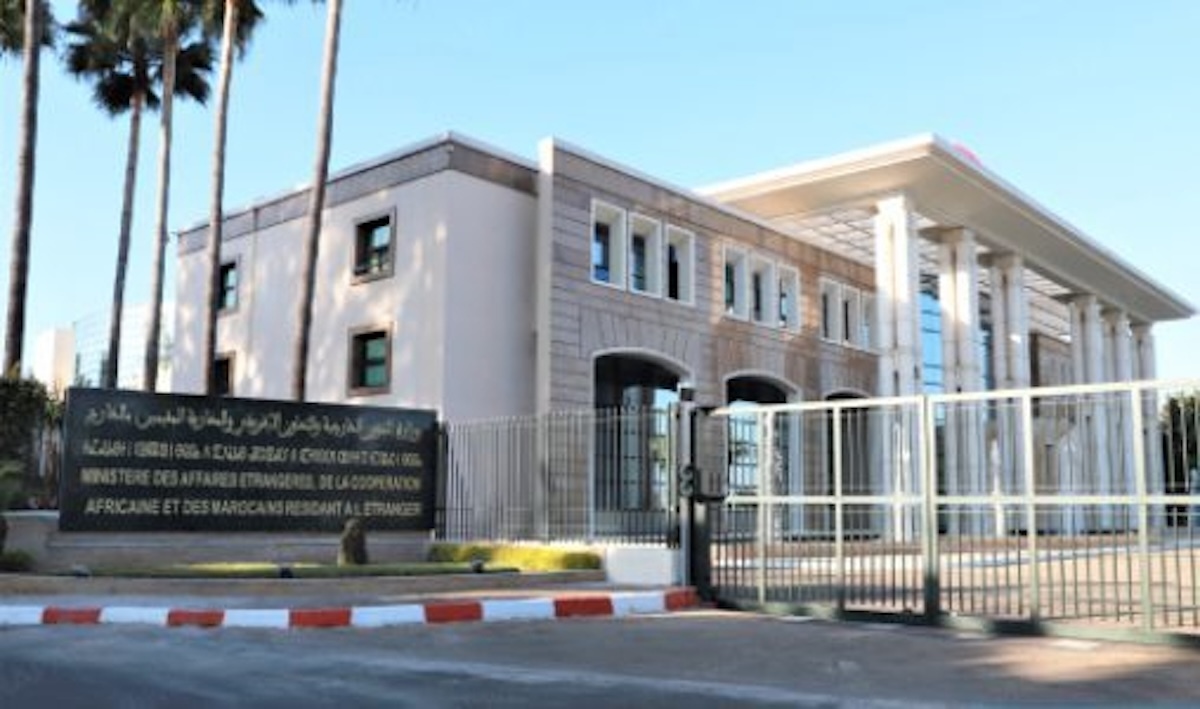
In this statement, the ministry emphasized, first and foremost, that the Kingdom of Morocco has sovereignly chosen to engage with the Kingdom of Spain in a relationship characterized by good geographical neighborliness, political understanding, economic partnership, and security cooperation.
This approach, the statement continues, found its most complete expression in the Joint Declaration of April 7, 2022, following the meeting between His Majesty King Mohammed VI, may God assist him, and the President of the Spanish Government, H.E. Pedro Sanchez.
The statement, it is recalled, marked a new phase in relations, based on the essential principles of mutual respect, mutual trust, ongoing dialogue, and the aspiration for a mutually beneficial partnership.
The ministry further noted that it is thanks to this approach that the two countries have succeeded in proactively fostering what unites them and in managing their differences to address them calmly and respectfully, without any attempt to create a fait accompli.
Tangible results have thus been achieved, particularly in the economic sphere (Spain is Morocco’s leading economic partner; the Kingdom is Spain’s second-largest trading partner outside the European Union) and in security cooperation (lives have been saved and terrorist and criminal networks have been dismantled, often at the cost of human and material losses suffered by Moroccan forces).
Third, the ministry emphasized that cooperation on migration has always been coordinated and efficient, adding that the regrettable events of last July certainly require a thorough investigation to determine the circumstances, identify any interference, expose any manipulation, and, above all, ensure that they do not happen again.
Now, setting aside all controversy and rhetoric, common sense and truthful discourse demand that we ask direct questions: Why continue to level accusations against Morocco when no evidence, facts, or reports establish any involvement by Moroccan authorities? Why are illegal migrants not being returned, even though the Moroccan government has officially committed to readmitting them? Why are unaccompanied minors being kept away from their families, when Morocco has urgently requested their return? the ministry asks, asserting that the answer to these questions is not to be found in Morocco, but with the relevant Spanish parties.
Fourth, it adds, Morocco regrets that certain Spanish political and media circles persist in exploiting the Kingdom for domestic political purposes, noting that it is particularly distressing that long-standing parties—despite their experience in government—have fallen into this quagmire where unreasonable and populist grandstanding prevails over common sense.
Similarly, it is regrettable that reputable legislative and judicial institutions are falling short through ill-advised initiatives that sow the seeds of discord. Such excesses—where discernment gives way to oversimplification and objective analysis to inflammatory rhetoric—are part of a strategy of fear that is harmful to all, the ministry laments.
Fifth, the statement continues, the Kingdom of Morocco refuses to be used as a pre-election political tool and will not tolerate being made a scapegoat in political score-settling.
Geographical proximity is an immutable fact. It is political leaders who, through their courage and vision, turn this into an asset for the future, the ministry asserts, concluding that strategic blindness, on the other hand, will transform this asset into a source of chronic mistrust and recurring tensions.