Get the best of Vancouver in your inbox, every Tuesday and Thursday. Sign up for our free newsletter.
To those not fully immersed in flamenco, the importance of the art form in Spanish culture can be hard to process. Victor Fernández is quick to acknowledge this when he’s reached in his adopted town of Bilbao.
The Granada-raised choreographer, dancer, musician, and educator confirms there are must-dos for tourists visiting the historic city where he got his start as an artist. Taking in the sprawling and stunning Moorish palace fortress known as Alhambra during the day is a big one, as is hitting the gorgeously chaotic tapas bars of the Centro-Sagrario district at night.
Just as essential a part of the Granada experience are the flamenco caves of the Sacromonte district, which have been visited and celebrated by everyone from Michelle Obama to Anthony Bourdain. In intimate and hyper-atmospheric rooms cut into the hillside, singers, dancers, and musicians perform for audiences that are, for the most part, made up of tourists from around the world.
That the caves of Sacromonte aren’t necessarily packed with locals, Fernández suggests, shouldn’t be read as a statement on flamenco’s stature in modern Spain. To understand that the art form is alive and well, he notes, all one needs do is watch the fire-brand passion and full-bore commitment of those onstage.
If you’ve seen a cave performance, you know the shows are powerful, awe-inspiring, and steeped in tradition.
“It’s complicated in that, yes, there is a relationship between flamenco and tourists,” Fernández says on a video call with the Straight. “It is where a lot of people see our art and experience a culture that is a deep part of our city. We understand that connection. So when we are doing flamenco for tourist crowds, we are trying to give them the best of ourselves—to give them good dance performances and good guitar performances. The idea is to show them the greatness of traditional flamenco.”
Fernández—who is headed to the West Coast this month to perform at the Vancouver International Flamenco Festival—has spent much of his life spreading the gospel. He first fell in love with the famously tradition-bound art form as a young kid.
“In the south of Spain, it’s very common to start dancing, or playing football or some other sport, when you are young,” he recalls. “Flamenco is one of the activities that kids do. My mother loved flamenco—the dancing and the music—so she saw this as a good opportunity to introduce it to her children. So I started when I was three or four years old in my little village in Granada.”
At nine he began flamenco classes, that education lasting until he was 18. A career followed, starting with his work with Oscar Quero Danza Company in Granada.
“As a style, as art, flamenco has to be very clean—to have a precision,” Fernández says. “I am very disciplined, so that went well with my personality, right from the start.”
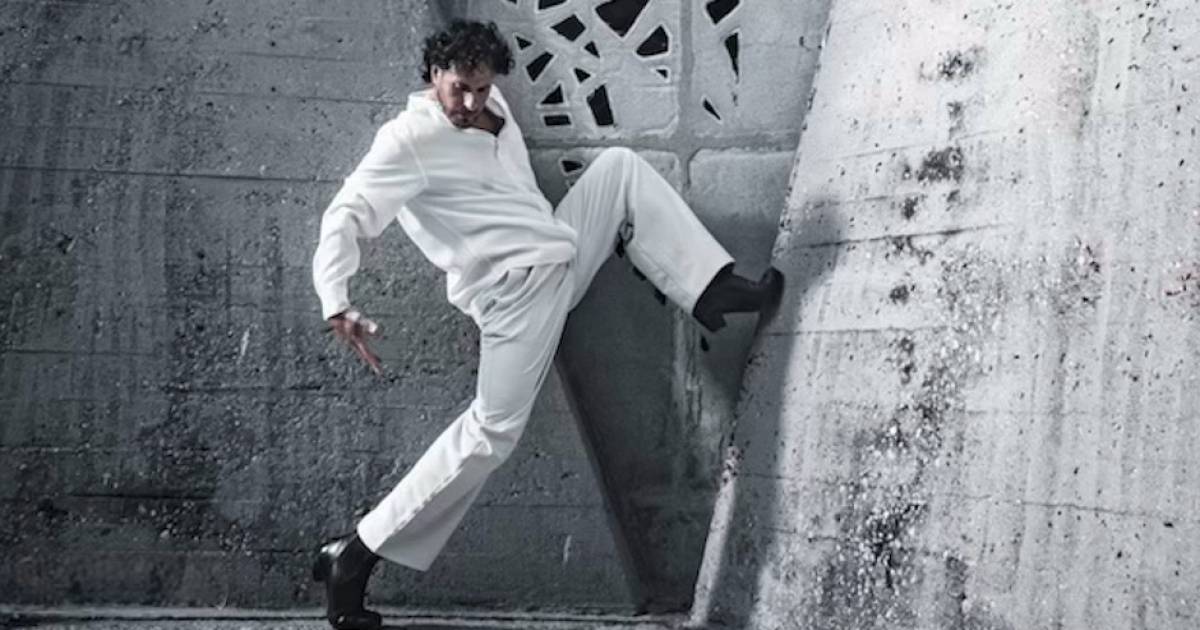
His journey quickly became a global one, leading to touring Europe and Asia with companies like the Madrid Flamenco Ballet, which bridged two very distinct worlds of dance. Although classically trained in a centuries-old discipline, Fernández came to realize that, to continue to grow and flourish, art forms must also evolve. The choreographer, whose original works include Encuentros and Raizando, has described his take today as one which “explores the space between flamenco tradition and contemporary movement, investigating the body as a site of memory, expression, and transformation”.
Beatrix Molnar.
That approach makes him something of a natural for the Vancouver International Flamenco Festival, which has embraced the philosophy of building on what’s come before, while not being afraid to take chances.
“This is a way to connect with young people who might not connect with the essence of flamenco,” Fernández says. “Flamenco has changed, because we all change as people—not just our bodies physically, but also our personalities and our characters as we get older. We start to see the world differently. And you learn that it’s okay to drink from and take things from other styles.”
He accepts that take doesn’t make everyone happy.
“When you get too far away from its roots, some people don’t agree with that,” he says. “So you have to measure your dance and your art. Go too far and you lose the essence of flamenco, because flamenco is very fixed in its ideas. Forget that, and you start to do something separate from flamenco. In some ways, this is good because it’s also a challenge. It’s like, ‘This might be interesting for me, but will audiences agree with that?’ ”
Vancouver flamenco fans will get the chance to figure that out for themselves when Fernández performs with cantaora Mercedes Cortés and Flamenco Rosario for the premiere of Nuevo IV—Lo Nuevo y lo Añejo, which translates to “the new and the old”. Launched by Flamenco Rosario in 2018, the series encourages choreographers from around the world to push boundaries in Vancouver, the idea being to create dialogue and new perspectives. Fernández will also host a more traditional workshop where he dives into the history of flamenco.
His straddling of both worlds suggests that, as much as he’s thrilled to move the conversation forward, he also understands the power of flamenco puro seen in the caves of Sacromonte. And while it would be easy for Fernández to go the diplomatic route on which he loves better, he instead answers the question.
“I love traditional flamenco,” he says. “But I feel more free when I’m doing contemporary flamenco. It gives you the opportunity to go to different places.”
The Vancouver International Flamenco Festival runs September 19-27.
Video of Vancouver Flamenco Festival 2026