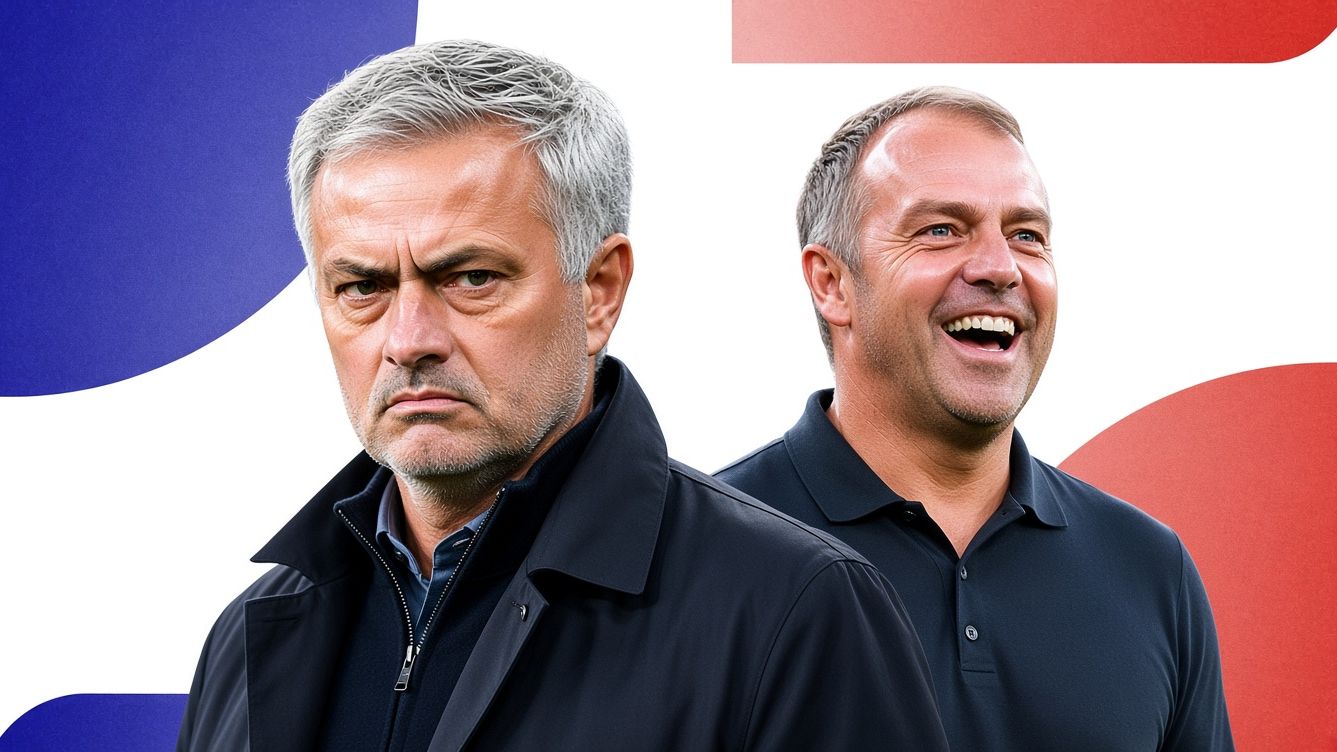
Managing minutes brings us to another crucial point: the quality of the options on each coach’s bench, a hidden weapon capable of deciding titles.
Real Madrid look short here. A punishing run of injuries, before the stars finally returned, has thinned the ranks, and some players have dipped in form.
Even after landing several of the signings the club chased last summer, Los Blancos still lack a “super substitute” in a number of positions. Take the left wing, should Mourinho ever decide to bench Vinicius.
Midfield offers Mourinho little more. Rest Valverde or Bernardo Silva and he runs into the errors of Camavinga, and to a lesser extent Tchouameni, who is still returning from injury.
Flick, by contrast, picks his side and rings the changes in near total comfort. There is barely any gap between the starters and the reserves at Barca, and that depth has let the German coach rotate carefully across recent matches. The result: every player stays sharp and nobody feels the strain.
Up front, which explains the terrifying tally so far, the options pile up on the flanks. Even the centre-forward berth that was a headache in the summer is sorted. Raphinha has become the main striker, Gabriel Jesus deputises, and young Egyptian Hamza Abdel Karim waits his turn.
In midfield, Flick leans almost entirely on Rodri and Pedri, yet the playmaker slot changes without any drop in level. Fermin Lopez lights up one game, then sits so Dani Olmo can shine in the next.
Defence throws up the same welcome dilemma. Whoever Flick picks, the performance holds up, even if the team has yet to meet an opponent with real attacking bite.
Versatility has helped him too. The Barca squad is packed with players comfortable in more than one role. Raphinha is the obvious example, a winger and a centre-forward, alongside new pair Karim Adeyemi and Anthony Gordon, plus Fermin Lopez.
All of that hands the coach huge tactical flexibility. Real Madrid, by contrast, have looked rigid all season.