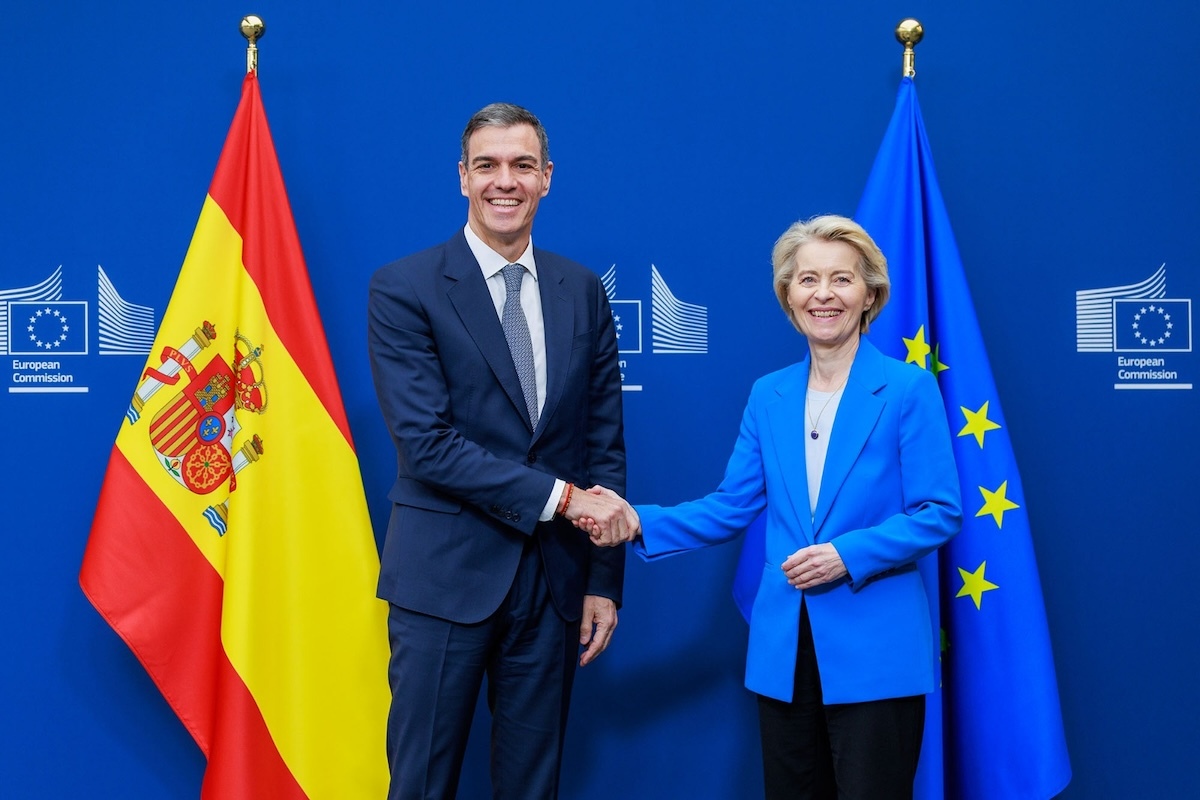
The assertion that the borders of Ceuta constitute European borders cannot be interpreted solely as an expression of support for Spain, but also as a confirmation by Brussels of the city’s inclusion—under Spanish sovereignty—within the European political and security space. This therefore implies transforming any crisis related to Ceuta from a bilateralissue between Morocco and Spain into a matter with direct European repercussions.
In this same context, the proposal to create a European framework for responding to emergency situations and episodes of mass migration—alongside strengthening the role of the Frontex Agency and accelerating return processes—reflects a European trend toward adopting a more restrictive approach to migration management. Although these measures are presented as necessary mechanisms to address the pressures arising from irregular migration and mass arrivals, they also spark a broad debate on the expansion of the powers of European security institutions and on the balance between security, humanitarian, and social considerations—which should form an essential part of European migration policy.
European messages directed at Morocco also do not appear to be unrelated to a process of redistributing roles within the European system. Brussels needs Rabat’s cooperation in areas such as border control, early warning, and the management of migration flows, while Spain relies heavily on direct cooperation with Morocco to prevent a recurrence of crises in Ceuta and Melilla. However, turning Morocco into the European Union’s first line of defense raises, in turn, political and ethical questions about the nature of this partnership and whether it will be based on balanced cooperation and a sharing of responsibilities, or whether it will ultimately become a mechanism for shifting part of the burden resulting from European migration and border policy onto neighboring countries.
As for the financial support announced for Spain, it should not necessarily be interpreted as an expression of European solidarity exclusively with Madrid, but can also be understood within the framework of investment aimed at protecting the European Union’s external borders. Due to its geographic location, Spain bears a significant portion of the costs associated with European policies on migration. Therefore, the funding allocated to Spain can serve as a tool to preserve the cohesion of the European system and manage its external borders, while also representing an expression of solidarity with the Spanish government.
From this perspective, one can understand the argument that Pedro Sánchez is one of the political recipients of the European messages directed at Morocco. The announced support for Spain may, on the surface, appear to be an endorsement of the Spanish government and its institutions, but at the same time it may have implications related to the reduction of the room for maneuver that Sánchez has sought to preserve on several sensitive issues, including migration, relations with Morocco, social policy, and Spain’s position within the European Union.
The more Madrid chooses to adopt more independent approaches on certain issues with respect to some of the prevailing European and Atlantic orientations, the more sensitive conservative forces will be toward his political approach, especially in the context of a broader dispute over the future of Europe’s political, social, and economic model.
However, reducing the European landscape to a direct confrontation between Sánchez and the European right could oversimplify a much more complex reality. The United States is not the only actor influencing European decision-making, nor does the European Union itself constitute a homogeneous political bloc. Rather, it is a space where the interests of national governments, the positions of European institutions, the rise of right-wing movements, and the influence of large corporations converge, in addition to U.S. and Atlantic pressures and commitments.
Therefore, the conflict surrounding Spain does not pertain solely to the figure of Pedro Sánchez, but is also related to the political model that his government represents. This model is committed, to varying degrees, to expanding the scope of social protection, strengthening the role of the state in certain economic and social spheres, and striving to achieve a certain balance between Atlantic commitments and national and European interests.
On the other hand, European right-wing forces are increasingly turning to the issue of migration as one of the continent’s main political and media topics. This is occurring against a backdrop marked by deeper crises, including Europe’s loss of competitiveness, rising levels of debt, the energy crisis, the decline of a segment of the middle class, as well as difficulties related to the development of a more independent European defense and economic policy.
In this context, migrants have become an easy target in European political and media discourse to explain some of the accumulated crises, while the structural causes linked to the economic model, fiscal policies, the energy crisis, production challenges, and strategic dependence feature much less prominently in public debate compared to the magnitude of their actual impact.
Furthermore, resorting to the narrative of the Russian or Chinese threat does not address the underlying issue regarding the European Union’s ability to formulate an independent geopolitical strategy. The Union possesses considerable economic and regulatory clout, but transforming that power into full geopolitical autonomy remains a challenge. The sanctions imposed on Russia and Iran, along with broad alignment with various U.S. policies, highlight the persistent tension between specific European interests and transatlantic commitments, which exert considerable influence on the European decision-making process.
In this complex environment, Spain seeks to present itself as a European state that neither rejects security solidarity nor shirks its responsibilities within the Union, but which, at the same time, does not wish to become a mere instrument for implementing border or economic policies defined outside the scope of its national interests.
Hence the political significance of Sánchez’s positions—not necessarily because they represent a complete break with the European or Atlantic system, but because they reflect an attempt to renegotiate Spain’s position within the Union and the nature of the balance between European and Atlantic commitments, on the one hand, and Spain’s national and social interests, on the other.
Consequently, von der Leyen’s message to Morocco can be interpreted on two interrelated levels. The first is explicit and direct, and concerns the protection of European borders, the strengthening of cooperation on migration issues, and support for Spain in the face of pressures related to its geographical position. The second is of a broader political nature and relates to the debate over the direction the European Union should take in the coming phase, the nature of the relationship between security and migration, between national interests and the European project, and between Atlantic commitments and attempts to build a greater degree of strategic autonomy.
If Sánchez is seen as representing a political trajectory that could limit the hegemony of the European right and the logic of the unrestricted market—and which, to varying degrees, seeks to grant greater space to social and national interests within a European project facing multiple crises—the future of this dispute will not depend solely on political statements or media confrontations. It will also depend on Spain’s ability to translate its political discourse into concrete European alliances, forge agreements within the Union’s institutions, and avoid limiting itself to managing its differences with its adversaries solely in the media and political spheres.
Thus, the issue of Ceuta does not appear to be merely a border or security matter of limited scope, but has become part of a broader European debate on migration, border security, relations with neighboring countries, the future of European solidarity, and the limits of the Union’s strategic autonomy. In this context, a fundamental question remains: Does the European discourse on Ceuta constitute an expression of effective solidarity with Spain in the face of border and migration challenges, or does it simultaneously represent an instrument of political pressure intended to readjust the room for maneuver that Madrid—and in particular the Sánchez government—seeks to preserve within the European arena?
Dr. Lahoucine Bekkar Sbaaï. Political analyst and strategy expert. Director of the Africa and International Cooperation Division at the International Center for Security, Migration, and Development.
Translated from Arabic by: Abdessamad Benyaich