What are journalists missing from the state of Delaware? What would you most like WHYY News to cover? Let us know.
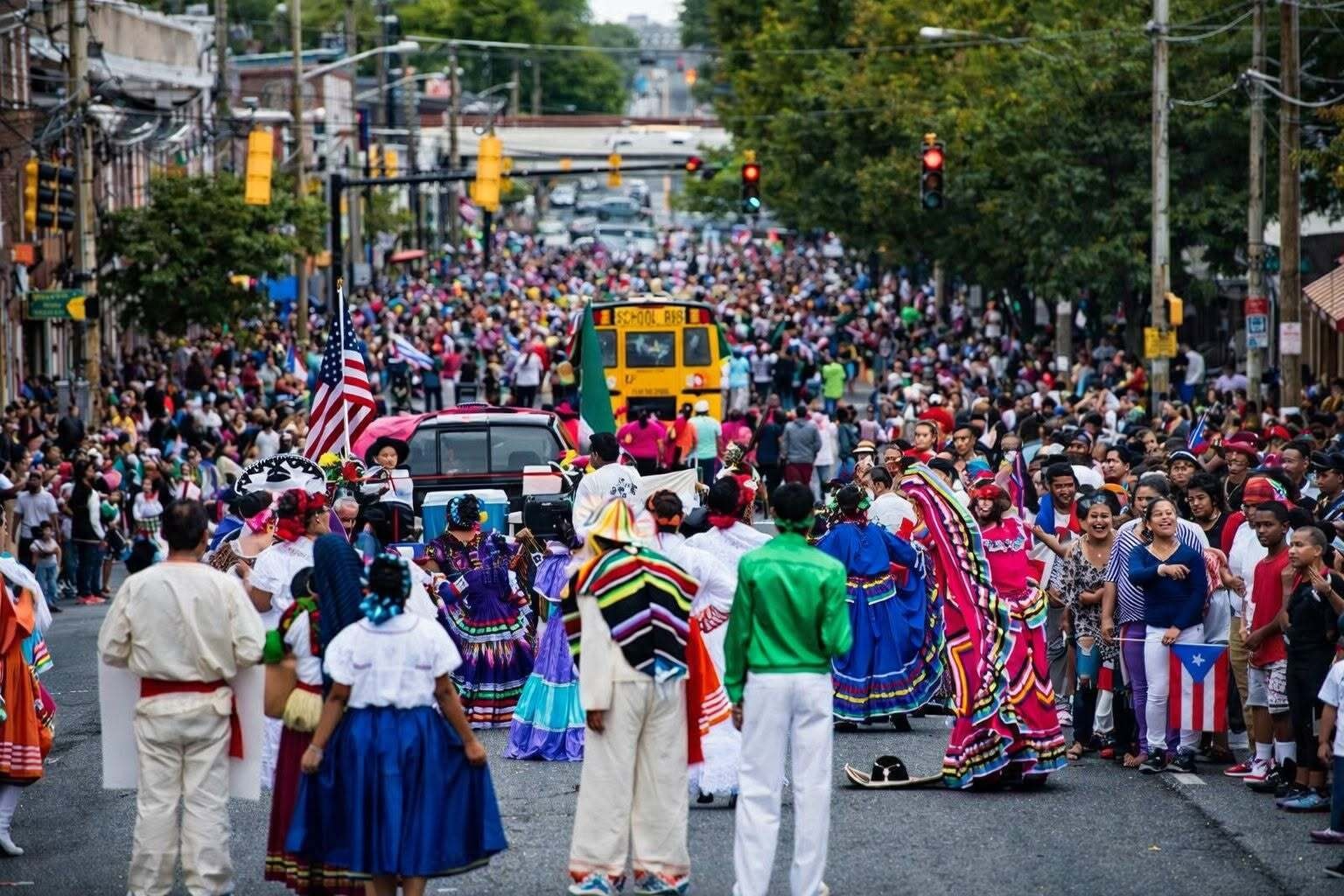
For five decades, Fourth Street – or Calle Cuarto – in Wilmington has become a place where Delaware’s Hispanic and Latino communities come together to celebrate their cultures, their history and their growing presence in the state.
But this year’s Wilmington Hispanic Parade will be more than a celebration.
It will mark the end of an era.
The parade will be the final one hosted in Wilmington before the annual tradition moves to Dover next year, as organizers said the growth of Delaware’s Hispanic community calls for a new model.
“[The parade] is so widespread that they’re all there now to celebrate what it represents for us. Where we were just standing up as a community almost 50 years ago, now it’s like people are standing with us. It’s no longer just the Hispanics walking down [the parade route],” said India Colon, chief operating officer and vice president of Nuestras Raices, a Delaware-based nonprofit.
Colon said the annual tradition began in the 1970s, when Hispanic and African-American communities in Wilmington were experiencing discrimination, racism and police brutality.
“In 1975 to 1976, the community just started banding together and realizing that there was an uprising happening within our Hispanic and African-American communities and there was just a lot of activism happening back then. They needed something to start being seen,” she said.
The effort originated with parishioners and community members at St. Paul San Pablo Church on Fourth and Jackson streets. In 1978, they launched what was then known as the Puerto Rican Day Parade, reflecting the large Puerto Rican community in Wilmington at the time.
But as more Latino communities came to Delaware, the parade evolved with them. It eventually became the Wilmington Hispanic Parade, representing a broader and more diverse Hispanic community.
Colon said that growth is perhaps the biggest change she has seen.
“It’s no longer just the Hispanics walking down in this parade. It is so diverse with Hispanics to non-Hispanic or [the] African-American community or Caucasian community,” she said.
 Community members showcase their Hispanic heritage through vibrant car displays as they drive through the streets of Wilmington. (Courtesy of Nuestras Raices)
Today, the parade brings together more than 80 groups and over 1,000 participants, including marching bands, local schools, community organizations, cultural groups, stilt walkers and decorated floats.
The two-hour parade will run from 1 to 3 p.m. along Fourth Street on Sunday, Sept. 13.
Colon said the event is about more than just music, food and colorful floats. It also allows residents to learn about organizations and resources serving Delaware’s communities. Some of those organizations include the Latin American Community Center, La Plaza and Caribbean Culture Awareness Inc.
“So, while it’s vibrant, it’s colorful and beautiful, we just welcome the community to pay attention to [who] it is that’s in [the parade] because they all carry something and they all bring something and offer something,” she said.
The parade also boosts the Fourth Street corridor economy, drawing thousands of participants and attendees.
“They might not all be there collectively at the same time, but the roll-through crowd is a good 3,000 people, sometimes more. And that doesn’t even count the individuals that are actually in the parade,” she said.