
BROOKINGS, S.D. — Drones are soaring in popularity in the agricultural sector, but it’s important to make sure they are actually financially viable.
Researchers at South Dakota State University surveyed 595 corn and soybean farmers in eastern South Dakota to get a better understanding of how drones are used in their businesses.
Drones can have two different uses on a farm: capturing aerial imagery and applying fertilizer, pesticide or herbicide.
“Those people using it for the treatment purpose, they are more likely to find it profitable than people using it for remote sensing,” said Tong Wang, professor and SDSU Extension specialist in the Ness School of Management and Economics at South Dakota State University.
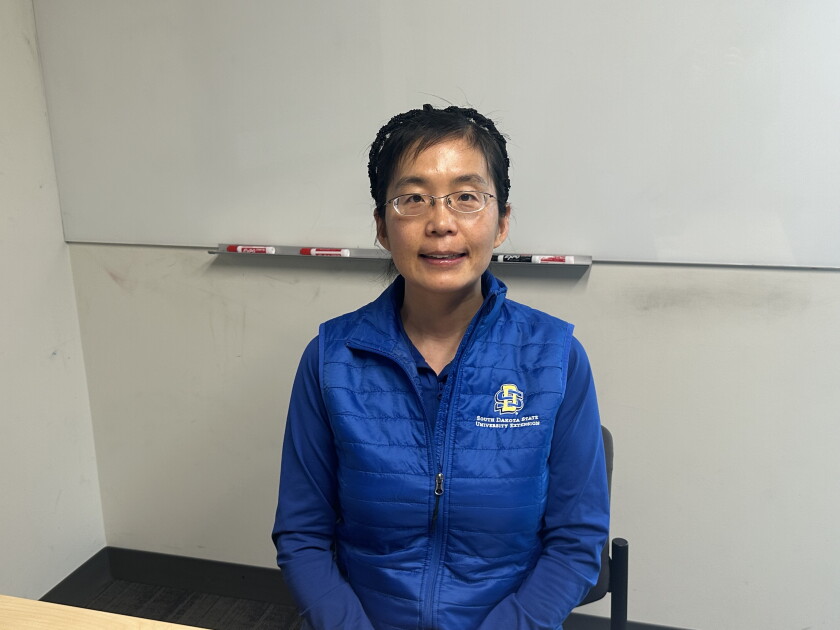
Tong Wang, advanced production specialist and associate professor at South Dakota State University
Ariana Schumacher/Agweek
Wang said people using drones for image gathering need to make sure they are actually using the information they are gathering.
“They kind of use this information to tell, like, which soil is more suitable for using the variable rate input technologies, to gather some information, use it, then they are going to make a profit,” Wang said. “But if they gather some information, and they never use it, then they are more likely to lose money.”
is a newer purpose than imagery, Wang said, but growing more rapidly.
“They find it more profitable and are more likely to adopt it,” Wang said.
For producers surveyed who use drones, 11% use them only for imagery, 6% for input application and 7% use them for both.
Cost estimates cited in the study, drawn from prior research on the DJI Phantom 4 v2, put the initial investment at around $4,391, which covers the cost of the drone, software, insurance and licensing. Annual cost is about $2,685 plus $52 per flight.
Wang said that of the farmers surveyed, around 90% of them own the drones, versus hiring the work out.
To determine if the drones were profitable, they divided them into categories by years of usage.
“The trend is, as you use them more years, you tend to find it more profitable,” Wang said. “But it doesn’t mean that you use it for more years, people always find it profitable. It just increases the likelihood.”
Profit depends on many factors.
“It depends on the soil conditions, depends on what other practices they are using, and yeah, it depends on how skilled they are using drones as well,” Wang said.
Those with soil conditions that need more attention benefit more from the drones, she said.
However, Wang said many producers don’t actually know if their farm is making or losing a profit from utilizing drone technology.
“Probably, they did not use it for enough time, so it takes them a while to realize what’s actually the profit,” Wang said.
Some producers also find that they are losing some profit, but not many, Wang said.
“Some people said they are losing profit, but most people said they have no idea or they are gaining profit,” she said.
When adapting precision agriculture practices, generally the farm size matters. Larger farmers typically have a higher adoption rate and higher profitability from the product.
However, Wang said she hasn’t found supporting evidence to determine if larger farms make more profit from drones compared to smaller farms.
“For this one, we have higher adoption rates, but we did not find the profitability increase as well,” Wang said.
However, drones are a bit different from traditional precision agriculture products.
“For drones, the thing that’s a little bit different is drones kind of use batteries and batteries kind of last not for a long time. So if you have too large of a farm, and you fly drones, it will end up with no battery in the middle. It’s kind of like you need to recharge and those types of things I think maybe make it more difficult for the larger farms because the battery probably won’t last that long,” Wang said.
Wang said producers should improve their record keeping to better understand. They should think about how they will balance the cost of purchasing a drone, or hiring a drone pilot, did yields increase, did they increase revenue and determine if net profit ultimately increased.
Education is also key to making sure you are getting the most out of adding drones to your farming operation.
“We found that being educated or also they could rely on someone who is educated in drones, that’s also like if they kind of use the information properly, they are more likely to profit from me,” Wang said.