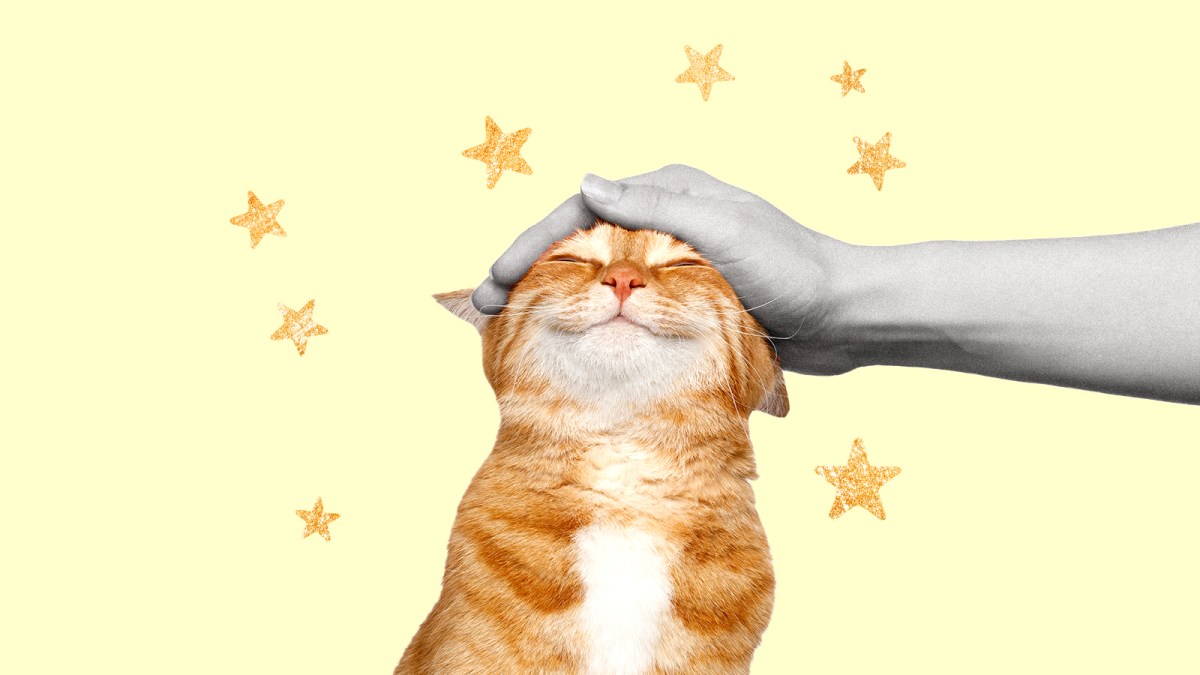
Marmalade-coloured cats are not the only orange-furred mammals in the animal kingdom, but scientists have discovered something that sets the tabbies apart from tigers, orangutans and even redheaded humans.
Only in domestic cats is the colour orange strongly linked to one sex, with males making up at least 80 per cent of ginger felines.
Researchers have now not only uncovered the gene responsible, but also the process that causes it to be linked so strongly to males.
• Cats become Britain’s favourite pet as Gen Z copy Taylor Swift
A gene known as Arhgap36 is shared by many mammalian species, including humans, but it normally has no link to pigmentation. Instead, it helps to govern the relationship between the nervous and hormonal systems. Cancers have been linked to the gene’s activity, but not hair colour — until now.
Researchers in the US examined 51 variants on a cat’s X chromosome and found one that switches on the Arhgap36 gene within pigment cells — a type in which it normally plays no role — to cause a change in colour that leads to orange fur.
In other orange-haired species, this disruption takes place at an earlier step via different genes, meaning that it can affect males and females equally.
• What I learnt at the world’s biggest festival for redheads
The fact that it is linked in domestic cats to the X chromosome means that a male, which has an XY chromosomal make-up, only needs one of these variants to create orange fur.
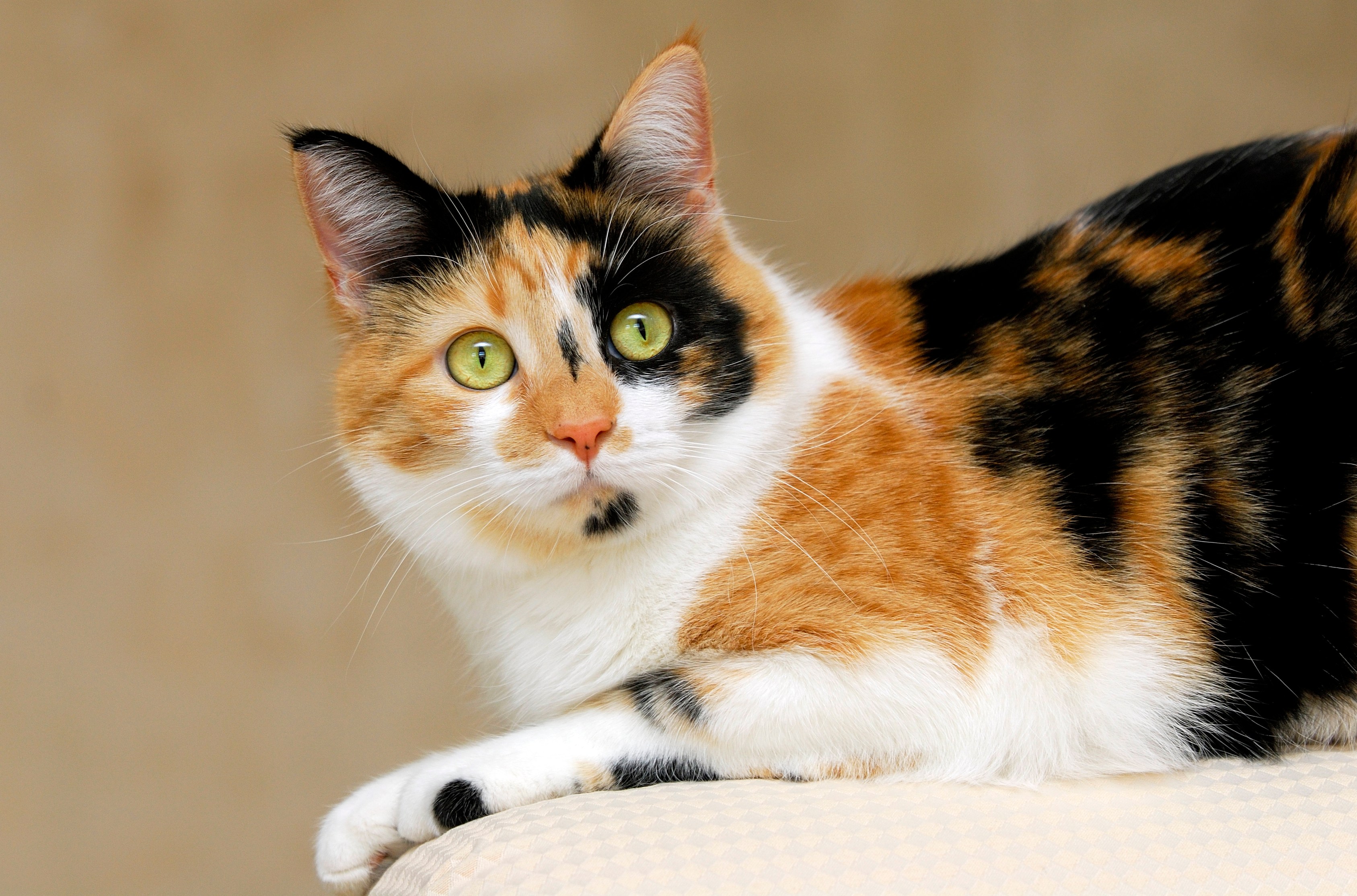
A female (XX) would need the same variant on both chromosomes. A variant on just one will lead to a female being partially orange, in a tortoiseshell or calico pattern.

An example of tortoiseshell markings and, below, a calico cat
GETTY IMAGES
Dr Christopher Kaelin from Stanford Medicine in California said: “In a number of species that have yellow or orange pigment, those mutations almost exclusively occur in one of two genes, and neither of those genes are sex-linked.”
Referring to the unique mutations that take place within the pigment cells of orange cats, he added: “Certainly, this is a very unusual mechanism where you get misexpression of a gene in a specific cell type.”
Orange cats feature in very old paintings, showing that the mutation has been around for centuries at least. It may have become more common as humans tried to breed cats with orange fur for their novel appearance.
“This is something that arose in the domestic cat, probably early on in the domestication process,” said Kaelin, whose team’s study was published in the journal Current Biology. “We know that because there are paintings that date to the 12th century where you see clear images of calico cats, so the mutation is quite old.”
• How cat lovers changed the course of art — from Da Vinci to Tracey Emin
There is often a stereotype that orange cats are more feisty, or affectionate, or fearless, but this may simply be because most of them are male. “There are not many scientific studies of the personality of orange cats,” Kaelin said.