
The European Union Aviation Safety Agency lowered its aviation risk classification for Israel and parts of the Middle East Wednesday, replacing its high-risk conflict zone advisory with a medium-level Information Note.
The agency said that the existing Conflict Zone Information Bulletin covering the Middle East and Persian Gulf expired on July 8 and made the decision to not extend it.
Under the expired designation, airlines faced additional security requirements as well as risk assessments, including what routes to take in the affected airspace. These factors required airlines to make decisions about what routes to operate and to assess potential insurance premium hikes.
The new advisory now means that airlines can decide whether to return to Israel based on their individual security assessments, including the popular major low-cost European airlines such as Britain’s easyJet and Ireland’s Ryanair, along with Hungary’s WizzAir.
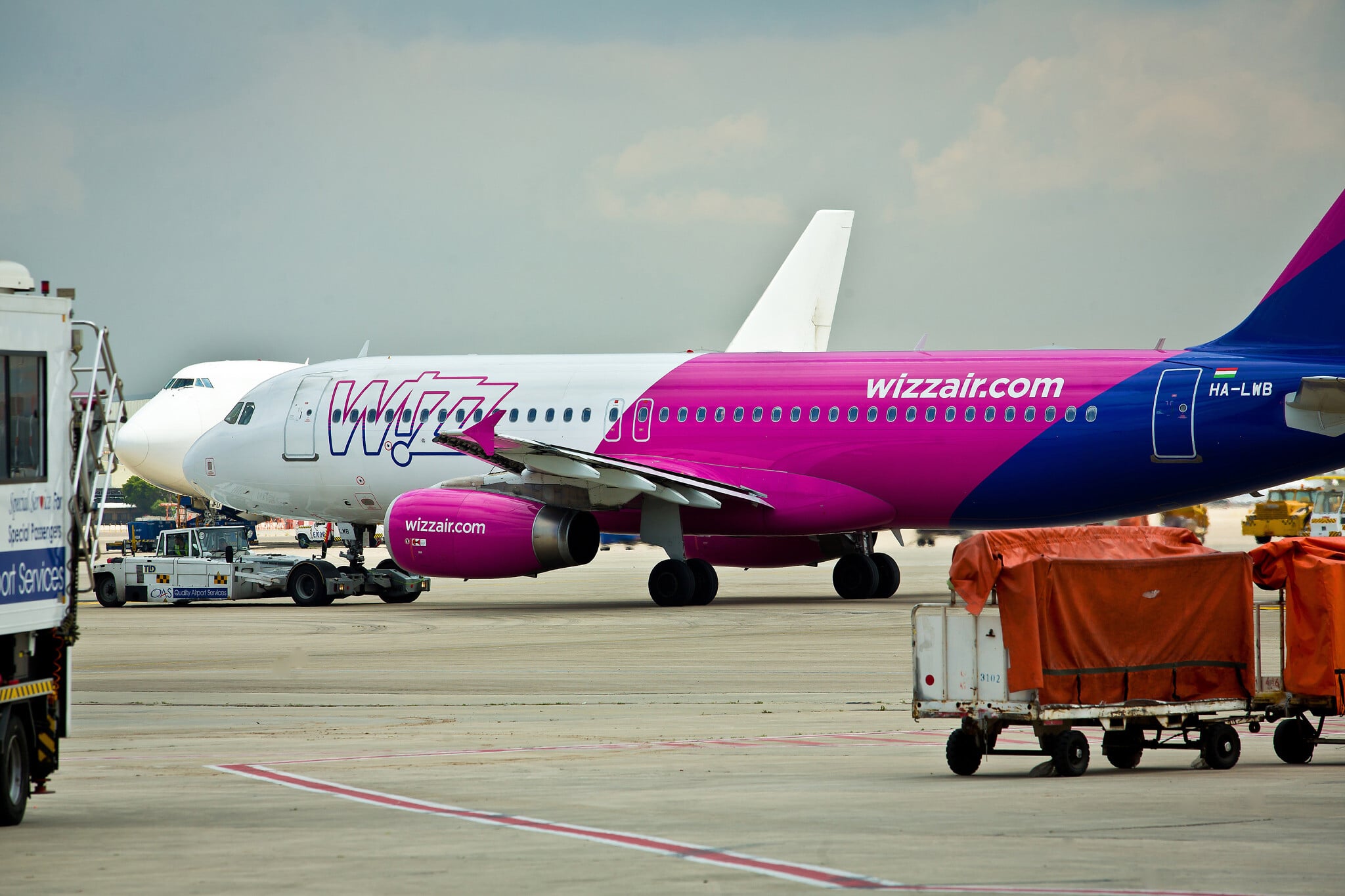
File: A Wizz Air flight at Ben Gurion International Airport. July 22, 2019 (Moshe Shai/FLASH90)
Major international airlines, including American carriers chose to suspend flights at various times over the past almost three years following ongoing conflict in the aftermath of the Oct. 7, 2023, Hamas invasion and massacre, including during the Iran-Israel hostilities earlier this year.
Get The Times of Israel’s Daily Edition
by email and never miss our top stories
By signing up, you agree to the terms
The agency’s decision appears to have been made before President Donald Trump said Wednesday that the US-Iran ceasefire was over, as skirmishes erupted between the two countries in the Strait of Hormuz. Trump also called Iran’s leaders “scum.”
The European body has now placed Israel within a medium-level risk category. Separate high-risk bulletins are still in place for Iran, Iraq and Lebanon.
In its announcement, the EASA said airlines should make their own decisions about resuming disrupted service, while it, along with the European Commission and EU member states, continues to monitor developments in the region.
While the US has begun to relocate some of its refueling aircraft that have been parked at Tel Aviv’s Ben Gurion Airport for months, their current presence at the country’s main international air gateway is still threatening flight cancellations for tens of thousands of passengers during the peak summer season beginning in July, Israel Airports Authority head Sharon Kedmi warned last month.
Kedmi said in May that the airport was operating at around one-third of its capacity because of space and resources being used by American military operations.
American Airlines, which suspended its New York–Tel Aviv route after Oct. 7, has repeatedly delayed its planned return over regional security concerns. The airline was scheduled to resume flights in March this year but extended the suspension after the clashes with Iran, and is not expected to resume direct flights until January 2027.
Other major US carriers have announced later timelines for returning to Israel. Delta and United are expected to resume some service later this year, although schedules remain subject to ongoing security assessments and regional developments.
The prolonged absence of American Airlines, along with continued delays from other US airlines, has left many American travelers dependent on Israeli airlines El Al and Arkia, with limited availability and exorbitant prices.
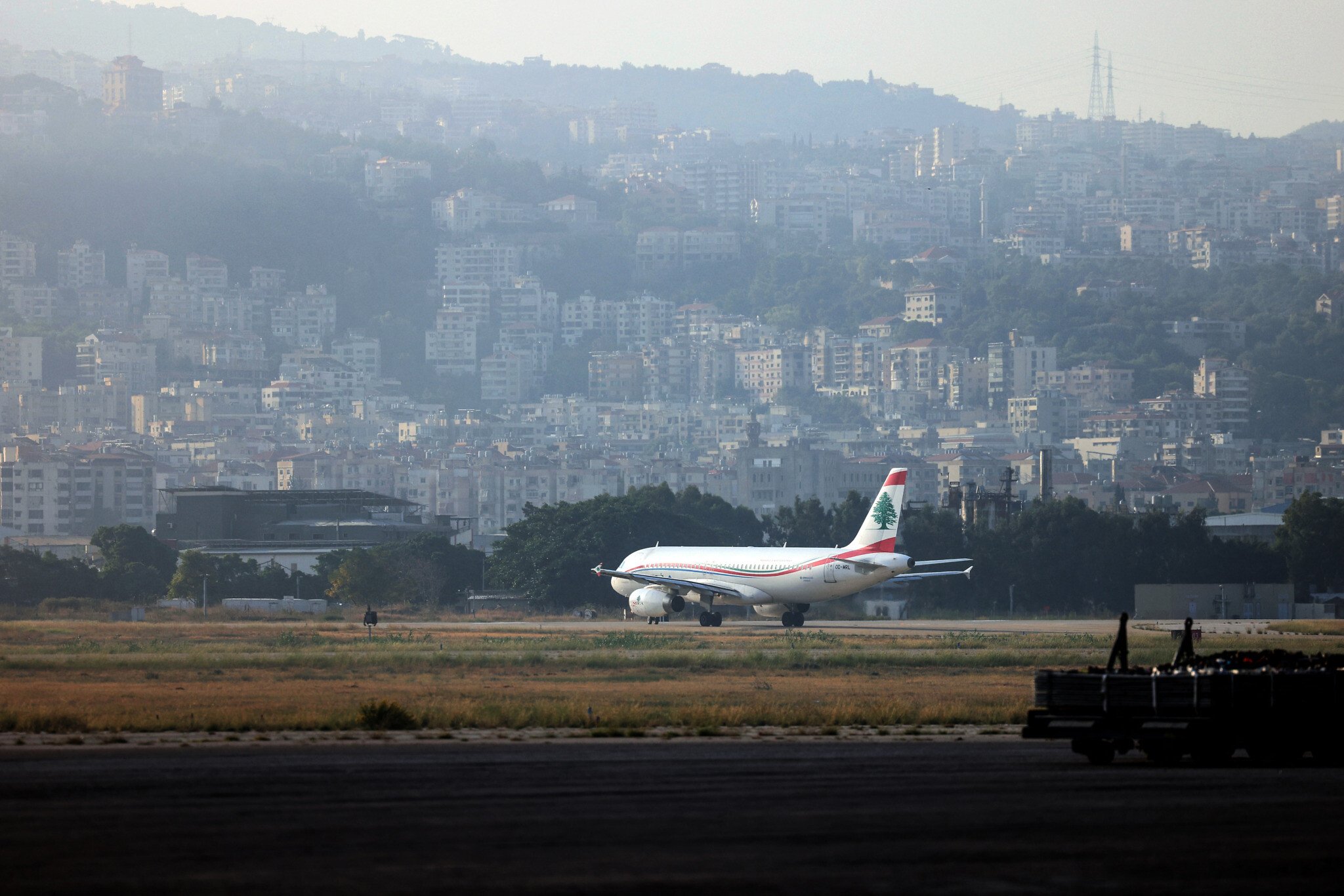
Illustrative: A Middle East Airlines commercial aircraft prepares for takeoff on the tarmac of the Rafik Hariri International Airport in Beirut, Lebanon, November 1, 2024. (Anwar AMRO / AFP)
The EASA said it would continue monitoring the security situation in the region and adjust its guidance accordingly.
The EASA’s withdrawn bulletin regarding Israel had also asked airlines to exercise caution when operating within the airspace of Bahrain, Kuwait, Jordan, Qatar, Oman, the UAE and Saudi Arabia. It was not immediately clear whether it would issue a new advisory for those nations.
The European agency also said that should the existing truce break down, Iranian airspace was likely to be exposed to “imminent threats.”
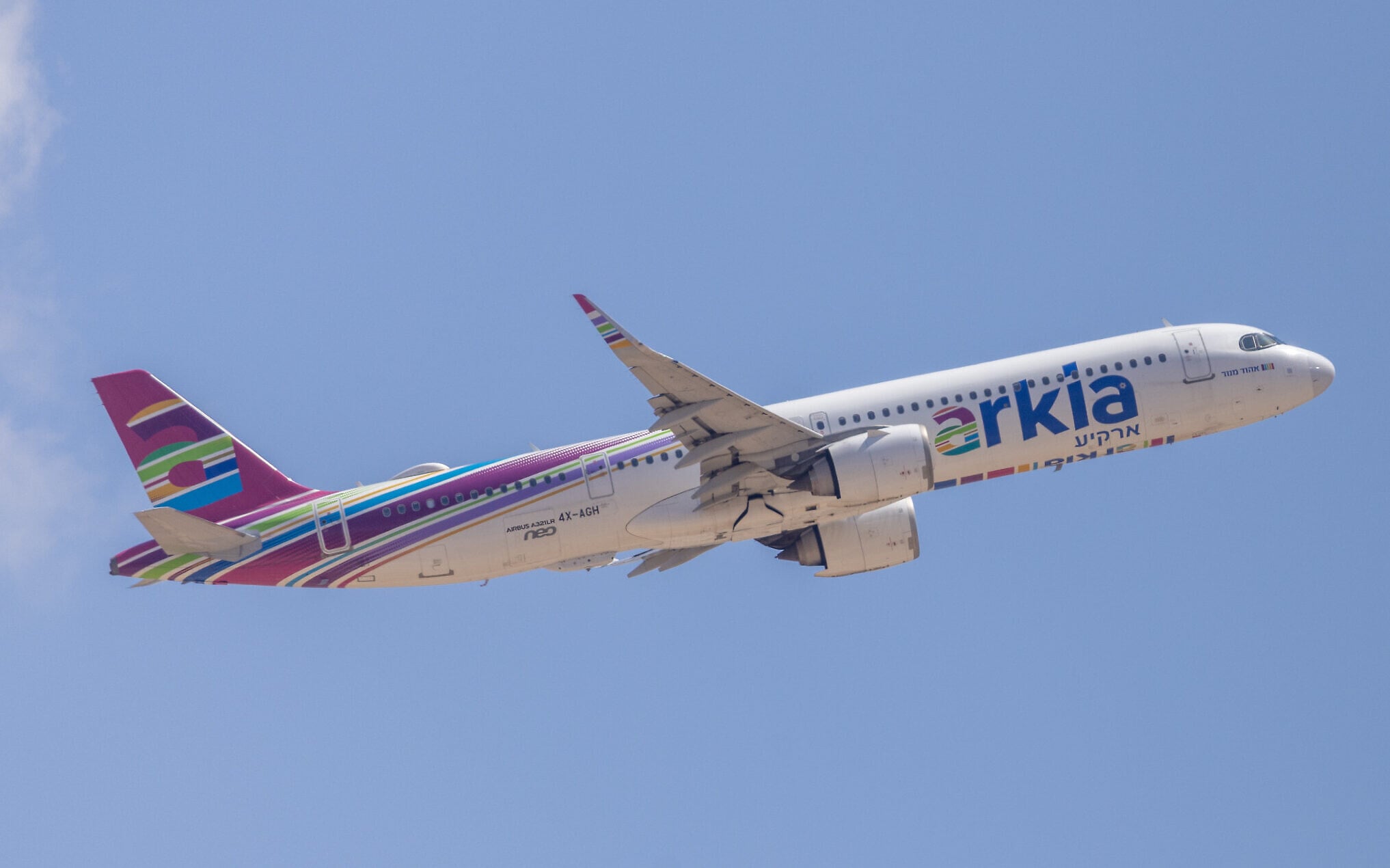
An Arkia plane takes off at Ben Gurion Airport, outside of Tel Aviv, May 5, 2026. (Yossi Aloni/Flash90)
Meanwhile, Israeli carrier Arkia announced on Wednesday that it would restart direct flight services to Morocco in August after an approximately three-year suspension due to the multifront war that followed the Hamas-led October 7, 2023, attack.
Starting on August 24, Arkia is resuming direct flights to Marrakesh twice a week using Airbus A320 aircraft, the airline said in a statement.
“The resumption of the route comes after an extended period of joint efforts with aviation and security authorities, and marks significant news for Israeli travelers wishing to return and visit Morocco,” Arkia said.
We can’t do this work alone.

The war with Iran has been draining for all of us in Israel. But when I heard about a high casualty incident – ballistic missile impacts in Arad and Dimona that left nearly 200 people wounded – I drank a cup of coffee, packed a bag, and headed south.
There, I spoke with Shilgit, the head of an after-school program for underprivileged youth. Standing outside her destroyed center, Shilgit said it was a miracle that no children were hurt and spoke about the community coming together in the hours since.
As a Times of Israel reporter, I’m committed to telling stories of resilience like Shilgit’s. But my colleagues and I can’t do this alone. If you value work like this, please consider joining our reader support group, The Times of Israel Community. Your financial support is essential to keep real human reporting like this going.
— Stav Levaton, military reporter
Already a member? Sign in to stop seeing this
You’re a dedicated reader

That’s why we started the Times of Israel – to provide discerning readers like you with must-read coverage of Israel and the Jewish world.
So now we have a request. Unlike other news outlets, we haven’t put up a paywall. But as the journalism we do is costly, we invite readers for whom The Times of Israel has become important to help support our work by joining The Times of Israel Community.
For as little as $6 a month you can help support our quality journalism while enjoying The Times of Israel AD-FREE, as well as accessing exclusive content available only to Times of Israel Community members.
Thank you,
David Horovitz, Founding Editor of The Times of Israel